
On September 15, BrandLab valued the Sber brand at ₽2.35 trillion. That is roughly 37% of Sber’s approximately ₽6.29 trillion stock-market value. Brand Finance, which also assessed Sber in 2026, put the same brand at $ 7.1 billion—about ₽626 billion at the exchange rate used here, or just over a quarter of BrandLab’s figure.
Sber comes first in BrandLab’s ranking, as it has in every edition. Its place at the top is not a puzzle. The puzzle is how two valuers arrive at prices almost fourfold apart for one of Russia’s most recognizable corporate names—and how a reader is supposed to judge between them.
BrandLab’s Top-100 Most Expensive Brands of Russia is now Russia’s most prominent regularly published brand-valuation ranking. Its numbers circulate in a market with fewer independent alternatives than it had before 2022. That makes them worth examining not only as estimates of corporate value, but as part of the evidence through which Russia’s post-2022 economy is described.
The vacuum, briefly
The international rankings once available for Russian brands disappeared in stages. Interbrand’s Moscow franchise closed after the 2014 annexation of Crimea. Brand Finance’s annual Russia 50 did not continue beyond 2021, although Brand Finance still assesses some Russian companies in global sector rankings. BrandLab, which says it represented Brand Finance in Russia for a decade, launched its own top 100 in December 2024.
BrandLab says its valuations use royalty relief and are guided by ISO 10668, the international standard for monetary brand valuation. Royalty relief estimates what a company would have to pay to license a brand if it did not own it, then calculates the present value of those hypothetical payments. It is an established approach. It is also one in which choices about revenue, royalty rates, growth and discounting can make a substantial difference to the result.
BrandLab’s claimed methodological inheritance therefore gives readers a way to ask a precise question. The question is not whether Russian brands have value. Many clearly do. The question is whether the published figures allow anyone outside the firm to understand why they are worth the amounts assigned to them.
Testing Sber
A brand valuation is an estimate, not an observed sale price. BrandLab’s ₽2.35 trillion figure deserves to be read in that light—and tested accordingly.
First, there is the relationship between the valuer and the company. Sber is a named BrandLab valuation client. BrandLab’s reports invite other companies to commission valuations and say that a sufficiently highly valued brand may be included in the ranking. Neither point establishes that Sber received favorable treatment. Together, they make it important to know how paid work is separated from decisions about a public league table. BrandLab’s founder, Alexander Eremenko, previously worked as Sberbank’s brand director, a connection that should be disclosed without being mistaken for proof of influence over this valuation.
Second, there is disclosure. BrandLab gives readers the final number but not the revenue base, royalty rate, discount rate or sensitivity tests behind Sber’s estimate. That does not demonstrate a failure to comply with ISO 10668: a public ranking need not contain everything in a client valuation report. It does mean an outside analyst cannot reproduce the figure or determine which assumptions drive it.
Third, there is Sber’s market value. BrandLab’s estimate amounts to around 37% of the bank’s market capitalization—an unusually high ratio for a banking brand. But market capitalization is an imperfect check in Russia. Sanctions, capital controls and restrictions on foreign investment can depress the price of a Russian bank’s shares without reducing the earning power of its brand to the same degree. The ratio gives us a reason to investigate, not grounds to reject the estimate outright.
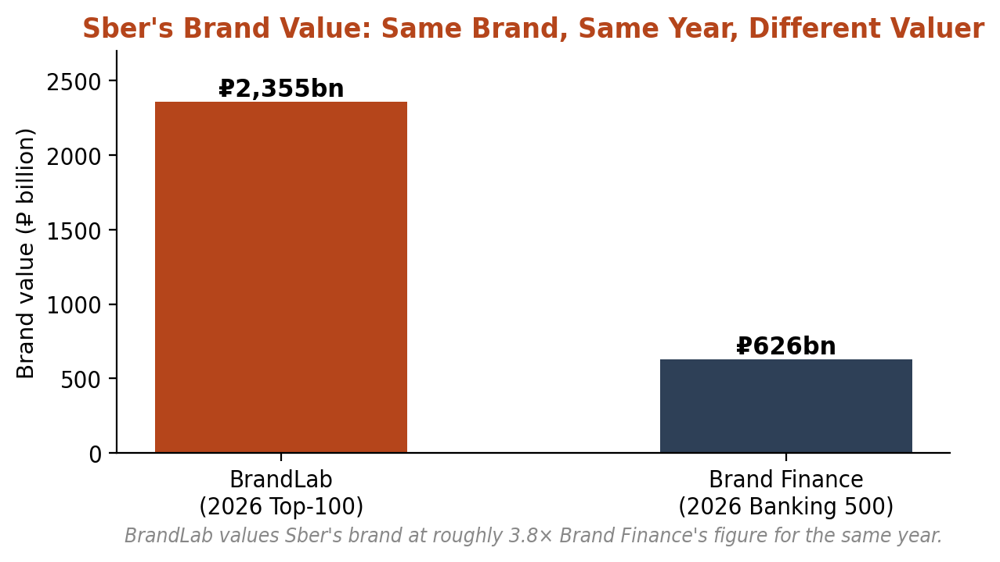
Figure 1. Sber’s brand value: BrandLab and Brand Finance, 2026.
Brand Finance offers a more direct point of comparison. Its 2026 Banking 500 estimates Sber’s brand at $ 7.1 billion, or approximately ₽626 billion using the exchange rate applied here. BrandLab’s figure is about 3.8 times higher. The two firms need not use identical forecasts or assumptions simply because they describe related valuation methods. But those differences are exactly what readers need to see if they are to understand a gap of this size.
The figures also move differently over time. BrandLab’s Sber estimate has risen relatively smoothly, including a 4.5% increase in 2026. Brand Finance’s dollar-denominated estimate has been much more volatile. Exchange rates and valuation dates could account for some of that contrast; differences in expected income and risk could account for more. From the public figures alone, it is impossible to say how much.
None of these tests establishes a reliable alternative value for Sber. They establish the limit of what can be concluded from BrandLab’s published number.
Which outliers can Russia explain?
BrandLab’s comparisons with international valuers invite a wider test. Under the same broad valuation approach, how unusual do its Russian figures look?
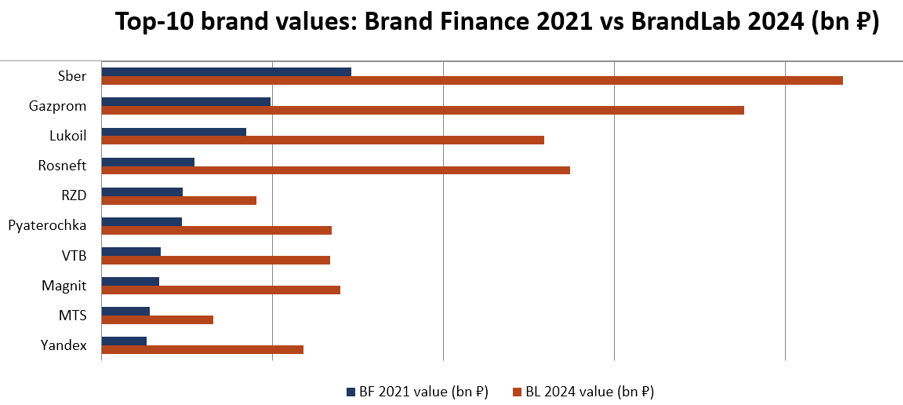
Figure 2. Ten brands appearing in Brand Finance’s 2021 Russia ranking and BrandLab’s first ranking in 2024.
The 2021 and 2024 figures should not be read as a clean before-and-after experiment. Russia’s economy, the businesses being assessed and the ruble all changed markedly in between. The comparison is useful for identifying differences in scale, not for attributing every difference to BrandLab’s method.
Market valuations also complicate comparisons with Western peers. Shares in Sber, Gazprom and VTB trade under conditions unlike those facing large international banks and energy companies. If their businesses were assigned higher stock-market multiples, BrandLab’s brand estimates would make up a much smaller share of their market values. Some of the apparent outlier, in other words, is a feature of Russia’s equity market.
That defense has less force for every company. Using the dates and market values in this comparison, BrandLab’s estimate for Yandex amounts to approximately 62% of its market capitalization; Ozon’s reaches about 86%. The value assigned to Pyaterochka alone exceeds the stock-market value of its parent group. None of these ratios is, by itself, proof of a faulty valuation. A share price reflects debt, expected earnings and risks beyond the strength of a brand. But these cases make the model’s assumptions especially consequential.
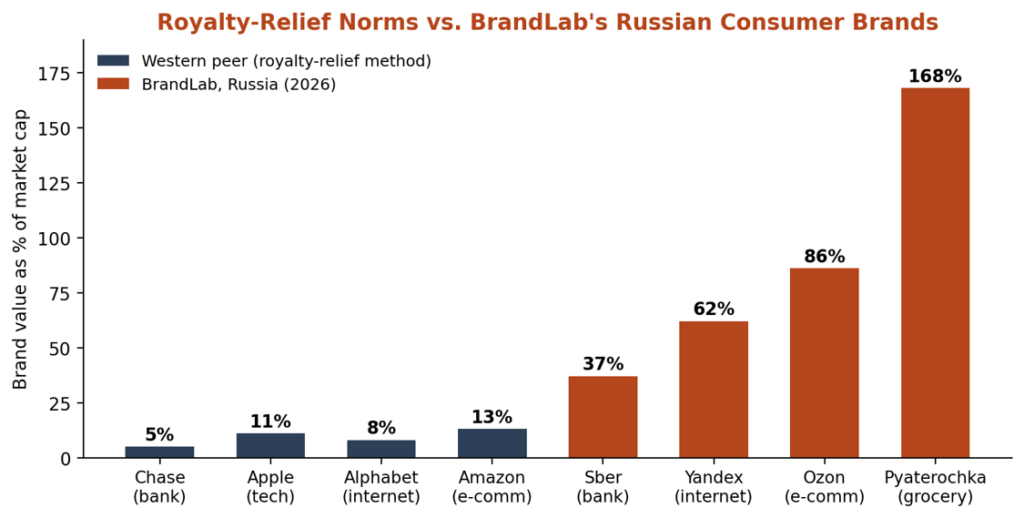
Figure 3. Brand value as a share of market capitalization: selected Russian and international companies, 2025−2026.
The treatment of related brands is one example. BrandLab assigns separate values to Yandex, Yandex Taxi and Kinopoisk. That can be reasonable if each valuation draws on appropriately distinct sources of revenue. Without an account of how those revenues are allocated, however, readers cannot tell whether the resulting figures overlap. Nor can they determine how much of a high valuation comes from an ambitious royalty rate rather than a strong financial forecast.
This is the point of the Western comparison. It is not that Russian companies should look like Western ones. It is that a firm invoking an established method invites readers to ask which market differences explain an unusual result—and which modelling choices remain hidden.
What a dominant ranking makes possible
BrandLab’s significance lies partly in the absence of a comparable, regularly published alternative covering Russian brands. A valuation can gain authority not because everyone has tested it, but because companies cite it, journalists repeat it and there are few other numbers at hand.
The ranking also assigns monetary values to brands that emerged from the departure or transfer of foreign-owned businesses. Vkusno — i tochka, Lemana Pro and Rostic’s acquire a public valuation history as brands in the changed Russian market. That history may influence how their development is discussed. Whether it would affect lending, investment decisions or future ownership claims is a separate question requiring separate evidence.
BrandLab’s brand-strength grades warrant a similar distinction. An AAA+ brand grade is not a credit rating. It does not measure a company’s likelihood of repaying its debts. But paired with a precise-looking monetary value, a familiar letter grade can lend an estimate the appearance of a settled financial fact.
Other measures show why the ranking’s scope should remain clear. NAFI’s survey of Russians’ favorite brands includes foreign names that BrandLab’s ranking, focused on brands active in today’s Russian corporate landscape, does not capture in the same way. NAFI measures preference, not money; it cannot tell us what Sber or Yandex is worth. It can tell us that the brands with the highest published valuations are not necessarily the ones consumers like best. Brand value, consumer affection and the current roster of companies operating in Russia are different things.
None of this requires BrandLab to be acting in bad faith. It is a reason to scrutinize a measurement more carefully when the market around it offers fewer independent checks.
What the numbers tell us
The order of BrandLab’s ranking can help identify which brands the firm regards as significant, though its selection rules mean it should not be mistaken for an exhaustive inventory of Russian consumer preference or corporate value. The ruble amounts make a more demanding claim.
For state-dominated businesses, Russia’s depressed stock market explains some of the startling ratios between brand and market value. It does not explain the nearly fourfold gap between BrandLab’s and Brand Finance’s Sber estimates. For consumer and digital companies, the questions extend to revenue allocation and the assumptions that turn brand strength into a monetary figure. The public ranking does not provide enough detail to settle them.
The remedy is not to stop valuing Russian brands, or to assume international estimates are automatically correct. It is to make the largest estimates more open to examination: publish the basis for revenue attribution, royalty and discount rates, show how sensitive the conclusions are to those choices, and explain how paid-client relationships affect inclusion in the ranking. Until then, BrandLab’s figures are useful evidence of what BrandLab estimates. They are much less secure as prices.