On 16 February 2022, Jair Bolsonaro stood beside Vladimir Putin in Moscow and spoke of strengthening a “strategic partnership.” Eight days later, Russia launched its full-scale invasion of Ukraine, giving the meeting an unexpected significance.
The economic relationship behind the photographs was much narrower. Bilateral trade had reached $ 7.3 billion in 2021, according to the Brazilian government, and was already centered on the agribusiness chain. Fertilizers were Russia’s main export to Brazil. Bolsonaro also had a straightforward domestic reason to keep the channel open: Brazilian agriculture depends heavily on imported plant nutrients.
Four years after the invasion, the relationship is larger and more visible, but not deeper in the way that “strategic partnership” usually implies. Sanctions redirected Russian diesel to Brazil, while fertilizer dependence acquired fresh political weight. BRICS gave both governments a convenient diplomatic stage. Investment, finance, defense and broader business ties, however, remain limited outside a few sectors.
Brazil has also pursued a course that frustrates both sides. It voted at the United Nations to condemn Russia’s aggression and demand the withdrawal of Russian forces, but declined to join Western sanctions. Under Luiz Inácio Lula da Silva, Brasília refused a German request for ammunition destined for Ukraine and continued to press for negotiations. This stance has helped Moscow limit its diplomatic isolation. It has not turned Brazil into a Russian ally.
A diesel route created by the war
The sharpest post-2022 shift did not take place at a BRICS summit. It took place at fuel terminals.
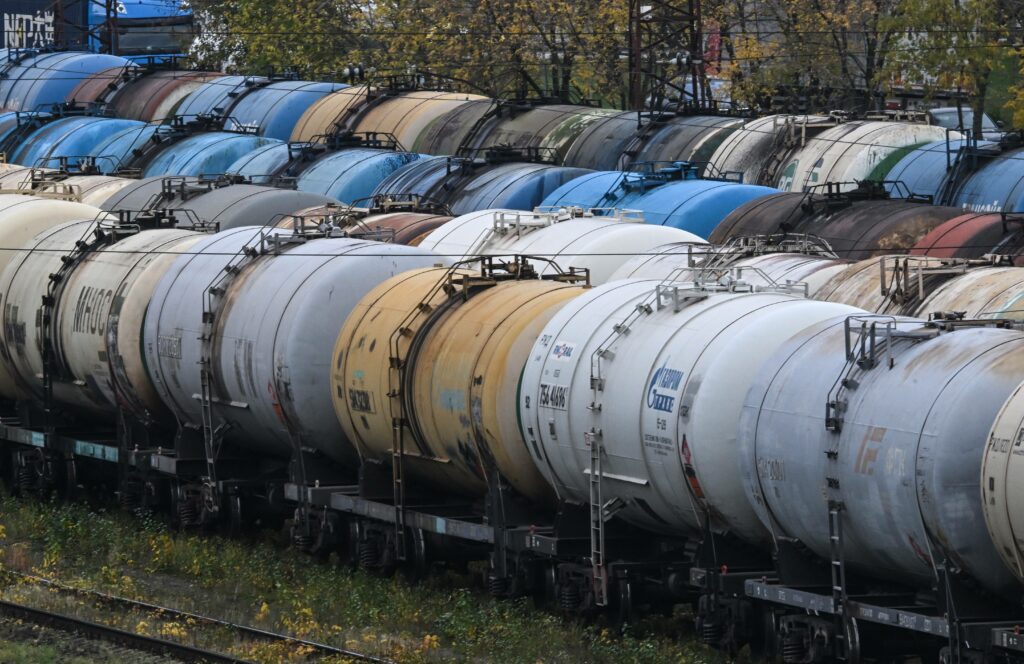
Russian diesel had been a marginal source of supply for Brazil. Once the European Union closed its market to Russian refined petroleum products in February 2023, Moscow needed new buyers, while Brazil continued to import a large share of the diesel used by trucks, buses, farms and industry. Brazilian purchases of Russian diesel rose from roughly $ 95 million in 2022 to $ 5.4 billion in 2024. Discounts did much of the work, reaching as much as 16 per cent compared with American fuel.
The flow was never as steady as the headline numbers suggested. By October 2025, after new US sanctions, refinery disruptions and stronger Russian domestic demand, Russia’s share of Brazil’s diesel imports had fallen to 17 per cent from approximately 60 per cent earlier that year. Brazilian buyers turned instead to the United States, India, Saudi Arabia and Oman. By early 2026, Russia had again become the leading supplier.
Attacks on Russian refineries in 2026 made this uncertainty more concrete. In May, Russia still supplied 73 per cent of Brazil’s imported diesel—1.02 billion liters—even though Russian refining output had fallen by almost 20 per cent between March and May. The figures showed Russian resilience. They did not, however, answer the question of reliability.
Russian seaborne diesel and gasoil exports then fell by 39 per cent in June. On 8 July, Moscow temporarily banned diesel exports to protect the domestic market after repeated Ukrainian drone strikes caused shortages and sharp price rises. Turkey and Brazil had absorbed at least half of the Russian cargoes available in June. In August, another Ukrainian strike shut the Orsk refinery, a facility with annual capacity of 6 million tons. The refinery could remain offline for as long as six months, further raising questions about predictability.
Can Russia continue to deliver the volumes Brazil needs? In the short term, it has often managed to do so—the May figures demonstrate that. Over a longer period, however, the answer will depend on refinery damage, Russian domestic demand, sanctions, freight costs and the prices offered by competing destinations. A discounted supplier is not the same as a strategic guarantee.
Brasília’s response is not to reject Russian fuel altogether, but to reduce its exposure to every foreign supplier. Petrobras is expanding refining capacity with the aim of cutting Brazil’s diesel-import dependence from 29 per cent to 15 per cent and eventually achieving self-sufficiency. In the second quarter of 2026, the company cut diesel imports by 85 per cent while running its refineries at record levels. For Brazil, energy security means retaining access to competitively priced cargoes while needing fewer of them. Brazil currently meets roughly 70 per cent of its diesel demand through domestic production and imports the remaining 25−30 per cent.
Fertilizers: localization, not separation
Fertilizers are different because Brazil’s dependence on imports predates the invasion. Brazil imports approximately 85 per cent of the fertilizer used on its farms. Russia was already a major supplier before February 2022. In 2025, Russia accounted for approximately 24−26 per cent of Brazil’s fertilizer imports. Russian officials claim that Russia’s share of the broader Brazilian fertilizer market rose to approximately 30 per cent in 2026.
Rising imports from Russia do not indicate that Brasília wants to replace one foreign supplier with another. The policy is older and broader: reduce total import dependence by producing more fertilizer at home.
The National Fertilizer Plan, launched in 2022, aims to reduce Brazil’s import dependence from approximately 85 per cent to about 45 per cent by 2050, even as demand grows. The plan has since been translated into a portfolio of projects, including the reactivation or expansion of domestic plants.
Two developments illustrate what this means in practice. EuroChem’s integrated complex at Serra do Salitre, opened in 2024 after a $ 1 billion investment, is designed to produce 1 million tons of phosphate fertilizer annually—approximately 15 per cent of Brazilian output. Petrobras has restarted nitrogen-fertilizer plants and expects its facilities to meet approximately 20 per cent of Brazil’s nitrogen-fertilizer demand in 2026.
This is not an anti-Russian policy. It is a policy against excessive concentration. Brazil still wants reliable supplies from Russia, but it also wants more of the value chain, technology and employment to remain inside the country. A supplier that invests in local production fits that strategy better than a relationship based solely on cargo shipments.
EuroChem’s investment in localized production in Brazil fits this objective particularly well.
This distinction helps explain Brasília’s behavior after the invasion. Severing fertilizer trade would have hit Brazilian farmers, food prices and export competitiveness at once. Keeping the trade open was a choice rooted in food security and commercial pragmatism, not an endorsement of the war.
Political usefulness is not alignment
Public reactions make the distinction clear.
Russia’s ambassador in Brasília, Alexey Labetsky, has openly praised Brazil for remaining outside the sanctions regime, refusing to supply arms to Ukraine and seeking a negotiated settlement. From Moscow’s point of view, a large democratic BRICS member that continues to trade and engage with Russia is valuable in its own right.
The reaction in Washington was almost the mirror image. In April 2023, after Lula suggested that the United States and European countries shared responsibility for prolonging the conflict, White House spokesman John Kirby accused Brazil of “parroting Russian and Chinese propaganda.” Volodymyr Zelensky later called the Brazil-China peace initiative “destructive” and disrespectful of Ukraine’s territorial integrity.
There is substance to those criticisms. Lula’s rhetoric has at times blurred the basic asymmetry between invasion and resistance, while the joint proposal with China did not begin with a demand for Russia’s withdrawal. His attempt to cast Brazil as a mediator has generated more diplomatic attention than concrete negotiations.
Yet the record does not support the claim that Brazil has moved into Moscow’s war camp. Brazil voted to condemn the aggression and reaffirmed Ukraine’s sovereignty. It has not recognized Russia’s annexation of Ukrainian territory. It refused to send ammunition to Ukraine, but it also rejected a reported Russian request in 2023 to buy back engines from the twelve Russian-made Mi-35 attack helicopters that Brazil had retired the previous year.
That episode captures Brazil’s preference for avoiding military involvement better than any “pro-Russian” label. Brazil declined to arm Ukraine, but it also declined to facilitate Russia’s military effort.
The policy has consequences that favor Russia, above all by weakening sanctions and diplomatic isolation. A policy can benefit Moscow, however, without being directed by Moscow. Brazil’s aim is to preserve room for maneuver, even when its language makes that claim harder to sustain.
Payment systems and banking constraints
The gap between rhetoric and infrastructure is clearest in payments.
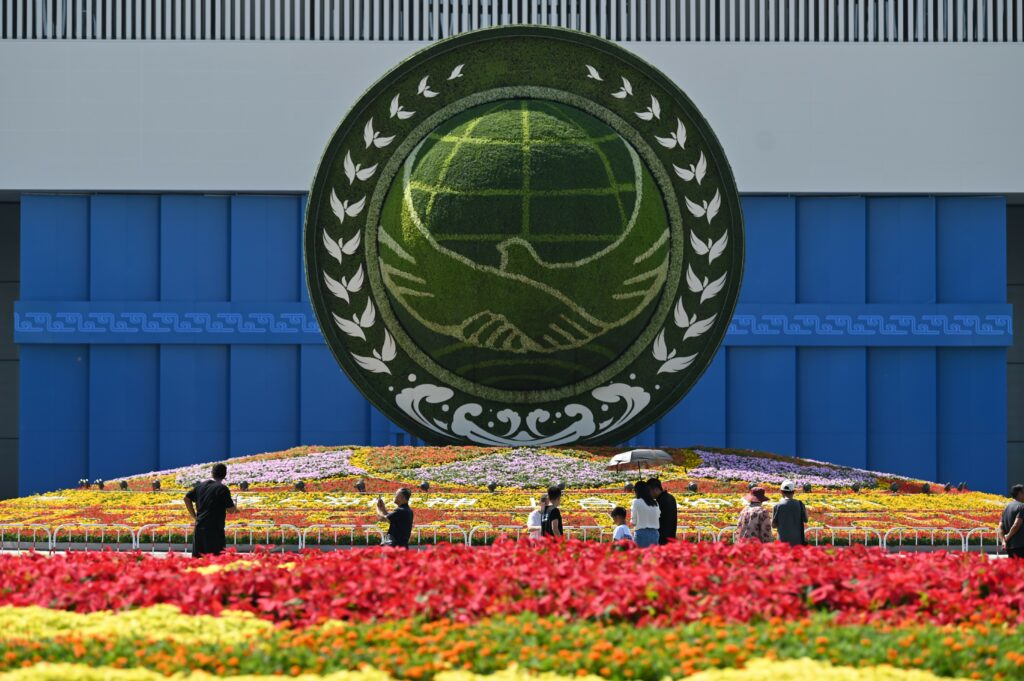
During Brazil’s 2025 BRICS presidency, Brasília set aside the idea of a common currency and concentrated instead on linking national payment systems and reducing the cost of cross-border transactions. In practical terms, the ambition is modest: a Brazilian importer could pay in reais while the foreign exporter receives its own currency, with participating banks handling conversion, compliance and settlement. No BRICS central bank or shared currency would be required.
Russia’s pre-summit proposal in 2024 was more ambitious. It envisaged a new messaging layer, a network of commercial banks linked through central banks, and possible use of distributed-ledger technology. Putin later said that existing BRICS infrastructure was sufficient and that no separate joint system would be created for the time being.
Brazil already has experience with local-currency settlement. Its Local Currency Payment System allows transactions with Argentina, Paraguay and Uruguay to be paid and received in local currencies without an intermediary reserve currency. No equivalent official mechanism for real-ruble settlement has been announced.
Nor is there a reliable public breakdown of the currencies used in Brazil-Russia trade. Claims that the relationship is settled mainly in dollars, rubles or reais are therefore unsafe. What is public is the unfinished institutional agenda. At the February 2026 high-level commission, Mishustin called for greater use of national currencies and direct banking cooperation. In May, Russian Economy Minister Maxim Reshetnikov again stressed the need for independent infrastructure connecting the two countries’ banks. These appeals reveal an institutional gap; they do not show that such a system already exists.
Sanctions make the gap costly. SWIFT disconnected designated Russian banks in 2022, and US sanctions in 2024 forced the Moscow Exchange to halt centralized dollar and euro trading. A Brazilian transaction can be legal under Brazilian law and still be delayed or rejected if a bank, correspondent, vessel, insurer or counterparty creates sanctions exposure.
That is what secondary-sanctions risk looks like in everyday business. A bank may demand additional documentation, widen the spread, refuse the payment or simply avoid the client. When NATO Secretary General Mark Rutte warned in 2025 that Brazil, China and India could face secondary sanctions, Brazil’s foreign minister dismissed the warning as inappropriate. Corporate treasurers could not dismiss the risk so easily.
What Brasília wants from Moscow
The 2026 high-level commission broadened the agenda to include energy, agriculture, science, technology, health and peaceful nuclear cooperation. Officials discussed medical radioisotopes, the nuclear fuel cycle, artificial intelligence and industrial projects. These are genuine institutional links. They should not, however, be mistaken for completed investment.
EuroChem’s Serra do Salitre complex remains the clearest large productive project linked to the relationship. Beyond it, much of the new agenda still consists of working groups, declarations and proposals. That is why officials on both sides continue to describe the potential as underused. Geraldo Alckmin, Brazil’s vice-president and minister of development, industry, trade and services, has urged that bilateral opportunities become concrete projects. Reshetnikov has argued that trade must shift towards more complex, technology-intensive goods.
The imbalance gives urgency to that argument. In 2024, bilateral trade hit a record $ 12.4 billion: Brazil exported $ 1.4 billion and imported $ 11 billion. Fuel accounted for 57 per cent of Brazilian imports from Russia and fertilizers for another 34 per cent. Brazil’s exports were led by soybeans, coffee and beef. Lula described the deficit plainly and said a healthy commercial relationship should be a two-way street.
Taken together, these policies reveal a clear Brazilian preference. Brasília wants Russia to remain a dependable supplier of inputs that are difficult to replace quickly. It also wants lower overall dependence on imported diesel and fertilizer, more production inside Brazil, more Russian investment rather than mere cargoes, higher-value Brazilian exports, and payment arrangements that comply with applicable regulations while reducing transaction costs.
These goals are compatible with a substantial relationship. They are not the programme of an alliance of any kind. Brazil has no interest in replacing dependence on Western finance with dependence on Russia, nor in creating a rupture that raises domestic costs simply to demonstrate loyalty to the West.
Since 2022, Moscow has become more important to Brazil because the war rearranged commodity markets and exposed vulnerabilities that had previously been easier to ignore. The relationship now involves more trade, more diplomatic symbolism and more political risk than it did when Bolsonaro visited Moscow.
It remains, however, a relationship built around a limited set of transactions. Russia gained a large market for products redirected from Europe. Brazil gained discounted diesel and continued access to critical fertilizer. BRICS gave both governments space to resist Western pressure. None of this is trivial.
More trade has not produced more alignment. The war made Brazil a better customer for Russia. It did not make Brazil more Russian.