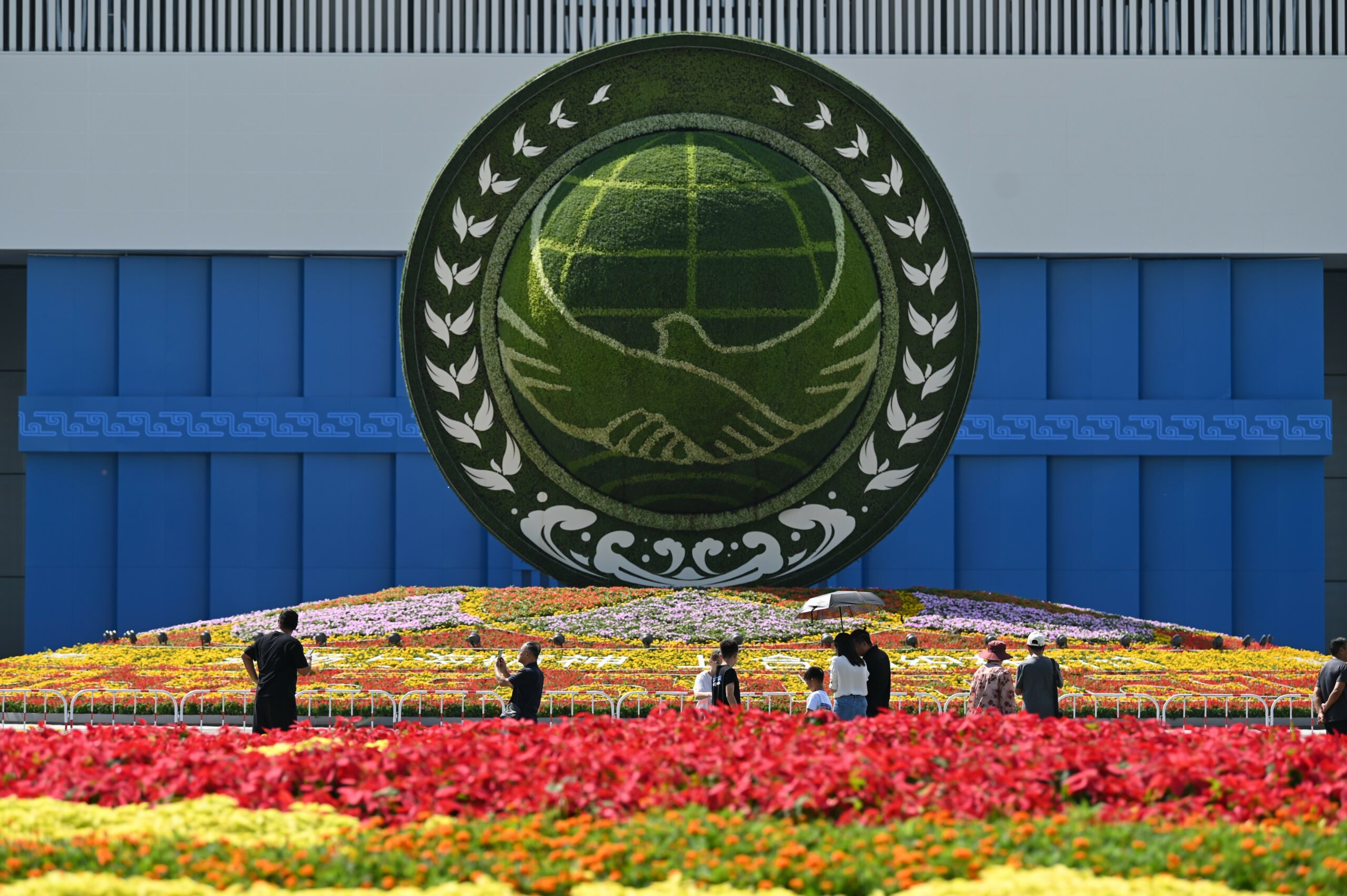
This week, Vladimir Putin threw himself into the Russia-Africa summit. He personally gave visiting heads of state a tour of an exhibition of advanced Russian technologies, treated them to ice cream, and, of course, took part in plenary sessions and meetings. The summit was evidently an important occasion for the Russian president, and Putin’s favorites were enlisted to organize it, including Deputy Chief of Staff Maxim Oreshkin. Predictably, the central theme of the Russian leader’s remarks was the struggle against Western “colonialism” and the creation of a “multipolar world.” Putin, it seems, views Africa as a continent unjustly neglected by the major powers in recent years—one with historical ties to the Soviet leadership—and therefore believes Russia has a good chance of becoming the principal partner of African states.
“Africa is increasingly asserting itself as one of the poles of the global economy and politics. The continent is experiencing a new awakening; its sovereignty is strengthening, and its influence and authority on the world stage are growing. Above all, Africans have an unyielding determination to defend their interests and to determine their own future and path of development,” Putin mused. The West, in his telling, is merely trying to trap Africans in “debt bondage.”
Putin is evidently prepared to spare neither his time nor his ice cream to secure this status. Yet the Russian president underestimates both the Western countries, which continue to defend their interests on the continent, and China’s active game. The low volume of Russia’s economic ties with African states—trade with the entire continent accounts for just 3.9% of Russia’s foreign trade and is falling—shows that the Kremlin has come late to this direction. Nevertheless, some leaders are willing to sit through a summit in the hope that their countries, or at least they personally and their entourages, will extract some benefit from cooperation with Russia. Putin’s entourage, and figures close to him such as Oreshkin, were only too happy to stage such an encounter.
The summit’s PR achievements look dubious. It could have been used to show the West, once again, that Russia cannot be completely economically isolated—even if its partners remain, for the most part, poor states often run by authoritarian governments. Instead, Putin’s engagement and near-obsequiousness toward African leaders revealed that he and his circle must make a serious effort to attract even such partners. This fawning sits poorly with the Russian leader’s image and ambitions to divide the world into spheres of influence alongside the United States and China. For Russian citizens—especially those old enough to remember the Soviet era—promises to help Africa, for instance with healthcare, against the backdrop of budget deficits and cuts to social spending, may evoke memories of Soviet support for “friendly states” amid the shortages and decline of the late USSR. Whether he intends to or not, Vladimir Putin is beginning to imitate the leaders of the era of stagnation—and, moreover, its most ridiculous and widely mocked aspects.
A Mayor from the Trenches versus the Political Bloc
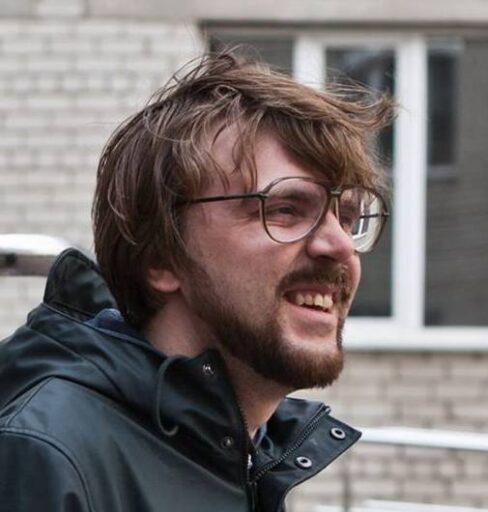
Nikita Gorelov, a former mobilized soldier appointed mayor of Sosnovka in Kirov Region in 2024, has lost his post. His dismissal is formally linked to municipal consolidation in the region: the administrations and councils of urban and rural settlements are being abolished, and the territories will be run by officials and deputies of “districts” created on the basis of municipal areas. Yet the regional authorities could, had they wished, have co-opted Gorelov into the newly created “district administration”—and deliberately chose not to. As a result, a local scandal has become a problem for one of the political bloc’s core lines of work.
Gorelov can be described as a member of an extremely rare species of veteran of the war against Ukraine: someone who served on the front line, held no senior officer rank, and received a post connected to genuine administrative and economic management and the distribution of financial flows. Of course, the mayorship of a small town of 8,000 people does not involve handling billions, but the official is responsible for housing and utilities, municipal institutions and, by extension, the stable everyday life of the local population. Other real participants in the war against Ukraine, by contrast, have mostly been content with posts related to youth policy, patriotic education, or liaison with the security services. Gorelov was among the first “veterans” to be co-opted into government at all. Kirov Region is governed by Alexander Sokolov, a former employee of the presidential administration’s political bloc; the seasoned apparatchik quickly grasped the trend and allowed his former boss, Sergei Kiriyenko, to report promptly to the country’s top leadership on progress in promoting veterans.
Gorelov, who had no prior experience in the system of governance, discovered that the municipal budget was tiny. This was largely because most taxes in Russia are collected at the regional or federal level, leaving municipalities—especially small ones—with very little in the way of own-source revenue. Gorelov attributed the shortfall to corruption among his predecessors and began actively denouncing them, along with the regional authorities. The mayor became popular among local residents by holding public meetings and engaging with constituents online. The recalcitrant official was initially sent back to the front, but after the scandal escalated to the federal level, he was allowed to return to work. After that, the presidential administration’s experiments with appointing “mayors from the trenches” came to an end: veterans were given the usual “youth and patriotic” posts, while seats with real authority went to members of the elite declared to be war participants.
Gorelov was treated with demonstrative severity: he was not even offered a “youth” post in the district administration. Moreover, the political bloc decided to use his story as a cautionary tale. In comments to Vedomosti, Yevgeny Minchenko, a political consultant who works with the presidential administration, said that “it is not enough simply to have taken part in the special military operation to succeed in government.” In his view, one also needs “the ability to negotiate, listen to others, build relationships, and understand how state institutions work in the first place.” Darya Kislicyna, an employee of the Kremlin-aligned think tank EISI and a State Duma deputy from the New People party, told the same outlet that Gorelov had supposedly never taken part in or graduated from training programs for veterans. Military blogger Alexander Sladkov said the same. The official did indeed receive his post without being a winner—or even a participant—in the Time of Heroes competition. But as Gorelov himself demonstrated in one of the program’s materials, he did take part in a month-long professional development course. The scandal surrounding Nikita Gorelov is not yet over: the former mobilized soldier and former mayor is defending his rights in public, and it cannot be ruled out that he may win the support of opponents of Sergei Kiriyenko, the head of the Kremlin’s political bloc—such as the State Duma leadership or senior security officials.
The story of the Sosnovka mayor seriously discredits all attempts by the political bloc to show Vladimir Putin that “veterans” are advancing up the career ladder. At present, Kiriyenko’s team has indeed refined a system for selecting maximally loyal people and tested ways of associating serving members of the elite with the war in order to promote them later. All of this creates the illusion—above all for Vladimir Putin—of a “new elite” crystallizing. Gorelov is a product of the early experiments, and his fate shows what could happen if rank-and-file “SVO participants” were genuinely co-opted into government. Putin’s vertical is not designed to admit outsiders even at the grassroots level, and experienced bureaucrats understand this. Putin himself, judging by his speeches, welcomes the opposite. The Gorelov case may therefore prove an effective weapon for weakening Kiriyenko’s team.
Beyond the Sosnovka mayor’s dismissal, they could highlight the vagueness of what counts as participation in training and personnel programs for military personnel. Usually, this means first and foremost the flagship Time of Heroes competition, whose participants—typically members of the elite or officers—receive appointments. But to demonstrate the mass scale and impressive engagement figures of its programs, Kiriyenko’s team also uses data on participants in short-term courses, such as the one Gorelov enrolled in. One cannot learn much in a few weeks, so it is indeed wrong to call the former mayor a “graduate” or even a serious “participant” of the program. But by excluding Nikita Gorelov from the ranks of Time of Heroes, Kremlin experts invite doubts about the program’s impressive engagement figures—another opening that Kiriyenko’s enemies may exploit.