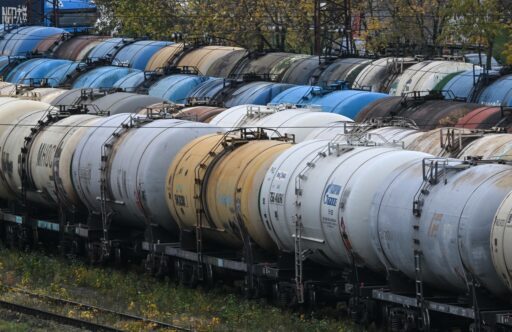
Since the Duma elections, there have been no signs of the overt mobilization many feared. Instead, the system appears to prefer quieter forms of administrative control. Recent discussions of the “diesel deal” with the United States and attempts to use Washington to pressure Kyiv into talks on terms favorable to Moscow, make sense in this regard. Rather than mobilizing, the system is managing upward pressure for the Kremlin through creeping administrative measures, such as a potential ban on issuing passports to men who lack a military service card. As sensible as mobilization might have been in practical terms, the regime has opted for its default course since 2023: a slow-boiling status quo that minimizes blowback without changing its strategic ends. The question now is what to expect from the broader economy heading into early 2027, given the many competing inertial forces weighing on growth, productivity, investment, and coherence.
Officials can point to a modest uptick in growth in August—summer home sales likely helped—but annualized growth for January-August remains just 0.6% year-on-year. Real wages apparently rose another 6% in January-July, a figure that makes sense only in light of the consumption boost given to military families. Sber now forecasts 2026 growth at 1%, an upward revision. There are also signs of divergence within the Bank of Russia’s money supply data. Russians’ dash for cash pushed the growth of cash in circulation to just over 15% for the year by the end of September, compared with 5.9% growth when slightly less liquid forms of deposits and investments are included. Crucially, household borrowing is growing more than three percentage points more slowly than business borrowing.
Money supply is a messy metric from which to draw firm conclusions, but two broad implications follow. First, consumers are increasing their borrowing at a noticeably slower rate than the official increase in their real wages. Second, aggregate business debt is rising while aggregate investment falls. Neither suggests that credit growth is pro-cyclical, following a structural expansion of activity and spending power. Some of the real wage gains likely reflect the compression of salary scales caused by the acute shortage of younger specialists. Companies are being forced to pay more for young talent in a labor market where a growing number of workers would like to change jobs but cannot.
One of the stealthier developments in the wartime economy since the peak “boom” of 2023−24 was the expansion of contract employment to meet companies’ staffing needs. But since January, MinTrud has cracked down on companies using contracts for de facto full-time employees, leading to a collapse in contractor employment. This is, on one hand, good for worker protections; on the other, it reduces what little slack remains in the labor market for managing shortfalls. Add to this that housing completions—the single most important driver of subsequent waves of consumer spending—fell 13.4% in January-September, and the ceiling on what consumption the civilian sector can sustain is slowly falling.
As with their counterparts in white-collar jobs in the United States, the United Kingdom, and many other major economies, people will not leave their jobs because there are not enough openings to move into; instead, they will slowly be squeezed in place. Commercial trucking deliveries may fall 4.6% in 2026, according to M.A. Research. Hotels are struggling, and liquor stores are closing. The Association of Russian Tour Operators expects demand for New Year’s holidays to fall 4−5%. Sochi alone has seen a 44% decline in tourist visits. September foot traffic in shopping malls was apparently down about 2.8% year-on-year. Reports are also beginning to surface of withheld wages at a few ferrous metals firms. Whatever “real” wage gains are occurring reflect the distribution of payments from the war and shifting cost structures to bring new labor into enterprises in the first place; neither translates into significant bargaining power for workers.
Observers will have to examine the fine print of the consumer basket to understand what exactly underpins the near-zero growth figures to which officials cling. Nominal growth alongside real decline is not an entirely new phenomenon in recent Russian history. The regime’s rigid adherence to market orthodoxy—even if a statist version of it—has ensured that prices provide some measure of rebalancing between sectors, households, and imbalances of supply and demand. However, military spending has become the dominant source of funds injected into households, driving large purchases, especially housing, which typically then triggers a further cycle of consumer-goods purchases.
Supply is not responding well. TsMAKP’s most recent industrial output release for September largely shows ongoing contraction in civilian production, and its non-energy sector industrial index includes domestic civilian industries whose output gains since 2024 have clearly been military-driven. Somehow, the Bank of Russia expects inflation to return to its 4% target in the first half of 2027. This seems remarkably odd, given that the cost increases faced by agricultural producers this year—driven by the war in the Middle East and the resulting squeeze on sulfur and fertilizer inputs—will show up next year, hitting food, which remains the most important component of Russians’ consumption basket.
The Bank’s claim is equally remarkable because, since the invasion, the only realistic path back toward its inflation target has effectively been recession. The war erodes the economy’s supply side every month, and increasingly so now that Ukraine can strike so many targets. Economic growth may continue its slow crawl forward, giving the Kremlin grounds to claim that things are better than skeptics predicted. But nominal growth is not real growth. 2027 is shaping up to be worse, as tax increases and consumer pullbacks weigh on business investment.