By the end of 2026, the cost of Russia’s full-scale war against Ukraine had reached astronomical levels: direct expenditure and losses of material assets alone exceeded 70 trillion rubles. Yet despite the scale of these costs, the Russian economy has not ground to a halt. Living standards began to stagnate only in the fifth year of the war, while the number of dollar billionaires in Russia and the combined size of their fortunes grew by 26% and 15%, respectively, compared with 2021. According to Forbes, by 2026 Russia had 155 billionaires with a combined net worth of $ 696.5 billion.
Nor has there been a collapse in popular welfare. Even setting aside Rosstat’s official statistics, which claim that Russians’ real disposable incomes grew by almost 25% between 2022 and 2026, it is hard to deny that Russians have not had to endure the hardships traditionally associated in the post-Soviet consciousness with wartime.
This naturally raises the question of how Russian business and society perceive the war—and what they can expect in the future.
A skewed burden
The broadest assessment of the situation explains why the war has not provoked widespread rejection in Russian society. The main losses—in both the level and quality of life—have fallen on the middle class in large cities: precisely those who were not enamored with Putin’s politics even before the war began. For those who remained in the country rather than leaving, freedom is now what they miss most.
Imported goods that they once used have disappeared from shop shelves, while servicing imported equipment has become sharply more expensive. Trips to Europe have ended, and investments in Western securities have been effectively wiped out. Access to the internet has become a luxury, while many forms of work, business partners, and employers have become inaccessible. Bank loans have become more expensive, and subsidized mortgages have ended. Moreover, people who only a few years ago actively used opportunities to run businesses now face intensified fiscal pressure; certain organizational forms, notably self-employment, may soon be abolished altogether.
By contrast, the position of the groups on which Putin has relied throughout his time in power—the wealthy elite and the poorer strata of society—has not formally changed so dramatically.
Big business under strain
Start with Russia’s largest corporations. Comparing the first eight months of 2026 with the same period in 2021 reveals a decline, but a rather moderate one: aggregate net profit fell from 16.9 trillion to 15.7 trillion rubles, while dividends fell from 3.6 trillion rubles for the whole of 2021 to around 3.1 trillion rubles in the first nine months of this year; no major payouts are expected in the remaining period.
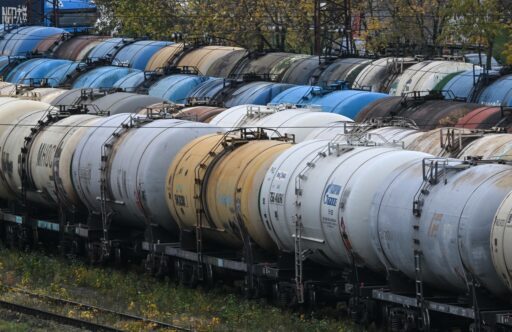
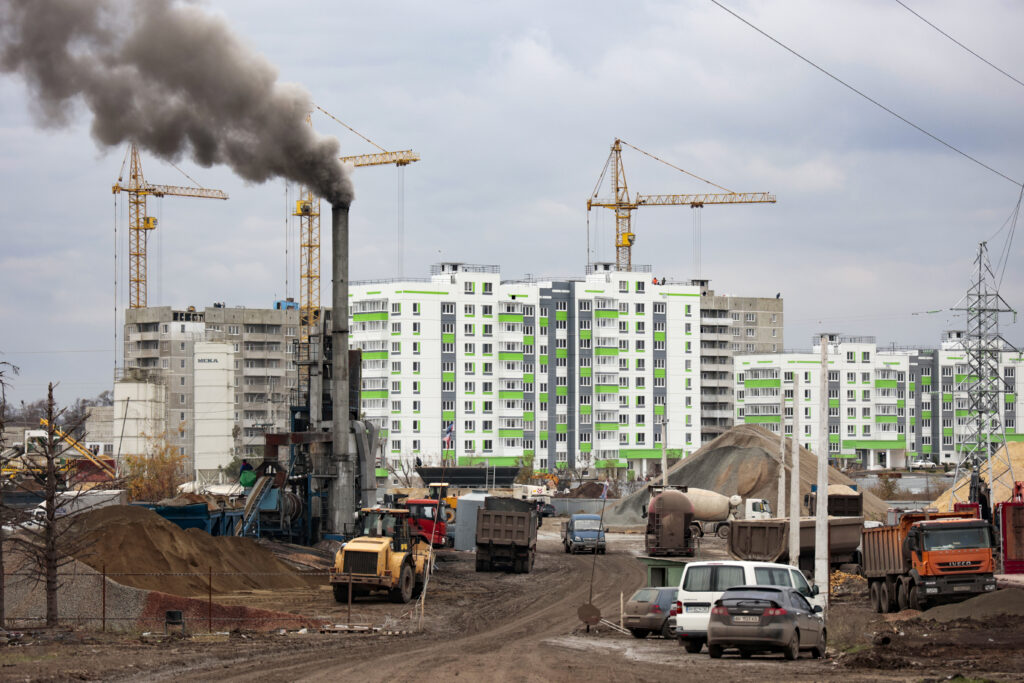
Sectoral dynamics, however, diverge sharply. Oil companies are now in the black—Tatneft and Lukoil are the champions of profit growth—as are banks, with Sber remaining Russia’s most profitable company. Losses are concentrated in metallurgy—Mechel, NLMK, MMK, and Severstal are recording revenue declines of 20−25%, and the industry became the biggest loss-maker in the first half of the year—and in construction. Aggregate business losses could have been far greater had the authorities not partially compensated the largest oil companies for the costs of recovery after Ukrainian attacks and transferred to them monthly budget-compensation payments of up to 300 billion rubles.
Big business, of course, bears the costs of wartime: the authorities are raising taxes, imposing one-off “windfall profit” taxes—first in 2023, then again in 2027—and demanding “voluntary” financing of the war, to which “oligarchs” have already contributed more than 470 billion rubles. Nevertheless, big business’s position is not yet dire enough for it to speak openly against Kremlin policy, although warning signs appear regularly—and often from corporations whose affairs are otherwise doing quite well. Sber, for instance, has repeatedly pointed to rising loan arrears and an increase in “defaulted” loans.
The losers and the winners
The sectors in the worst position today are coal mining—the only loss-making industry in Russia for the past three years—ferrous metallurgy, construction, forestry, transport (especially aviation), wood processing, extraction of other minerals (sand, chalk, salt, and so on), motor-vehicle manufacturing, and the sports and entertainment industry. In recent years, public catering, hotels, internet and mobile communications, and retail trade have hovered around break-even. The oil and gas and financial sectors show no serious problems.
The outlook is far from rosy. The Bank of Russia’s reduction of its key rate is probably approaching its limit. Entrepreneurs are cutting investment—by almost 10% in the first half of the year—because of a shortage of their own funds and stagnant demand. Tax revenues continue to rise, if not through higher rates then through a tough drive to “whiten” the economy. The war is devouring enormous resources, and by the end of 2026 all the reserves for financing it have been exhausted. Entrepreneurs and citizens therefore face difficult, if not catastrophic, times ahead.
The sole—and entirely predictable—exception remains the defense-industrial complex, into which the state is channeling funds both from reserve funds and from taxes collected from other sectors. The average annual revenue growth of large defense-sector companies has exceeded 20% since 2023, reaching historic records in 2024−2025. Since 2024, growth in this sector has accounted for the majority—and sometimes all—of Russia’s GDP growth. Profits in these companies, however, have not grown nearly as dynamically, because they have been squeezed by high borrowing costs, sharply higher wages, and constant state monitoring of product prices; Rostec’s profit even fell by 42% last year. Nevertheless, there can be no doubt that the defense industry is the war’s principal beneficiary. Its share of the economy remains no more than 6%, but in recent years it has accounted for up to 6−8% of all investment in fixed assets; wages in the sector have grown faster than anywhere else in the economy, and the Russian president has publicly said that the defense industry will be fully supplied with orders for 5−10 years after the war ends.
Why business is uneasy
If the overall economic situation has so far remained relatively stable, and if big business and Kremlin-linked oligarchs are extracting noticeable benefits from what is happening, why are entrepreneurs increasingly voicing not necessarily direct criticism of the war, but at least open skepticism about it? Everyone remembers how German Gref, despite the enormous profits of his bank, said that ending the war was “the biggest dream of all Russians.” There are, most likely, two reasons.
On the one hand, the full-scale war has, since 2024, raised the tax burden on the entrepreneurial class and fueled what might be called “selective repression.” The first trend has worsened the position of competitive businesses, which had been among the main beneficiaries of the war’s early years: having first allowed them to develop within the legal framework, the authorities then began to tax them ever more heavily and close the loopholes through which they had avoided taxation. As a result, between 2022 and 2026, non-oil-and-gas revenues collected for the federal budget are projected to rise from 16.3 trillion to 33.6 trillion rubles—more than doubling with minimal GDP growth.
Small businesses and the self-employed have been hit hard: the conditions for simplified taxation have been tightened, benefits abolished, and customers have stopped cooperating. But the greatest problems have been created by terror from the tax authorities: inspections have become far more numerous, and the familiar schemes for evading taxes are disappearing rapidly. This year, tens of thousands of companies involved in “paper” VAT schemes have been shut down, which will result in additional assessments of hundreds of billions—if not trillions—of rubles, along with the collection of enormous penalties and fines.
On the other hand, in recent years the authorities have begun to persecute business on a large scale and to resort to nationalization of property—first targeting those deemed insufficiently loyal to the Kremlin or those moving capital and profits offshore, and then allowing the process to become almost uncontrollable and unpredictable. The anti-corruption campaign the authorities have recently been waging has overlapped with a campaign of expropriation, and in the near future we are likely to see audits of transactions connected in one way or another with convicted corrupt officials, judges, and security-service officers. The number of such officials exceeds 5,000 this year alone, and the value of their arrested assets has reached 800 billion rubles. Over the past four years, the authorities have seized property and assets worth more than 7.6 trillion rubles. No fewer than 7,800 entrepreneurs have been convicted or are in pretrial detention on criminal charges. No one knows where the “de-privatization” campaign will go next or whom it will affect, but there can be no doubt that this is the part of state policy that causes the greatest anxiety in the business community.
Infrastructure damage
The Kremlin’s much-discussed decision to place companies under external administration if their owners fail to ensure the proper preservation of property that is formally theirs but in essence entrusted to them by the state has not yet been used to attack business. Ukrainian strikes on Russian infrastructure have not inflicted catastrophic damage on business: in the case of the oil industry, losses from such strikes are estimated even by Ukrainian sources at 500−800 billion rubles since the beginning of the year, whereas oil companies received 1.25 trillion rubles from the government in budget-compensation payments alone in the first three quarters. Strikes on the logistics facilities of major retailers have likewise not proved fatal for any of them, since most of the damage fell on suppliers whose goods were in warehouses (as in the case of Wildberries) and on the owners of the warehouses themselves, which the trading companies rented (as in the case of Ozon).
Who gained, who lost
Turning from business to the population, as already noted, the most serious problems have affected the middle class. The upper strata have barely noticed them, while the poorest—through involvement in “deathonomics,” the emergence of a mass of vacancies for low-skilled workers, and the reduction in the number of labor migrants—have even improved their material position. These purely financial “gains,” of course, come at the cost of destroyed families, lost relatives, and the other usual consequences of war; but in economic terms, they register as a factor accelerating growth through increased effective demand.
One can say that the war has brought benefits to almost no one that was not accompanied by new problems and risks. Its beneficiaries have been only a small group of businessmen and officials close to the Kremlin. Yet even they have lost a significant part of the opportunities and advantages they enjoyed in the pre-war reality.
Moreover, it is still too early to draw a final balance of the war’s consequences. Debts and mutual obligations have accumulated across the economy, and not all of them will be honored. Nor is there any certainty that the state will fulfill all its promises—to participants in the war as well as to the enterprises currently working on state contracts. It is quite likely that a significant part of the nominal growth in incomes in the coming years will be wiped out by inflation.
Most likely, this war has no genuine beneficiaries in the sense that, without it, all social groups in Russian society—including the oligarchy—would be living better than they are today.