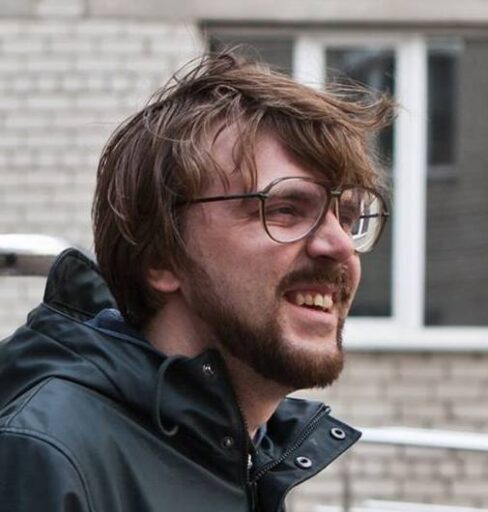
General Alexander Shuvaev, a veteran of the war against Ukraine and a graduate of the Kremlin’s “Time of Heroes” personnel program, was appointed governor of Belgorod Oblast in May. He became the first “veteran” without any prior civilian experience to receive a genuinely important regional post.
Only a month and a half has passed, yet problems with assembling a team and positioning the “general-governor” are already plain to see. Shuvaev is being handed a team of “parachuted managers”, and efforts are underway to present him as a “technocrat-lobbyist.” His case makes it clear that the promotion of military officers into senior civilian posts remains Vladimir Putin’s personal project — one that sits uneasily with the actual needs of the regions.
A Difficult Decision
Shuvaev’s appointment was clearly a struggle for the Kremlin. His predecessor, Vyacheslav Gladkov, was an experienced official and political technologist close to Alexander Kharichev, head of the Kremlin’s Directorate for Monitoring and Analysis of Social Processes. When Gladkov arrived in Belgorod in 2020, locals — unaccustomed to outsiders — viewed him with suspicion. He nevertheless quickly won public support through his open and accessible style of governance.
Gladkov and Sergei Kirienko’s political team had hoped to use the Belgorod governorship as a springboard for federal-level advancement. The war upended those plans. The region descended into crisis, while personnel stagnation in the Kremlin and government only deepened. Gladkov had already resigned himself to another term when he was suddenly informed that the leadership wanted him replaced.
Shuvaev was quickly named as his successor, but the appointment was delayed. Reports in the media suggested that Kirienko’s bloc considered the general unsuitable for a civilian role and began searching for a more acceptable candidate.
In the end, Shuvaev took the post — but in May rather than early April. The delay was overcome thanks to active lobbying by his patron, presidential aide Alexei Dyumin (Shuvaev had previously headed the military component in Tula Oblast during Dyumin’s governorship there).
By that point the Kremlin had abandoned hope of finding an experienced civilian administrator capable of managing a frontline region facing acute problems: regular shelling, drone attacks, and a severe budget deficit. Kirienko’s bloc reported to the president that a military figure was being promoted, while the influence group around Rosgvardia Director Viktor Zolotov — to which Dyumin belongs — scored another personnel gain. Its representatives already govern Samara, Kursk, and Tula oblasts.
An Idea Without a Team
Zolotov and Dyumin have long advocated appointing military officers, security officials, or people connected to them to frontline regions. Their reasoning is simple: in these territories the military element is steadily gaining ground over the civilian one, and its weight will only increase.
For years the plan made little headway. Kremlin political managers and government officials had their own ideas about how regions should be run. Civilian populations and infrastructure in frontline oblasts have not vanished, and keeping them functioning requires civilian administrative skills, not uniforms.
The appointment of Alexander Khinshtein to Kursk Oblast — a United Russia State Duma deputy close to Zolotov — was a compromise. An experienced public politician was expected to defuse the political crisis that followed the Ukrainian breakthrough into the region, when residents of affected areas began protesting over inadequate compensation. Khinshtein also brought a security background: he had served for years as an adviser to Zolotov in Rosgvardia.
The decision on Shuvaev was far more overtly military. Apart from completing the “Time of Heroes” program and a short subsequent stint as vice-governor of Irkutsk Oblast, the general has almost no civilian managerial experience. Consequently, he arrived without a ready-made team.
Local media speculated that Shuvaev would draw on the circle of Yevgeny Savchenko, the long-serving former governor who had supposedly reached an understanding with Zolotov and Dyumin. Events showed otherwise. Either no such deal existed, or the Rosgvardia group chose not to honor it. No appointments from Savchenko’s circle followed, even though they could have been arranged relatively quickly.
The first personnel moves appeared only after several weeks. Valeria Reshetnikova, a pro-military journalist who had worked in the Irkutsk regional government and under ultra-patriotic Vologda Governor Georgy Filimonov, was made responsible for media relations. Another Irkutsk alumnus, Yevgeny Kudryavtsev — who fought with the Wagner Group and later completed the regional “Heroes of Priangarye” program — was appointed adviser on relations with participants in the “special military operation”. Alexei Okhlopkov, former vice-governor of Khanty-Mansi Autonomous Okrug who had since worked in business and at the government’s Center for Strategic Research, became economic adviser. Both men are expected to receive deputy-governor or ministerial posts soon — the same advisory-to-senior-role path followed by Khinshtein’s team in Kursk.
These disparate appointments confirm the obvious: Shuvaev has no team of his own and, it appears, cannot assemble one. At best he can promote a few former colleagues from Irkutsk. Reshetnikova and Kudryavtsev oversee secondary portfolios. The economic bloc had to be entrusted to an experienced manager — here the general and his patrons evidently received help from government officials and Kirienko’s bloc. The infrastructure and social blocs will most likely also be headed by outsiders, with civilian specialists assisting in the search.
Building teams for their protégés has long been a weak point for Zolotov’s group.
Dyumin was fortunate: he retained the core team assembled by his predecessor, Vladimir Gruzdev, an experienced manager with a business background. Dmitry Milyaev, who succeeded Dyumin, kept that same nucleus intact.
In other cases the results were far worse. Yaroslavl Oblast under Dmitry Mironov was repeatedly rocked by scandals. Vyacheslav Fedorishchev, who arrived in Tula with Dyumin as his deputy and later took over Samara Oblast, also lacked his own team; the Rosgvardia group proved unable to help him build one. Fedorishchev was forced into constant compromises with local and federal influence groups, producing endless personnel churn and scandals.
A similar pattern emerged in Kursk. Khinshtein tried to bring in trusted Samara cadres but ultimately had to turn to the Kremlin. His government was headed by Alexander Chepik, a former Karelian prime minister close to Rosatom structures, while infrastructure was placed under Vladimir Bazarov, who had held the same post under Gladkov in Belgorod. The outcome has been the same everywhere: scandals, arrests, and administrative turmoil.
The path ahead for Governor-General Shuvaev’s administration is therefore already visible. Unlike Khinshtein or Fedorishchev, however, Shuvaev has almost no civilian experience, which means he is poorly placed to judge the competence of the officials offered to him.
The Positioning Problem
In the era of competitive gubernatorial elections in the 1990s and early 2000s, generals entering politics leaned heavily on their military image — uniforms, decorations, and “firm hand” rhetoric. In several regions the approach worked: Alexander Lebed in Krasnoyarsk Krai, Alexander Rutskoy in Kursk Oblast, Georgy Shpak in Ryazan Oblast, and Vladimir Shamanov in Ulyanovsk Oblast.
Shuvaev also entered office as a military man. The final decision, however, was taken by Russia’s ultimate “voter” — Vladimir Putin, who has consistently promoted participants in the war against Ukraine. The president regularly recalls conversations with officers, telephones the front, and invites veterans to public events.
One might have expected Shuvaev and his patrons to emphasize this background and stress that the general had only recently returned from the front. Instead, he appears in a civilian jacket. Political technologists shaping his image are testing various personas, but the military element has so far found no place in them. Intellectual-looking glasses, by contrast, have. In his current presentation Shuvaev resembles the early “technocrats” promoted by Kirienko’s bloc.
This choice is deliberate. Local journalists note that Belgorod residents are weary of the war; a governor in uniform would serve as a constant reminder of it. In civilian clothes Shuvaev does not clash too sharply with the image of the popular Gladkov. Kirienko’s bloc chose not to irritate the population over an issue important locally but secondary in the Kremlin’s eyes. The mere fact of appointing a “veteran” satisfies the report to Putin; promoting him is easier without a military tunic.
Shuvaev is therefore being presented not as a soldier who will “restore order,” but as an effective federal lobbyist. He has already claimed credit for restoring mobile internet, attracting major investment into the region’s strained budget, and securing federal money to repair vehicles damaged by drones.
This framing is familiar — almost all outsider appointees cast themselves first and foremost as effective Moscow lobbyists. So far, however, it rings hollow. It is unclear where and how a general without civilian experience could have built the necessary connections.
Belgorod journalists have already pointed out that the sums Shuvaev announced are insufficient to repair all the affected vehicles: 2,500 people are waiting for compensation, while the stated amount would cover at most 400 cars. Even more unrealistic are his claims that regional budget revenues will grow twelvefold thanks to investment. The impression is that Shuvaev either does not understand the figures he cites or fails to grasp that increasing a region’s budget twelvefold — in crisis conditions or otherwise — is simply impossible.
A Lone Warrior
The appointment of a participant in the war against Ukraine to a major civilian post shows that this experiment is not going well.
Despite the delayed appointment, General Shuvaev and his patrons have still failed to assemble a team for the region. The easiest option — drawing on people from former governor Yevgeny Savchenko’s circle — was not taken. The recruitment of outsiders has dragged on, and the question of how someone with no civilian administrative experience can effectively coordinate managers brought in from different regions and federal agencies remains unanswered.
The slow pace of team formation also raises doubts. The status of a regional official has already been significantly devalued, especially in a troubled frontline region. An experienced civilian manager can still recruit through personal networks; for the general and his patrons the task is far harder. With State Duma election preparations underway, Kirienko’s bloc is unlikely to devote much attention to it either.
Shuvaev’s positioning problems are equally serious. Generals who won elections in the 1990s and 2000s could count on public demand for a “firm hand.” No such demand exists in Belgorod; residents were broadly content with Gladkov. In the role of technocrat the general looks unconvincing, particularly when the numbers he cites immediately invite skepticism about his competence.
Kirienko’s bloc will most likely find a way to turn even this case to its advantage. The team has already developed a reliable method for satisfying Putin’s wish to promote military figures without undermining civilian regional governance. Civilians and deputies who formally “went to the front” are enrolled in the “Time of Heroes” program, after which some vacant posts are distributed among them. This is how former Krasnodar mayor Yevgeny Pervyshov became governor of Tambov Oblast, and former Tambov mayor Alexei Kondratyev became a senator from Kursk and later from his native Tambov Oblast.
Appointments of actual generals to governorships are likely to remain rare. It is entirely possible that the experiment will be limited to the single case of Alexander Shuvaev.