In early September 2026, two new Mi-35M attack helicopters began operating from the Indonesian Army’s aviation centre in Semarang, Central Java. They were the first new Russian major equipment to reach Indonesia since 2014, the year of the last Russian delivery.
The Army says the helicopters will mostly carry supplies in Papua. Among the eleven major equipment items Indonesia received during President Prabowo Subianto’s first two years in office, they are the only Russian entry; the other ten came from Italy, France, Turkey, Germany, South Korea, the United States, Airbus and an Indonesian shipyard.
The two helicopters show in miniature the shape of Russia-Indonesia relations since the full-scale invasion of Ukraine. The war made Indonesia more valuable to Moscow as a non-aligned, Muslim-majority G20 member that never joined sanctions and joined BRICS in January 2025. Yet it also left Russia less able to deliver the large projects Indonesia once wanted.
The warmth has come mainly from Jakarta: through the Russian commodities that Indonesian importers buy, and through the access Prabowo gives Russian officials.
Ambitions and stalled projects
Russia’s flagship projects were already stalling before 2022. In February 2018, Jakarta signed a contract for eleven Su-35 fighters worth US$ 1.14 billion, part of which was to be paid in Indonesian commodities such as palm oil, rubber and coffee. In December 2021, Indonesia’s air force chief said the Su-35 plan had been abandoned, and Jakarta turned instead to French Rafales and American F-15EX aircraft.
The slow procurement process and fear of US sanctions under CAATSA had done that work before the full-scale invasion. Russian diplomats have kept the deal rhetorically alive: in January 2025, Ambassador Sergei Tolchenov insisted that the contract “has never been canceled”. Such persistence is partly explained by the symbolic significance of the deal: it is important for Moscow to maintain at least the appearance of a presence in Southeast Asia’s largest arms market.
The civilian flagship followed a similar path. Pertamina and Rosneft agreed in 2016 to build a refinery at Tuban in East Java, but by January 2026 the energy ministry could say only that Rosneft’s final investment decision was “still in process,” with no new target date.
In nuclear energy, Rosatom’s presence has become more specific without rising above company level. Its September 2025 memorandum with PLN Nusantara Power covers only a preliminary feasibility study. On 16 October 2026, at Russian Energy Week, Rosatom signed an agreement with the private Indonesian company PT Pembangkit Listrik Nuklir to sell electricity from two floating PEB-100 units, each of 200 MW, to northern Halmahera in North Maluku.
Rosatom’s chief executive called it “the world’s first export agreement for the supply of electricity from a floating nuclear power unit”. The company says the project relies on private investment, with first power due at the earliest five years after the contract’s main terms take effect.
But no ministry, PLN or the regulator BAPETEN is a party to the agreement. In July, BAPETEN identified the units’ flag status, the license holder’s legal form and liability in a nuclear emergency as unresolved questions. Vietnam, by contrast, signed an intergovernmental agreement with Russia on its Ninh Thuận 1 plant in March 2026.
The Commodity Trade
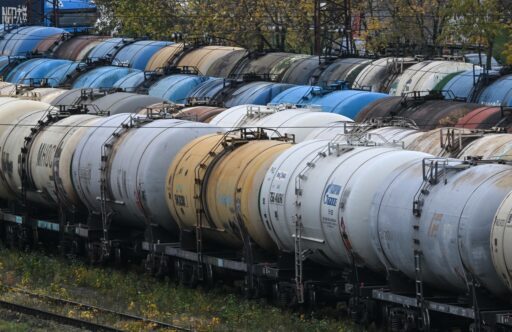
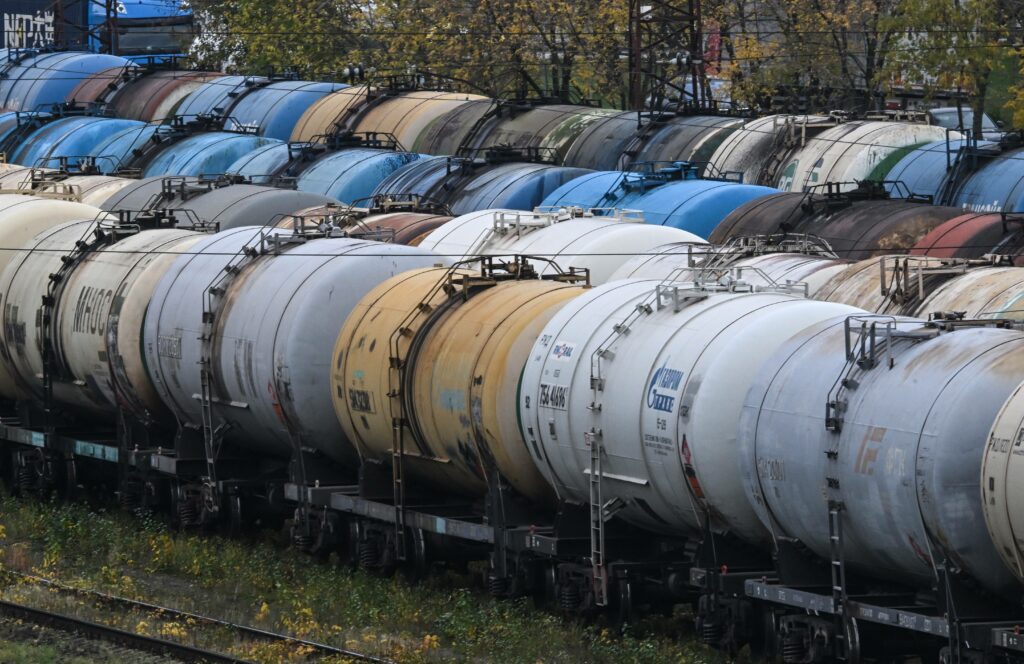
In trade, the dynamics were positive: deliveries of Russian raw materials to Indonesia increased noticeably. In 2021, Russia was Indonesia’s third-largest fertilizer supplier, with US$ 326 million, or 14.8 per cent of imports. By 2025, it was first, with US$ 698 million, or 27.8 per cent.
Russian coal sales to Indonesia rose from US$ 188 million to US$ 901 million over the same period, making Russia the second supplier after Australia. Refined fuel imports rose from US$ 45 million to US$ 860 million. In 2026, under a presidential regulation on oil and fuel purchases for national energy security, Indonesia began importing Russian crude through Lemigas, the state oil and gas testing centre.
Energy Minister Bahlil Lahadalia said in August that the first cargo had arrived and that a long-term contract was being prepared. The EU had already sanctioned the oil terminal at Karimun in Indonesia’s Riau Islands in its twentieth sanctions package of April 2026, describing it as a port “used to circumvent the oil price cap”.
Access in Two Phases
Political access came in two phases. The first was cautious. As G20 chair in 2022, President Joko Widodo visited Kyiv and then Moscow, where he told Putin that the war had had a huge impact on food and asked him not to restrict grain and fertiliser exports. Jakarta kept Russia at the Bali G20 summit that November, which Sergei Lavrov attended in Putin’s place.
When Indonesia chaired ASEAN in 2023, the East Asia Summit chairman’s statement recalled UN resolution ES-11/1, which “deplores in the strongest terms the aggression by the Russian Federation against Ukraine”.
The second phase began before Prabowo took office. In Moscow on 31 July 2024, still president-elect, he reminded Putin that the Soviet Union had helped build Indonesia’s armed forces, adding that Indonesians must “never forget those who help us”. Under his presidency, Indonesia became a full BRICS member in January 2025, while Malaysia and Thailand were admitted only as partner countries. Tenggara Strategics, a Jakarta consultancy, suggested at the time that the early admission had come at Russia’s suggestion.
A month later, Deputy Foreign Minister Sergey Ryabkov held BRICS-sherpa consultations in Jakarta. Indonesia and the Eurasian Economic Union then signed a free trade agreement in St Petersburg on 21 December 2025, which Putin signed into Russian law on 25 May 2026.
The traffic of this phase runs largely one way. Prabowo has met Putin six times since July 2024, once as president-elect and five times as president; none of the meetings took place in Indonesia. Putin’s last visit to the country took place in October 2013, when the APEC summit was held in Bali. Prabowo’s four presidential trips to Russia already exceed Widodo’s two visits over ten years.
Russia’s senior visitors are received with equal warmth. During First Deputy Prime Minister Denis Manturov’s working visit to Jakarta on 16 October 2026, Prabowo received him at the Bogor palace and hosted a dinner attended by the cabinet, armed-forces and police leadership, the three service chiefs and the chair of the Presidential Advisory Council. Prabowo also thanked Russia for past help “to gain independence and to take Papua”.
Neither government published the substance of the talks beyond Manturov’s statement that they covered nuclear technology, space, civil aircraft and shipbuilding. The next day, Putin praised Prabowo as an “experienced and far-sighted politician” with a “principled commitment” to strengthening bilateral friendship.
At the Eastern Economic Forum in Vladivostok on 3 September 2026, Prabowo said Indonesia remained “by tradition, non-aligned” and belonged to no military alliances.
In his speech, Prabowo quoted the Russian proverb “Odin v polye ne voin”—one man cannot fight alone—and paired it with the Indonesian ideal of *gotong royong*, mutual help. Later, Putin returned to this proverb, emphasizing its economic meaning, and then added: “Together we will win.”
Indonesian Sympathy and Russian Presence
Russia’s actual presence in Indonesia remains small while political access grows. In 2024, Russia accounted for 0.8 per cent of Indonesia’s goods trade. In 2023, UNESCO counted 556 Indonesian students in Russia, against 13,920 in Australia.
The one Russian state outlet publishing in Indonesian also withdrew during the war. Russia Beyond, run by ANO TV-Novosti, the organization behind RT, suspended its Indonesian posts on Facebook, X and Instagram in February 2022, retaining only Telegram. In April 2024, it announced it would stop all Indonesian-language publication “for some time to come”. Since then, the publications have not resumed.
Indonesian views of Russia, however, moved the other way. In Pew Research Center surveys, 42 per cent of Indonesians held a favorable view of Russia in 2023, 64 per cent in 2025 and 68 per cent in 2026—the highest share among the 37 countries surveyed that year, where the median was 34 per cent. The unfavorable share barely changed, from 30 per cent in 2023 to 29 per cent in 2026. Most of the increase came from respondents who had previously given no answer.
The available polling on the war itself is older and methodologically uneven. In SMRC’s March 2022 telephone survey, 71 per cent of respondents knew of the war; among them, 51 per cent disagreed with Russia’s attack on Ukraine and 20 per cent agreed. However, when the wording of the question was amended to state that Russia attacked Ukraine allegedly because of Kyiv’s desire to join NATO, the responses among those aware of the war were split almost evenly: 29% approved of Moscow’s decision, while 28% did not.
SMRC’s August 2022 face-to-face survey found 71 per cent of those aware of the war against the attack and 16 per cent for it, while 78 per cent of those aware of the G20 summit backed the government’s decision to keep inviting Russia. A GlobeScan online panel for The Economist in July-August 2024 found Indonesia among five countries where more respondents wanted Russia than Ukraine to win; roughly half of Indonesian respondents chose Russia, and about a fifth Ukraine.
An online panel reaches the urban and connected first, and the chart excludes those who preferred not to answer.
The sources of sympathy lie largely in Indonesian politics and religion. A 2025 study of Russia and Southeast Asia identifies anti-Americanism and a desire to avoid great-power disputes as key factors in regional responses to the war. It also expects religiosity to continue shaping positive perceptions of Russia in Indonesia, Malaysia and Brunei, so long as Moscow maintains support for Palestinian statehood.
The Valdai Discussion Club has described the same reception more instrumentally. Its October 2024 report, “The World Majority and Its Interests”, recommends that Russia disseminate “the discourse that Russia deems correct” in its engagement with the World Majority. On Indonesia, it says sympathy for Russia “is rather confined to military circles and is not part of a broader discourse”. However, this contradicts the results of Pew Research Center surveys, according to which a majority of Indonesians view Russia favorably.
What Moscow Can Expect
The next steps have largely been set by Jakarta. At Vladivostok, Prabowo proposed doubling bilateral trade within the first review period of the free trade agreement, whose entry into force he expected in early 2027. He urged every Eurasian Economic Union member to complete internal procedures quickly and warned that “without reliable payment and settlement channels, trade itself can be paralysed.”
Russia has added space to the agenda. During the October visit, Manturov stated that Indonesia is interested in building a spaceport on its territory, and that Russia is ready to assist with this. His office listed space alongside nuclear technology, civil aircraft and shipbuilding as subjects of the talks. Roscosmos had already discussed space cooperation with the chair of Indonesia’s research agency BRIN in Jakarta in July.
Moscow should also expect to remain only one of Indonesia’s many defence partners. Kompas, the Jakarta daily, framed the Mi-35M purchase alongside the Army’s American AH-64E Apaches as an effort to preserve diplomatic balance amid global polarization. The Indonesian frigate KRI I Gusti Ngurah Rai joined Russia’s Pacific Fleet for the Orruda-2026 exercise in Vladivostok in July 2026; en route home, it held a drill with a Chinese frigate east of Taiwan, prompting concern in Taipei. Jakarta described the exercise as routine.
Indonesian sympathy may also be tested by the war itself. In September 2026, Indonesia’s ambassador in Moscow said the embassy had received “many dozens” of calls from families reporting that relatives had apparently become mercenaries. The embassy reportedly sent a note verbale to Russia’s foreign ministry asking for verification. The author has traced the recruitment routes in an earlier piece for The Diplomat.
As previously noted in Riddle Russia, since 2022 BRICS has primarily served Russia as a tool for shaping a useful narrative and strengthening its foreign-policy image. Indonesia fits that pattern—but with an important qualification: the narrative Moscow gains is phrased in Indonesian terms. In Vladivostok, Prabowo presented the trade agreement as part of a “free and active” foreign policy, telling his Russian hosts that Indonesia works “to the east, west, north, and south as a sovereign and equal partner”.