At the start of 2022, it seemed self-evident that the future of relations between Kazakhstan and Russia would be shaped for years to come by the Collective Security Treaty Organization’s (CSTO) military operation. When the organization deployed a contingent amid the January unrest—known in Kazakhstan as Qandy Qantar, or “Bloody January”—in Almaty, it was clear that Astana’s dependence on Moscow would deepen: the legitimacy, and indeed the very survival, of President Kassym-Jomart Tokayev’s regime now rested directly on Russian security guarantees.
Yet Russia’s full-scale invasion of Ukraine, launched barely a month and a half later, set in motion so many new processes that the political consequences of the CSTO’s January operation quickly receded into the background. The war transformed Russia’s position in the post-Soviet space and reshaped the agenda of its relationship with Kazakhstan. Former red lines in the bilateral dialogue blurred, while factors that had previously simply not existed came to the fore—from sweeping sanctions and parallel imports to drone attacks on oil pipelines. Kazakhstan’s own position changed as well, both in its relations with Moscow and on the international stage.
The defining feature of Russian-Kazakh relations after 2022 has been their growing ambivalence. On the one hand, Kazakhstan remains one of Russia’s most important military-political and economic partners, alongside Belarus and China. On the other, Russian officials, deputies, and state propagandists regularly question Kazakhstan’s territorial integrity, dispute the country’s historical statehood, and openly threaten Astana with a repeat of the “Ukrainian scenario.”
The Kazakh leadership faces a difficult task: to preserve its alliance with the principal guarantor of the regime’s survival while containing the risks posed by that very partner.
A Security Paradox
The new logic of Russian-Kazakh relations has been most visible in the security sphere.
Moscow continues to serve as Kazakhstan’s external political insurer, as it demonstrated so vividly in January 2022. There is mutual understanding between the two countries’ political elites, reinforced both by informal contacts and by an extensive network of institutional ties. The security services of the two states have cultivated close cooperation for decades. Kazakhstan’s National Security Committee (KNB) and Russia’s Federal Security Service (FSB) share a common Soviet legacy, speak the same professional language, and — despite the absence of complete mutual trust — maintain direct channels of communication. The two countries are also linked by a shared air-defense system, military training grounds, the Baikonur space facility, and obligations under the CSTO.
These ties did not disappear with the start of the full-scale war in Ukraine. In September 2022, Kazakhstan readily admitted hundreds of thousands of Russians fleeing mobilization. Yet for Russian political activists and service members who refused to fight, the country did not become a safe haven. On issues sensitive to the Kremlin, Astana often accommodates Moscow: Kazakh authorities have detained antiwar activists at Russia’s request and extradited deserters. The forced deportation of FSO Major Mikhail Zhilin, who fled to Kazakhstan after mobilization began, attracted particular attention. In addition, the two countries’ financial regulators continue to exchange information on the bank accounts of Russian citizens.
At the same time, Astana understands that if Kazakhstan faces an external military threat today, it comes precisely from Russia. These fears are not unfounded. The 2008 war with Georgia, the 2014 annexation of Crimea, and the 2022 full-scale invasion of Ukraine are the three most obvious examples of the Russian state’s aggressive policy toward its neighbors. Kazakhstan shares the world’s longest continuous land border with Russia—more than 7,500 kilometers. Moreover, a significant share of ethnic Russians still lives in the country’s northern regions: more than one million people. In total, Kazakhstan is home to more than 3 million ethnic Russians, or roughly 15 percent of the population.
Astana’s concerns are regularly fueled by statements and actions from Moscow itself. Since Vladimir Putin’s famous remark at the 2014 Seliger forum that Kazakhs had “never had statehood,” territorial claims against Russia’s southern neighbor have become a familiar feature
of Russian political discourse. State Duma deputies Vyacheslav Nikonov and Yevgeny Fyodorov have publicly described Kazakhstan’s territory as a “great gift” and “leased land.” A since-deleted post on the page of Deputy Chair of the Russian Security Council and former president Dmitry Medvedev referred to Kazakhstan as an “artificial state” and to the need to protect Russians in northern Kazakhstan. Propagandists Vladimir Solovyov and Tigran Keosayan openly threatened Astana with a repeat of the Ukrainian scenario.
Most telling for the Kazakh elite is that the Kremlin has never punished those making such statements, signaling that this kind of rhetoric toward its closest ally is entirely permissible in Moscow. Russian Foreign Minister Sergey Lavrov explained such attacks on Kazakhstan as an “inevitable part of democratic life.”
Astana avoids public spats with Moscow at the highest level, but it has consistently prepared for potential threats at home. In particular, Kazakh authorities have made active use of criminal legislation on separatism. Article 180 of the Criminal Code, which establishes liability for separatist activity, was introduced in 2014, shortly after the annexation of Crimea. Since then, even social media posts calling for a referendum on joining Russia have served as grounds for convictions. In 2023, members of the People’s Council of Workers organization in Petropavlovsk, who declared that they did not recognize Kazakhstan’s independence, were sentenced to between seven and nine years in prison. Kazakhstan’s Interior Ministry has also produced a documentary film about such cases, which is actively shown to public-sector employees and to school and university students.
Alongside these measures, Astana has launched a series of military reforms. They were partly a response to the January 2022 unrest, but were driven no less by the war in Ukraine. Since 2021, Kazakhstan has doubled its defense budget, updated its military doctrine, and begun restructuring its armed forces, with particular emphasis on protecting the state border. A full-fledged territorial-defense system has emerged within the armed forces. In parallel, the authorities have carried out “measures for the comprehensive strengthening of defense,” including drone procurement. The Ministry of Defense has also undergone a series of personnel reshuffles.
Astana is also trying to reduce its critical dependence on Russia’s military-industrial complex. Kazakhstan has already agreed to localize the production of Turkish ANKA military drones and is expanding military-technical cooperation not only with Turkey, but also with China and NATO. Dependence on Russia nevertheless remains substantial: more than 80 percent of all arms imports into the country still come from Russian suppliers.
An Economy at War and Under Sanctions
Russia’s full-scale invasion of Ukraine, the sanctions that followed, and Russia’s partial isolation created new opportunities and niches in the economic relationship between the two countries.
First, Kazakhstan has become a kind of window for Russia onto a world free of sanctions restrictions. Deliveries of parallel-import goods through Kazakhstan—mainly electronics—have grown by hundreds of percent in certain categories compared with the prewar years. Total bilateral trade reached nearly $ 30 billion a year—a record in the history of the relationship.
Russian logistics companies have also begun circumventing European bans on the entry of freight transport by routing through Kazakhstan. In the first year of the war alone, the number of companies with Russian capital in Kazakhstan increased by 70 percent. Many were subsidiaries or informally affiliated structures that, among other things, registered their trucks on Kazakh license plates.
Other Russian businesses seeking opportunities to make international payments and purchase imported components adopted a similar strategy. Whereas before February 2022 Kazakhstan was home to approximately 11,000 enterprises with Russian participation, two years later their number exceeded 23,000.
The downside of this new economic activity is obvious. Dozens of Kazakh shell companies implicated in supplying dual-use goods to Russia’s military-industrial complex have fallen under secondary U.S. and EU sanctions, forcing Astana to constantly justify itself to Western regulators.
A second new phenomenon has been the relocation of businesses to Kazakhstan. Before the war, virtually all multinational corporations operated in the CIS markets through their Moscow offices. After February 2022, that model ceased to be viable. As a result, some companies moved their regional headquarters to Almaty and Astana. In 2023, the Kazakh government reported that 35 major foreign companies had relocated their businesses to the country. The number of foreign companies in Kazakhstan continues to grow at record pace.
Some Russian companies have relocated as well. For example, the taxi service inDrive and the game developer Playrix moved thousands of employees to Kazakhstan.
Russian businesses that could not fully leave Russian territory have begun viewing Kazakhstan in a new light. First, as a familiar, growing, and solvent market in terms of business culture. Russian marketplaces Wildberries and Ozon, as well as the Yandex ecosystem, have launched large-scale expansion in the country, building logistics centers in major cities. Second, Russian corporations have come to see Kazakhstan as a jurisdiction where they can relocate the parts of their businesses responsible for dealings with the outside world. As a result, a number of major companies—from the gold-mining giant Polymetal to the Fix Price retail chain—have re-registered in the Astana International Financial Centre (AIFC) in order to retain access to Western investors and protect their foreign assets from sanctions.
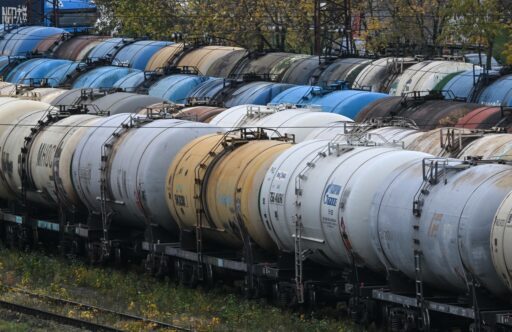
These new opportunities, however, do not erase Kazakhstan’s structural dependence on Russia—above all in energy and transit, as well as within the Eurasian Economic Union. Moreover, Kazakhstan’s oil exports, which account for up to 40 percent of state budget revenues, are inconceivable without Russia. More than 80 percent of Kazakh oil reaches global markets through Russian territory via the Caspian Pipeline Consortium (CPC) to the terminal at Novorossiysk.
Since 2022, Moscow has repeatedly exploited Astana’s dependence for political ends. Russian courts and regulatory bodies have repeatedly suspended oil shipments—sometimes citing environmental violations, sometimes the search for Second World War mines. All of these suspensions have coincided with statements and actions by Astana that ran counter to the Kremlin’s position.
Kazakhstan has also faced problems pumping its oil to Germany through Russia’s Druzhba pipeline. And as the war has expanded deeper into Russian territory, the CPC pipeline has become one of the Ukrainian Armed Forces’ principal targets. The Trans-Caspian route—the Middle Corridor through Azerbaijan and Georgia, actively promoted by Astana—is well suited to container traffic, but it is physically incapable of replacing the CPC: the entire annual volume of oil that tankers can carry across the Caspian is pumped through Russia by the CPC system in just a couple of days.
Moreover, Astana’s energy dependence on Moscow has actually grown over these years. Faced with an acute domestic fuel shortage, Kazakhstan joined the so-called “gas union” with Russia and Uzbekistan. Having lost the European market, Gazprom reversed the Soviet-era Central Asia-Center pipeline and began supplying Russian gas to the region, allowing Astana to meet domestic demand while fulfilling its export contracts with China. In autumn 2024, Kazakhstan held a referendum approving the construction of the country’s first nuclear power plant. Russia’s state corporation Rosatom is assigned a key role in the international consortium implementing the project. This will technologically bind the two countries’ energy systems for decades to come.
Between Russia and the World
Of course, not every process in global politics revolves around the war in Ukraine. But Russian aggression has forced many capitals to view the post-Soviet space anew and pay greater attention to Central Asia—a region long relegated to the periphery of Western diplomacy.
Unlike Tajikistan and Kyrgyzstan, which preferred to maintain the most restrained possible position, Kazakhstan could not afford to remain silent: its long-shared border with Russia substantially raised the stakes. For Astana, publicly distancing itself from Russia’s aggression against Ukraine was not merely a foreign-policy choice; it was also a way to reduce the risk that Western partners would view the country as part of Russia’s orbit.
Astana therefore adopted an unequivocal position from the first months of the full-scale war. In June 2022, at the St. Petersburg International Economic Forum, Kassym-Jomart Tokayev directly declared, in Vladimir Putin’s presence, that the Donetsk and Luhansk “people’s republics” were “quasi-state entities” and that Kazakhstan would not recognize them. In 2026, at an interregional forum in Omsk, he clarified that Kazakhstan does not regard the Russo-Ukrainian war as an internal or civil conflict, thereby underscoring its recognition of Ukraine’s sovereignty and territorial integrity.
The practical steps are even more telling. Tokayev is the only president in Central Asia who has maintained direct official communication and telephone contact with Ukrainian President Volodymyr Zelensky throughout these years. Both the state and private business have sent humanitarian aid to Ukraine. The “Yurts of Invincibility” in Kyiv and Bucha became a symbol of this support.
This position was important both for strengthening relations with Western partners and for reducing the risk of secondary sanctions. At the same time, Western countries themselves were interested in deepening ties with Astana. The movement was thus toward one another.
With the European Union—still Kazakhstan’s largest trading and investment partner—Astana has built intensive dialogue in energy and logistics. Most recently, during Tokayev’s visit to Germany in September 2026, the two sides signed agreements worth $ 2 billion, with the German companies Rhenus Group and Deutsche Bahn agreeing to participate in the modernization of Kazakhstan’s railways and the Caspian port of Aktau.
Relations with the United States shifted from an ideological to a pragmatic footing under the previous administration. Kazakhstan quickly adapted to Donald Trump’s return to the White House. Astana’s diplomats readily switched to the deal-making language favored by the new administration. By promising American business multibillion-dollar contracts and access to critical mineral deposits, Kazakhstan achieved an unprecedented rapprochement with Washington. This rapprochement may not translate into real multibillion-dollar investments or inflows into the country’s economy, but it matters as a factor strengthening Kazakhstan’s negotiating position in its relations with Moscow and Beijing.
China, of course, plays a distinct role in Astana’s geopolitical configuration. In September 2022, Chinese President Xi Jinping chose Kazakhstan for his first foreign visit after the long pandemic-related isolation. In Astana, the Chinese leader publicly declared for the first time that Beijing would “resolutely support Kazakhstan in safeguarding its independence, sovereignty, and territorial integrity, firmly support the reforms (…) being carried out to ensure stability and development, and categorically oppose interference by any forces in internal affairs.” Chinese diplomacy uses the same formulations when setting out Beijing’s official position on Ukraine.
This statement should not be overinterpreted. Xi’s words did not impose any new obligations on China, and Beijing certainly has no intention of assuming the role of Kazakhstan’s military shield against nuclear-armed Russia. The only multilateral regional-security mechanism involving China in which Kazakhstan participates is the Shanghai Cooperation Organization (SCO). But Russia belongs to the same organization, and the format hardly inspires confidence as an effective institution.
Nevertheless, the Chinese leader’s statement, made at the height of the war in Ukraine, sent a signal that every observer could interpret in their own way. For Astana, it confirmed that Kazakhstan has China’s support should the need arise. For the Kremlin, it offered reason to reflect on the ambiguity of what had seemed a merely formulaic phrase.
Legitimacy Reset Twice
All of these foreign-policy and economic maneuvers run up against Kassym-Jomart Tokayev’s principal domestic political problem—the one that makes relations with Russia genuinely contradictory.
Tokayev understands perfectly well that in the critical moment of January 2022, his regime survived largely thanks to Vladimir Putin’s intervention and the deployment of CSTO troops. For any president, it is uncomfortable to be in the position of a leader whose power rests on the external military support of an unpredictable neighbor—especially at a time when the war in Ukraine has stirred pre-colonial reflections within Kazakh society, increased demand for the Kazakh language, and prompted a reassessment of Soviet history and Russia’s role in it.
It is precisely the desire to escape this double trauma that explains all the sweeping political changes in Kazakhstan over the past four years. These concern, on the one hand, dependence on Nursultan Nazarbayev’s political legacy, and, on the other, the “January debt” owed to Vladimir Putin. Tokayev has launched a continuous institutional restructuring with a single aim: to reset the old legitimacy and build a new one based exclusively on domestic mechanisms of power.
In 2022, Tokayev initiated constitutional reform and held early presidential elections, securing a new seven-year mandate. By 2026, the process had reached its final stage: the Senate was abolished as the country moved to a unicameral parliamentary model, elections were returned exclusively to party lists, and early parliamentary elections were held in August 2026, won by the new pro-presidential Adilet party. The Constitutional Court opened up a legal path for Tokayev to run for president again in 2029 under the new constitution. All of this is intended to reaffirm his legitimacy.
Tokayev understands that, in the event of another major domestic crisis, Russia still possesses significant coercive resources to which the Kazakh leadership could theoretically turn to preserve the regime. But he also understands the price of such a decision: in today’s realities, another call for Russian military intervention would mean the final loss of sovereignty. This is the fundamental paradox of the current ambivalent alliance. And so, when it comes to holding on to power, suppressing protests, and preventing elite fragmentation, the Kazakh leadership is left with no choice but to rely on its own resources. te