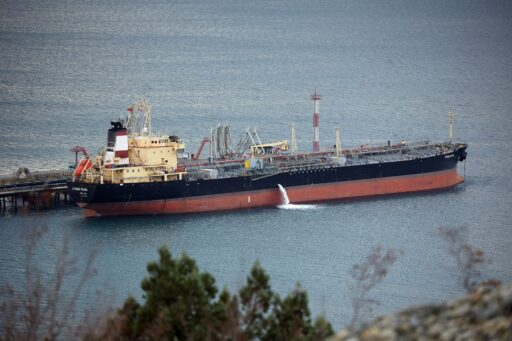
Two weeks have passed since U.S. special forces stormed Caracas, captured Nicolás Maduro, and whisked him off to face charges in New York. Yet Vladimir Putin has uttered not a single public word about it. Venezuela has long been touted by Kremlin propaganda as one of Moscow’s staunchest allies—a key node in the «axis of resistance» against Western dominance. Silence also surrounds the recent U.S. seizures of «shadow fleet» tankers, including one Russian-flagged vessel that raised its national colors during a chase—though neither the flag nor the gesture spared the ship or its crew. Equally absent from Putin’s commentary are Donald Trump’s thinly veiled hints at regime change in Cuba, or the ongoing unrest shaking Iran.
One would expect swift, forceful Kremlin responses to crises hitting friendly regimes. For years, Russia—led by Putin—has championed a «multipolar world» where authoritarian governments deserve respect and immunity from outside interference. Moscow casts itself as a reliable great power ready to shield its partners and allies from external threats. This narrative serves both foreign-policy branding and domestic consumption: cozy up to Russia, the message goes, and you gain ironclad protection.
The protection, of course, applies mainly to regimes loyal to the Kremlin, not necessarily to the states themselves. In 2015 Russian media celebrated the military lifeline that saved Bashar al-Assad in Syria. By late 2024, however, his regime’s collapse was quietly swept under the rug (it turned out Assad wasn’t quite the indispensable ally after all). Meanwhile Venezuela—where Maduro’s grip once appeared rock-solid—along with Cuba and Iran remained poster children for Moscow’s circle of steadfast friends, countries Russia would supposedly defend at all costs. Yet the Syrian script replayed itself in Venezuela, and Putin has offered no explanation.
At first, his silence could be chalked up to the New Year holidays. Once those ended, the president found time for work meetings with First Deputy Prime Ministers Denis Manturov and Marat Khusnullin, and even a session with Yaroslavl Region Governor Mikhail Evrayev. That last encounter was almost certainly pre-recorded footage («canned» material): such visits require advance quarantine protocols, and Evrayev was holding public events in Yaroslavl right before the meeting was announced. Time for clarifying Russia’s stance on Venezuela, Cuba, Iran, or the detained tankers? Apparently not.
On January 15, Kremlin spokesman Dmitry Peskov previewed that Putin would address «key foreign-policy issues» during a credentials ceremony. The speech, however, stuck to boilerplate phrases about «non-interference in internal affairs» and «respect for sovereignty.» No mention of Venezuela, the United States, or the dramatic events in Caracas.
The Kremlin is clearly falling back on a well-worn playbook: say nothing about an embarrassing setback—in this case a glaring blow to the image of Russia as the «senior partner”—and hope the story fades from the news cycle. An added motive is the desire not to antagonize Donald Trump unnecessarily, in hopes of eventual thaw in relations. The lack of any concrete action or even clear statement is already stirring unease among hardcore «ultra-patriots,» who are beginning to question the Kremlin’s strength and reach. Nor is it likely that the casual «loss» of Venezuela will go unnoticed by wider audiences: for years they were fed the image of a broad network of friends that Moscow stands ready to defend.
Putin alludes vaguely to violations of «sovereignties» and «interference» in internal affairs without naming names—as though dodging direct confrontation and afraid to say too much. This Aesopian language, laden with hints, omissions, and circumlocutions, echoes the wooden rhetoric of late Soviet stagnation and comes across as even more feeble than outright silence. Instead of projecting the image of a formidable protector, the figure on stage appears wary of speaking plainly.
Parliament behind closed doors
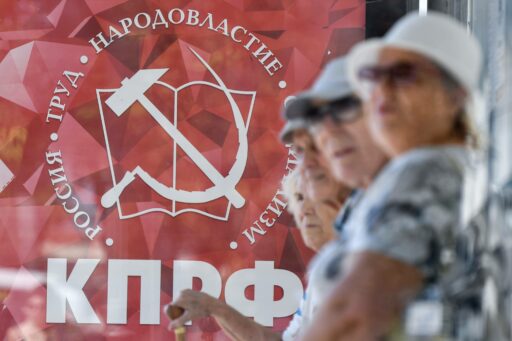
State Duma Speaker Vyacheslav Volodin has advised deputies to debate controversial or unpopular bills in closed sessions first, only bringing them to the floor and public discussion afterward. The remark came during the closed portion of a plenary meeting.
«We must find ways to discuss the most sensitive and even unpleasant topics, recognizing that it is necessary,» Volodin was quoted by Vedomosti as saying. «And do so in this [closed] format—if we want to achieve a solution, rather than some other outcome.»
He also urged committees to prepare questions for the government well in advance of the annual cabinet report—through closed committee meetings, sessions with ministers, and dialogues between Prime Minister Mikhail Mishustin and faction leaders. Unlike full Duma sessions, these formats can be held behind closed doors, filtering out sharp questions and criticism of officials before they reach the public eye. Meanwhile, United Russia deputies received a reminder letter from leadership: photographers are always present in the plenary hall, so behave accordingly.
Clearly, after the recent scandal involving paid roundtables in the Duma, Volodin is tightening the screws and working to prevent further public embarrassments. His prescription: handle the most contentious and potentially toxic issues strictly in closed committee and commission settings, only presenting society with a fait accompli once decisions are locked in.
Volodin’s zeal is understandable: he is fighting to keep his job. He likely realizes that no equivalent or higher position awaits him in the system. In post-Soviet Russia, Duma speakers rarely last beyond two terms, and Volodin’s second is nearing its end. Yet Putin’s ultra-conservative approach to personnel—favoring long-familiar, utterly predictable figures—gives him hope. Anton Vaino holds the record for longevity as presidential-administration head; Valentina Matviyenko and Sergei Lavrov have long held their posts and would prefer quieter roles. Volodin could join this club of «eternal» functionaries, but public scandals in the Duma and the passage of unpopular laws clearly hurt his case. Nor does his long-standing bureaucratic feud with Kremlin political overseer Sergei Kiriyenko help; after moving from first deputy chief of staff to speaker, Volodin tried for a while—via proxies—to retain influence over United Russia, much to Kiriyenko’s irritation.
During his first term as speaker, Volodin emphasized the importance of parliamentary institutions and publicity in an effort to underline his value to the power vertical and to Putin personally. He acted like a politician: publicly dressing down government officials, demanding that regional deputies show similar visibility and activism. Now the vertical has grown even more closed-off, and a parliament with even limited autonomy is no longer needed. Deputies have become high-ranking bureaucrats whose job is to fast-track required legislation, assist in drafting it, and refrain from asking awkward questions.
Many committee chairs—Andrei Makarov (budget) or Pavel Krasheninnikov (state-building), for example—have held their positions for multiple convocations. Their working style is far closer to that of officials than to classic parliamentarians. In this system the Duma’s role has shrunk to a ceremonial-procedural and status function. Volodin appears ready not only to accept but to accelerate this transformation—turning the lower house into a closed bureaucratic machine where thorny, unpopular matters are hashed out behind shut doors, and the public is presented with accomplished facts. This runs directly counter to any traditional understanding of a parliament’s purpose. But for any participant in today’s vertical, preserving one’s own place in the hierarchy clearly outweighs loyalty to the institution itself.