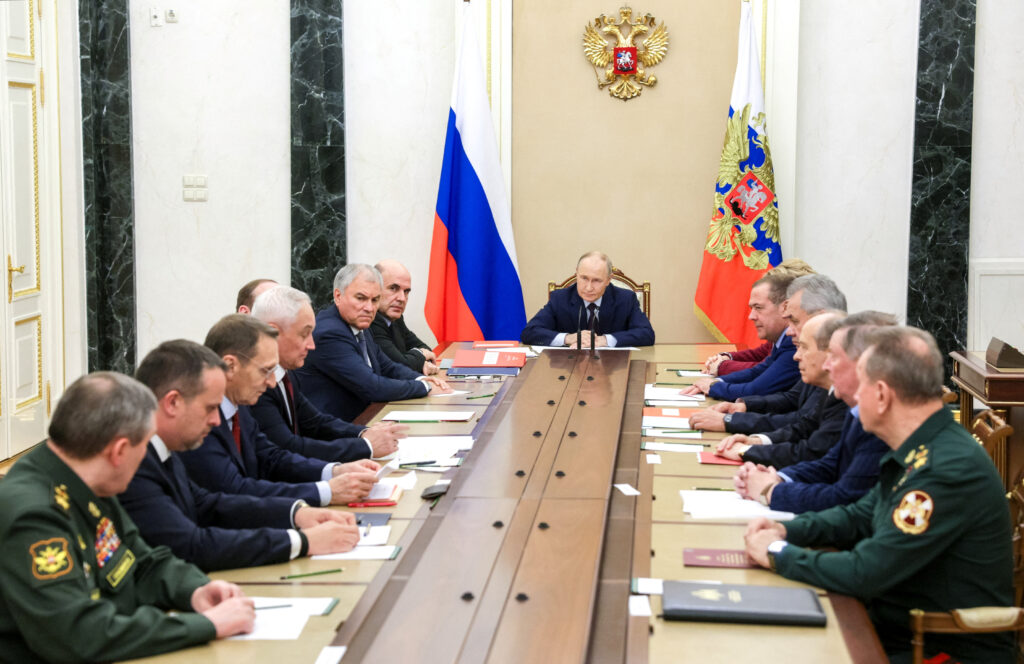
In 2025, the war in Ukraine firmly dominated Vladimir Putin’s public narrative. He increasingly met with military personnel and recounted detailed conversations with frontline soldiers. Putin could expound at length on the tactics involved in capturing small Ukrainian towns and villages—names he had committed to memory (unlike, say, those of mid-sized cities in Tomsk Region).
Some observers saw this as a signal to Donald Trump: Russia is prevailing and prepared to fight indefinitely, so Washington should pressure Kyiv into accepting the Kremlin’s terms. But the reality points elsewhere—Putin is simply indulging in what he genuinely enjoys.
At a Kremlin awards ceremony, television host Vladimir Solovyov—a keen student of Putin’s psychology and worldview—declared that the war had restored meaning to his generation’s life and that «man is made for war.» These remarks were likely aimed first and foremost at the president himself. Both Solovyov and Putin consistently disregard the broader public’s sentiments, as the country has long grown weary of the conflict.
Economic and social hardships barely register in the president’s attention—this was evident from his annual call-in show and the traditional meeting with business leaders. Putin remains convinced that the economy can adapt to any conditions, while citizens must simply endure higher taxes and prices. His only concession is to suggest that these difficulties might be «temporary» (though they might not be).
Meanwhile, Russia’s political system continues its rapid transformation: intra-elite conflicts proliferate, and long-established rules of the game are routinely breached.
The Elite on the Defensive
One of the most dramatic events of 2025 was the sudden death of former Transport Minister Roman Starovoit shortly after his dismissal and amid mounting pressure over an impending criminal case. Starovoit and his team were scapegoated for failures in repelling the Ukrainian incursion into Kursk Region, shielding top leadership and the security services from scrutiny. This tactic largely succeeded.
Starovoit’s persecution shattered many entrenched norms of the power vertical. A core principle had been guarantees of immunity in exchange for loyalty. Reaching a certain level granted officials a form of indulgence, revocable only in cases of direct conflict with Putin’s inner circle (as with former Economy Minister Alexei Ulyukayev). Affiliation with a powerful clan further reinforced such protections. Starovoit, part of the bureaucratic network tied to the Rotenberg brothers, should have enjoyed ironclad security under the old rules. It failed to materialize.
Repressions against the bureaucratic elite have surged overall. Arrests of vice-governors, regional ministers, or mayors of significant cities are now commonplace. According to Novaya Gazeta Europe estimates through mid-October 2025, criminal cases were opened against 155 senior officials—compared to around 50 annually in pre-war years.
Nationalizations have targeted enterprises owned by prominent regional business figures. Many of those affected held positions in regional United Russia branches, served as key party donors, and received state honors. A prime example is Konstantin Strukov, former owner of Yuzhuralzoloto in Chelyabinsk Region.
The municipal reform abolishing urban and rural settlements has eroded the grassroots foundations of the bureaucratic apparatus. Everything that once made the power vertical resilient began to crumble in 2025. No new mechanisms or rules have emerged to replace them—and none are likely in 2026. War participants have not become the promised «new elite»: they receive minor posts or «veteran» status is bestowed on senior officials and deputies. Meanwhile, the old elite—still propping up the system—faces mounting blows and growing frustration.
Kiriyenko’s Empire
First Deputy Head of the Kremlin’s domestic political bloc Sergey Kiriyenko significantly consolidated his position in 2025, despite seeming unlikely to advance further at the end of 2024. Beyond overseeing domestic politics, cadre competitions, education, Rosatom, and annexed territories, Kiriyenko secured control over the Kremlin’s «external contour.» A new department for strategic partnerships—handling influence operations in the post-Soviet space and Africa—was placed under him, a goal he pursued methodically throughout the year.
It began with Abkhazia. Kiriyenko’s team backed pro-Kremlin candidate Badra Gunba in the unrecognized republic’s presidential election. Though Gunba failed to win outright in the first round, opposition claims of widespread fraud followed the runoff. Kiriyenko nonetheless defended the outcome to Putin, who promptly met with Gunba. This paved the way for the domestic political bloc to assume oversight of unrecognized South Ossetia, Armenia, Moldova, and even Africa.
From May 2025, Kiriyenko pushed for a new presidential administration department or reassignment of an existing structure. Initial efforts faltered, as the post-Soviet space and influence operations were then curated by Dmitry Kozak—a longtime Putin ally and former deputy head of the administration. Kiriyenko highlighted Kozak’s team’s missteps, including in Abkhazia. In August, The New York Times published profiles portraying Kiriyenko as Putin’s loyal soldier and Kozak as a war opponent favoring reforms. Soon after, the external contour passed to Kiriyenko.
Kozak lingered briefly as a «minister without portfolio”—a deputy with no clear remit or subordinates. Putin then offered him the plenipotentiary role in the Northwestern Federal District—a demotion. Kozak declined and left the administration.
Such aggressive expansion and near-open bureaucratic rivalry were once taboo in the power vertical. Kiriyenko crossed that line—and prevailed.
The new department’s creation counts as another victory. Kozak’s former units were staffed mainly by security service veterans. With carte blanche, Kiriyenko sidelined outsiders. The department is headed by Rosatom executive Vadim Titov, with subordinates drawn largely from the domestic political bloc.
By year’s end, Kiriyenko had emerged as one of the most influential figures in Russia’s power structure. Unlike most peers, he did not await favors from above but actively expanded his domain, offering Putin solutions and services. Yet the broader his remit, the harder it becomes to defend. Rivals eager to expose errors will always surface—security services on domestic matters, intelligence agencies on the external contour. Kiriyenko’s team lacks administrative leverage there; Kremlin technologists long ago lost expertise in genuine competitive campaigns. In 2023, a political bloc coalition failed to secure victory for a United Russia candidate in Khakassia’s gubernatorial race, losing to a communist.
A key question for 2026 is whether Kiriyenko can safeguard his expansive influence zone and create opportunities for further growth—perhaps by absorbing the government’s social bloc, using the playbook tested against Kozak. Groundwork exists: ally Andrey Polosin oversees ideological and propaganda disciplines in universities, while budget-funded sectors are tied to corporate election mobilization.
Ideology from Kharichev
A cornerstone of Kiriyenko’s expanded political bloc in 2025 was crafting an official ideology for Putin’s Russia. This task fell to close associate Alexander Kharichev, head of the Kremlin’s social monitoring department.
A political consultant long specialised in regional campaigns and gubernatorial relations, Kharichev unexpectedly became the regime’s «ideologue» and philosopher when needed. Starting with a vague «pentabasis» in late 2023, by 2025 he identified core traits of the «Russian character»: collectivism, patriotism, service, and self-sacrifice. Sociological data contradicts this—Russians tend toward individualism, valuing personal autonomy. Yet Kharichev’s categories align perfectly with Putin’s views, who has publicly stated citizens would rather «die in war than from vodka» and that business must adapt to state imperatives.
These quasi-academic efforts target the president above all. The emerging ideology justifies unpopular measures—tax hikes, war prolongation, restrictions—as supposedly tolerable to «collectivist» and «sacrificial» citizens.
Kharichev goes further, advocating education of a «person of the future» suited to preserving Russia’s «civilizational system». This echoes a quasi-military logic of fulfilling preset tasks—set, naturally, by the authorities.
While Putin remains in power, the political bloc will continue producing texts on popular self-sacrifice and obedience. But a leadership change could easily repurpose Kharichev’s ideology into a corporate variant, shedding «sacrifice» for business-friendly «mission» and swapping «collectivism» for «teamwork.»
The Kozak Question
Dmitry Kozak’s voluntary resignation—following Kiriyenko’s aggressive expansion—was a bold move by power vertical standards. He rejected Putin’s offer of the Northwestern Federal District plenipotentiary post, choosing his own path. His exit signaled Putin’s final devaluation of old allies holding independent views on the country’s course and the war. Rationalists willing to defend positions were never favored, but 2025 forced a stark choice: full alignment with the war and current policy, or departure. Kozak chose the latter—perhaps influenced by age and health. Unlike Kiriyenko, he is not in the succession race or vying for the premiership, allowing decisions based on conviction rather than expediency.
Kozak’s detractors continue periodic reminders to top leadership, with media leaks about his «reform plans» and increased foreign travel. These are aimed solely at Putin, suggesting rivals fear retaliation and Kozak’s lingering influence. Frequent war-focused reminders of Kozak’s proposals are likely to irritate Putin further. Yet Kozak’s counterstrike potential is not zero; the departed rationalist may resurface in 2026.
Elections on the Horizon
The presidential administration’s political bloc is gearing up for the State Duma campaign, though contours remain fluid and hinge on whether the war continues or ends.
Despite declining authority ratings and rising social discontent, the Kremlin targets a new United Russia record—at least 55%, ideally 65%. Even loyal VTsIOM polls show the party at 35%; growth seems improbable amid worsening economic and social strains.
The political bloc long ago shifted from quality persuasion to corporate mobilization and adjusting vote tallies to meet KPIs at polling stations. Proven methods will likely dominate. Sharp rating drops could force «heavy artillery”—Putin heading the United Russia list, maximizing administrative effort for the president’s personal result.
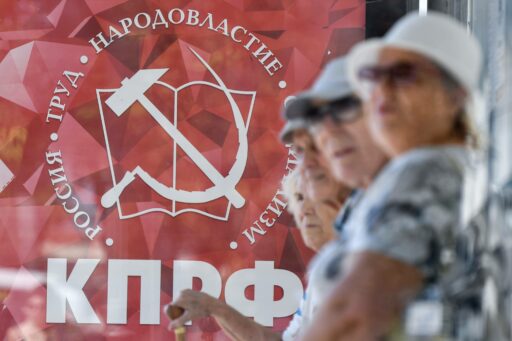
Other Duma KPIs are clear: the Kremlin-managed LDPR should displace the KPRF as the second-most popular party. Success is far from guaranteed, even with full administration backing. The KPRF, despite Stalinist leanings and war support, capitalizes on social grievances—the more problems, the stronger its potential. LDPR’s vague social slogans under lackluster leader Leonid Slutsky are unlikely to compete in crisis. The Kremlin recognizes this, applying pressure on strong KPRF regional branches (e.g., Altai Krai, Lipetsk Region).
Harsher measures target Yabloko, campaigning on «For Peace and Freedom.» Exempt from signature collection for Duma registration, its simple slogan could channel war-weary protest votes. The administration will likely block participation, preventing a recognizable list: deputy chairs Lev Shlosberg and Maxim Kruglov are detained, other figures face disqualifying charges. If a list forms, registration could be denied on procedural grounds.
Overall, the Kremlin advances a «systemic opposition«—fully controlled parties with appointed leaders and empty slogans. The political bloc has reshaped LDPR accordingly and now seeks to neutralize ideologically misaligned communists and marginal Yabloko liberals.
Rigidity Turning Fragile
In 2025, surveys indicate Russian society is definitively exhausted by the war: most favor peace talks. The power vertical and loyal business—operating under emergency conditions for nearly four years—feel this fatigue too. It alters the vertical’s operating rules. Victims include former minister Starovoit and loyal regional tycoons whose assets were nationalized.
New rules remain undefined, breeding uncertainty that disorients the elite. Recruitment for gubernatorial posts falters amid mass arrests and regional budget shortages—the role grows unappealing and risky.
The vertical, reliant on regional/municipal bureaucracy and loyal local business (including election mobilization), is devouring itself. It hardens—nationalized assets flow to major clans, municipal bodies abolished—yet grows fragile as its base erodes.
The Kremlin shows no intent to reverse course. The new direction has clear beneficiaries—chiefly Sergey Kiriyenko, steadily amassing influence. This stems from crafting a comfortable reality around Putin: «Time of Heroes» participants and cadre contestants publicly endorse the war, fostering illusions of popular approval and motivating continued policy. Deputy Maxim Oreshkin feeds optimistic economic adaptation narratives. Even the call-in show aired sharp questions on taxes and prices—real public concerns—without presidential answers.
This widening president-society divide, increasingly hard to bridge, became 2025’s dominant political theme. It will likely shape 2026. Russia teeters on economic crisis, threatening political upheaval.