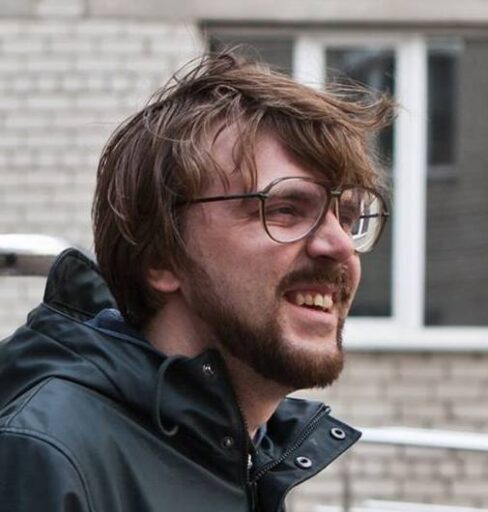
Russia’s systemic parties have started featuring Denis Maksimov, the owner of the suburban Moscow bakery «Mashenka,» in their PR efforts.
«Remember the owner of the ‘Mashenka’ bakery in the Moscow region who spoke to the President during the Direct Line? The entrepreneur will continue standing up for small business — now as part of the LDPR,» the Liberal Democrats’ official Telegram channel announced.
The party has invited Maksimov to join its economic council. He first shot to fame after raising the issue of a sharp tax hike on small businesses during the President’s annual Direct Line broadcast.
«Starting this year, we’ll have to pay income tax and VAT. That means hiring a professional accountant and taking on extra costs. Honestly, we’re looking to the future without much optimism. A lot of businesses will shut down or go underground,» Maksimov said at the time.
Soon after the broadcast, he publicly announced plans to close the bakery — even though a basket of his pastries had been handed to Putin, and the president was filmed eating one on camera. Economic Development Minister Maksim Reshetnikov quickly stepped in to «save» Mashenka, briefing the head of state on ways Maksimov could lighten his tax burden. Later, the bakery’s products were gifted to Steven Witkoff, a close aide to U.S. President Donald Trump, who visited Moscow for another round of talks.
By late January 2026, Maksimov was already telling journalists he would most likely expand the business and open another 5−6 new outlets. The secret to his turnaround? Simple, and he didn’t hide it: the Moscow region authorities promised to fully cover the rent and equipment costs for the new locations.
In just a few days, thanks to efforts from the Kremlin and pro-government media, this suburban entrepreneur became a momentary celebrity. It’s no surprise that the LDPR — which is aggressively recruiting pop figures, bloggers, and other media personalities ahead of State Duma elections — latched onto him immediately.
After the death of the party’s founder, the flamboyant populist Vladimir Zhirinovsky, and the arrival of deputy Leonid Slutsky — whose leadership began with a string of high-profile scandals — the LDPR has become a structure without a clear ideology or recognizable face. It lacks any real internal core. In such circumstances, party leaders have little choice but to fill their ranks and public image with noticeable ambassadors. Otherwise, the Kremlin’s task of displacing the CPRF from its position as the country’s second-largest party remains impossible for Slutsky and his team.
For his part, Maksimov is speaking cautiously about cooperating with the LDPR: he says he’s considering the offer but hasn’t made a final decision. Right now, any mention of «Mashenka» and its owner genuinely draws attention from audiences and the media. The buzz might last a few months and even carry into the start of the Duma campaign. Still, the very act of recruiting such figures into a fully Kremlin-controlled establishment party vividly illustrates the ideological and personnel dead end in which the entire «systemic opposition» now finds itself.
Even as public sentiment — fueled by rising prices, job difficulties, and general exhaustion — begins tilting toward protest voting, party operatives under heavy censorship and full control from the political bloc opt for the safest, most curator-friendly ways to grab attention. Partnering with Maksimov, who enjoys official patronage, is unlikely to win the LDPR votes from real entrepreneurs facing the same problems but receiving zero help — let alone from owners of failed businesses.
«New» Faces, Same Old Game
The New People party (NP), created with backing from the Presidential Administration’s political bloc for the 2021 Duma elections, operates on exactly the same logic. NP plans to bring actresses Anfisa Chekhova and Liza Moryak, along with popular bloggers, into its Duma campaign. Its federal top three is already set: party leader Aleksey Nechayev, his deputy and former presidential candidate Vladislav Davankov, and former Yakutsk mayor Sardana Avksentyeva. Keeping the federal portion small (up to about 15 people total) makes sense for NP — it helps motivate regional branches.
Unlike United Russia’s announced top five — whose final lineup could still change dramatically — NP’s federal trio is highly likely to stay intact. Beyond Nechayev, Avksentyeva, and Davankov, the party simply has no other prominent figures. There’s no point in the Kremlin artificially pushing moderately liberal officials or big businessmen onto their list; it would only hurt United Russia’s results.
The makeup of NP’s top three also highlights the party’s internal weaknesses. In 2021 it scored well and entered parliament largely thanks to a clever name and brand that tapped into public demand for «new faces» in politics. But the actual recruitment of those new people effectively ended right after the campaign. Back then, the party didn’t bring in promising regional politicians or standout local business owners — people who still exist in Russia.
Instead, Aleksey Nechayev chose to promote loyal graduates of his «Business Captains» course. Or the party fielded Kremlin-suggested candidates from the ranks of «old» regional elites or participants in presidential cadre contests. That approach hasn’t changed. New People keeps reshuffling the same «captains» as heads of regional branches. Many of these «leaders» openly back initiatives from governors or the Kremlin even when those directly contradict the party’s stated agenda.
For example, the NP faction votes for bills abolishing the first tier of municipal government. The «captains» move sideways, not upward. As a result, the party has almost no candidates for a large federal list — perhaps except for the flashy deputy Ksenia Goryacheva, who has learned to stand out in the Duma with eye-catching speeches and extravagant outfits (think kokoshnik headdresses). Yet even she wasn’t placed in the federal portion, though options remain for her — for instance, if Vladislav Davankov is appointed governor somewhere.
New People may still limp through the 2026 campaign on its old brand. But by the next Duma elections, party leadership and the AP political bloc will either have to genuinely find and promote fresh figures, or the Kremlin will opt to create an entirely new structure aimed at urban voters — assuming top leadership still sees value in maintaining the facade of imitative multipartyism. If that facade is deemed an unnecessary relic of the past, the services of the «systemic opposition» will no longer be required. And in the event of any democratic shifts, the prospects for artificial parties built with AP involvement look even cloudier.
A List Without a Head
The Vologda regional parliament has gone even further and abandoned a unified regional list altogether for the upcoming election of a new convocation (set for September this year). The region is run by the flamboyant governor Georgy Filimonov, who also heads the local United Russia branch.
Filimonov is notorious for a series of controversial moves: an effective (though unofficial) ban on abortions (with prosecutors trying to push back against his behind-the-scenes orders), shutting down liquor stores, and erecting Stalin monuments. Naturally, these steps do not thrill the local population. His policies are openly criticized even by heads of neighboring regions, who are already dealing with «alcohol tourism» from Vologda residents crossing borders to buy booze.
Dropping the unified list is a straightforward admission that the Vologda authorities — and Filimonov himself — recognize their rating problems and understand how residents view them. Normally, regional heads eagerly lead United Russia lists: the campaign lets them boost their own approval ratings, which count toward mandatory Kremlin KPIs. Despite his love of publicity and loud statements, Filimonov is deliberately distancing himself from the United Russia list. Had there been a unified regional portion, he — as branch head — would have had to top it, and a poor party result would automatically reflect on the governor personally. Filimonov solves the problem in the simplest way possible: he eliminates the unified candidate list entirely.