2025 brought neither a formal end to the war in Ukraine, nor a major crisis in Russia, nor breakthrough decisions edging the parties toward a just peace. In that sense, it continued the pattern of prior years—protracted, exhausting, and unpromising. Yet 2025 did see a shift that could prove symbolic and potentially influential in the coming year: sanctions on Russia began eroding the very foundation of its economic resilience—the oil rent.
This argument often meets skepticism. In public and expert debates, sanctions are frequently judged by their failure to halt the war outright, leading to the common conclusion that they are ineffective or even pointless. But this confuses the metric of success. Oil sanctions were never designed as a tool to immediately stop hostilities. Their aim was different: a gradual reduction in Russia’s oil and gas revenues—the financial underpinning of the war—while keeping Russian oil on global markets to avoid shortages and price spikes. As Russia remains one of the world’s top suppliers, accounting for over 10% of global production, abruptly removing its volumes would inevitably drive prices higher, harm importing nations, and potentially boost Russia’s total oil earnings.
This explains the apparently contradictory effects in the early years of the full-scale war. Since 2022, the European Union has adopted nineteen sanction packages, yet Russia’s economy adapted: export flows were redirected, evasion routes for sanctioned goods established, and the budget continued receiving substantial oil and gas income. For Russia, the sanctions regime appeared as a necessary but manageable constraint—one that curbed long-term growth more than it imposed critical costs on war financing.
Adaptation, however, is not the same as resilience. It came with rising transaction costs, persistent price discounts, more complex and expensive trade and logistics schemes, declining margins, and a gradual erosion of oil rent—processes whose effects accumulated but long remained invisible at the budget level.
Against this backdrop, the first U.S. sanctions on Russia following Donald Trump’s return to the White House—most notably placing state-owned Rosneft and privately held Lukoil on the stringent SDN List—did not initially seem a qualitative leap. Especially since smaller firms like Surgutneftegaz and Gazprom Neft had been added earlier in 2025 without triggering a collapse in the oil sector or sharp budget revenue drops.
Yet viewing the measures against Rosneft and Lukoil not as another symbolic or impromptu step, but as a core element in the West’s consistent strategy to devalue Russia’s oil rent—without displacing its oil from global markets or destabilizing prices—reveals this as potentially the tipping point that could break the camel’s back.
Carriers of the Rent
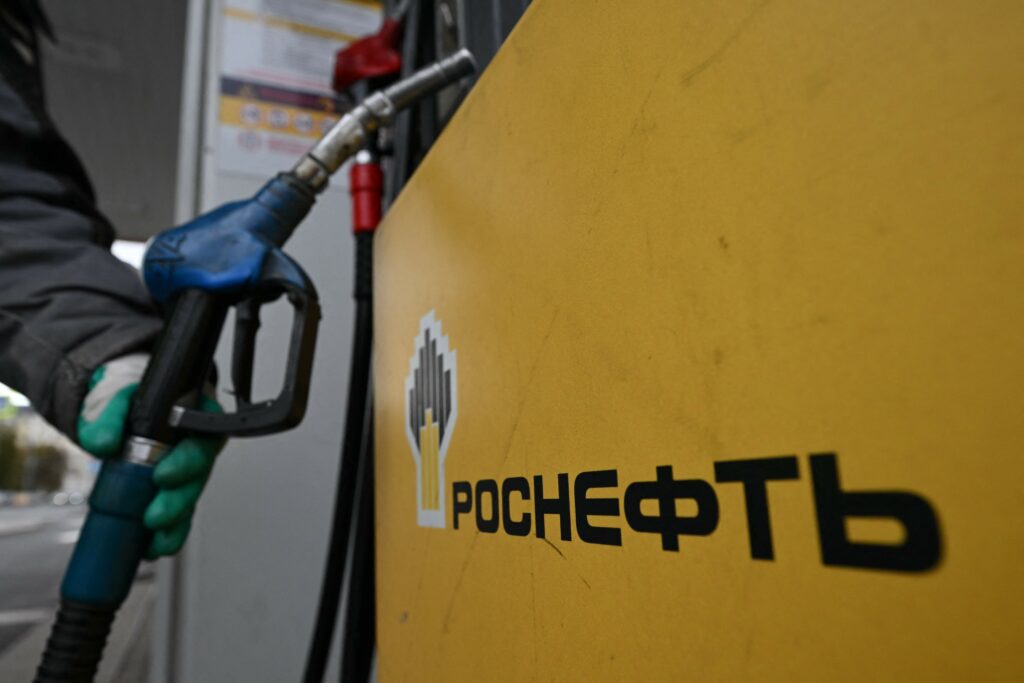
Oil rent does not exist in the abstract; it concentrates in specific corporate structures that redistribute it to the budget. In Russia’s case, these are primarily the largest vertically integrated oil companies, capable of extraction, export, logistics management, and income allocation across markets and jurisdictions. Rosneft and Lukoil hold central roles here, capturing a large share of the rent and converting it into fiscal revenues, investments, and foreign exchange earnings.
Before the war, both were systemic players in the global oil market, building overseas infrastructure over decades, expanding sales access, and deeply integrating into worldwide trade, finance, and logistics chains. They held significant foreign assets—from stakes in upstream projects to refining capacity and trading arms in Europe, Asia, the Middle East, and Africa. Their models relied on international financing, insurance, shipping, and Western services. Pre-2022, Lukoil ranked among the world’s top private oil firms by market cap, while state-controlled Rosneft served as a key tool for Russia’s geo-economic influence on global oil balances. Together, they produced around 7 million barrels per day (about 5% of global output) and formed the core of Russia’s export and fiscal stability in oil.
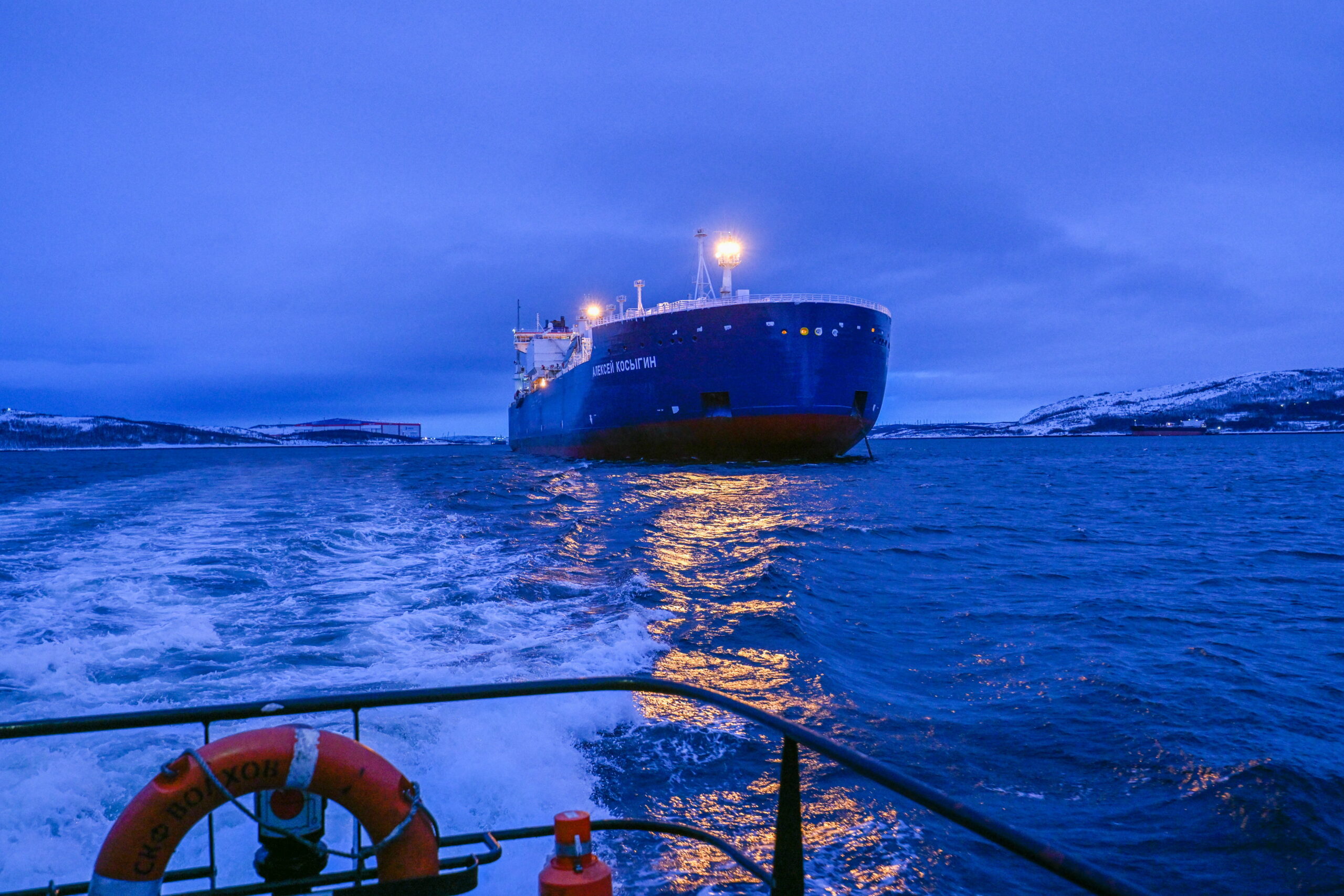
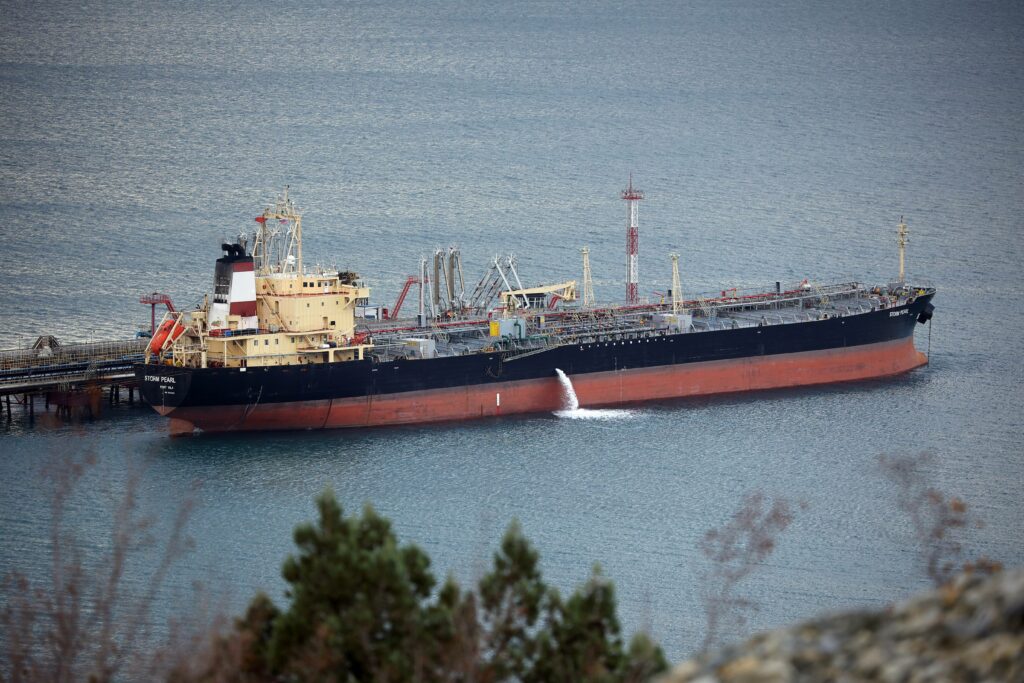
Early sanctions focused on trade restrictions, logistics, insurance, servicing, technology, and price caps—but spared the largest corporations—had limited impact on the rent. Rosneft and Lukoil rerouted exports via shadow tanker fleets, ramped up deliveries to India, China, and Turkey, employed alternative chains and intermediaries, and partly offset discounts with higher volumes, preserving nominal financial stability.
The key feature of this adaptation was that costs accrued internally within the corporate perimeter, while budget impacts remained muted. Surging global prices in 2022−2023, followed by heavier industry taxation, allowed the state to extract much of the income. In 2024, Russia’s oil and gas budget revenues rose 26% year-on-year despite sanctions. Rosneft’s revenue hit a record 10.2 trillion rubles (+10.9% from 2023, +15.9% from pre-war 2021). Lukoil’s reached 8.6 trillion rubles (+8.7% from 2023), though still below 2021 levels (-8.5%). These came with massive budget contributions: over 6 trillion rubles from Rosneft (around 17% of federal revenues) and about 2 trillion from Lukoil. Their combined taxes exceeded those from sectors like finance, metals and mining, chemicals, power, diamonds, telecoms.
At the same time, both faced sharp net profit declines, reflecting higher taxes, transaction costs, and shrinking margins under tightening sanctions. The negative trend accelerated. Rosneft’s 2024 net profit was 1.1 trillion rubles (-14.4% y-o-y); for January-September 2025, it fell to 277 billion (-70% y-o-y). Lukoil’s 2024 profit was 849 billion (-26.5% y-o-y); January-September 2025 saw 353 billion (-14.2% y-o-y), with Q3 more than four times lower than the prior year. Lukoil also faced forced sales of foreign assets worth over $ 20 billion, previously providing steady income and hard currency. Sales to India and China cost both billions annually in discounts.
As a result, Russia’s largest oil corporations—among the country’s most valuable companies—have effectively become both fiscal and corporate buffers against sanctions pressure, enabling the state to sustain budget revenues at the cost of eroding profitability and diminishing access to global markets.
The Limits of «Gray» Adaptation
As the sanctions regime has tightened, Russian oil has not vanished from the global market. On the contrary, it has been increasingly redirected into a parallel trading ecosystem that operates outside Western financial, logistical, and pricing institutions. A distinct market for sanctioned oil has emerged, complete with its own routes, intermediaries, insurance arrangements, and settlement mechanisms—all progressively detached from the standards of mainstream global oil trade.
This gray zone now features resilient supply chains: a shadow tanker fleet, specialized traders, insurers operating beyond G7 jurisdictions, small banks handling non-dollar transactions, and independent Asian refiners willing to accept heightened sanctions and reputational risks in exchange for wider margins. Settlements are increasingly conducted in national currencies, relying on complex clearing schemes, ship-to-ship transfers, and vessels flagged in convenient or even obscure jurisdictions.
For Russia, this adaptation has produced mixed outcomes. It has preserved physical export volumes, but each escalation into deeper gray areas has further compressed the oil rent. The farther Russian crude moves from mainstream markets, the higher the transaction costs, the steeper the price discounts, and the smaller the share of export revenues that translates into taxable net income for the budget. Oil continues to flow, but it delivers diminishing fiscal returns, transforming Russia from an oil superpower into a marginal player on the global stage.
In this context, the addition of Rosneft and Lukoil to the U.S. SDN List—with its extraterritorial reach—marks a qualitative escalation in sanctions pressure. Previously, these flagship companies could orchestrate and anchor the parallel market, absorbing risks, managing logistics, and cultivating ties with major Asian buyers. Blocking sanctions now undermine that capacity. SDN status not only restricts access to Western infrastructure and finance but dramatically elevates risks for all counterparties, even those already in the gray zone, by exposing them to credible U.S. secondary sanctions.
The practical effects are already evident. Turkish refineries have begun shifting toward alternative suppliers. India has reduced purchases of Russian crude to the lowest levels since 2022, largely confining contracts to non-sanctioned entities. Similar caution is apparent in China, where both state-owned giants and private firms have scaled back certain Russian supplies. By late 2025, China’s imports of Russian oil had fallen by hundreds of thousands of barrels per day, underscoring a sharp demand contraction since the war began.
This has intensified downward pressure on Urals crude pricing. Combined sanctions risks, rising logistics and financing costs, and the need for steeper discounts have pushed some cargoes to the brink of breakeven—or beyond. Producers have so far stayed afloat partly through zero or preferential rates on the mineral extraction tax (MET), the primary source of oil and gas budget revenues. Yet at the state finance level, the erosion of oil rent is unmistakable. In November 2025, oil and gas budget revenues dropped to around 531 billion rubles year-on-year (-33.8%), with the January-November total reaching 8.03 trillion rubles—down 21.4% from the prior year. By year-end, Urals prices in Baltic and Black Sea ports sank to as low as $ 33−35 per barrel, the weakest since the pandemic era, while discounts to Brent widened to $ 27 or more.
Expert commentary remains skeptical about the durability of these trends, often viewing the challenges as transitory. Arguments typically highlight the Russian oil sector’s proven adaptability, potential for new evasion routes, and limited U.S. enforcement efficacy. Past experience with Surgutneftegaz and Gazprom Neft—whose SDN designations did not trigger sharp production or export declines, and where costs and discounts to India and China eventually normalized—is frequently cited.
However, this perspective overlooks the structural nature of the shifts underway. These are not isolated market setbacks but a systematic constriction of the space sustaining Russian oil rent. Roughly three-quarters of Russia’s oil exports now involve SDN-designated entities. Such measures reinforce the sanctions regime by impairing operations even in the gray zone. Each new adaptation layer reduces net income per barrel and demands greater concessions from the state and companies alike. Notably, Surgutneftegaz—a perennial profit leader—reported a 453 billion ruble loss for the first half of 2025.
Adaptation, then, is ceasing to provide resilience and is instead becoming a mechanism for the gradual depletion of oil rent. The SDN designation of Rosneft and Lukoil thus represents not merely another tightening but an effort to strip Russia of the very tools enabling gray-zone functionality and stable oil and gas revenues. The cumulative effects suggest that oil sanctions are achieving their intended objectives.