Vladimir Putin spoke at the launch of the «Year of Unity of the Peoples of Russia» which the authorities have officially designated 2026. The president once again leaned on ideas drawn from Lev Gumilev’s passionarity theory, the Eurasianist-historian: «The Russian people are still a young nation—passionate, forward-looking.» According to Gumilev’s scheme—civilizations go through birth, peak, decline, and death—the Russian civilization is far from young, even if somewhat younger than the «Western» one. Yet in Putin’s telling, Russia remains youthful, and that very youth supposedly dooms it to victories and success. It’s a convenient, psychologically comfortable position for the president.
In the speech, Putin referred only to the «Russian people»; all other ethnic groups appeared merely in the plural. Russian officials have long insisted that other ethnicities simply «merged» peacefully into the Russian core (as the president phrased it, they «flowed in»). The Kremlin has never clearly spelled out the foundation of this symbiosis. Putin again invoked vague «basic traditional values» without any specifics. What he did name as the concrete «value» uniting Russia’s peoples right now was the war against Ukraine.
«Our fighters, our heroes on the front line in the zone of the special military operation, call each other ‘brother’ regardless of ethnic background or even religious differences,» Putin declared. «That is worth a great deal. It underscores our invincible unity. That is exactly what underlies our achievements in the most varied fields and our victories.»
On «Direct Line» the president fondly recalled how one of the war’s participants supposedly addressed him as «brother.» He reused the same word in this speech. Kremlin ideologists—most likely figures close to Sergei Kirienko, such as Alexander Kharichev, head of the presidential administration’s social analysis department, along with his subordinates and political technologists—will probably elaborate this «military unity» concept further. The notion itself is fairly absurd. The trenches hold not only representatives of Russia’s ethnic groups but also mercenaries from numerous countries; it is hard to see how that automatically enrolls them in Putin’s version of «Russian unity.» The president’s emphasis on martial solidarity invites an obvious counter-argument: beyond war, militarism, and «combat brotherhood,» very little actually binds Russia’s peoples together.
Pushing the theory of «military unity» could become one of the weakest links in Russia’s quasi-ideology and propaganda. Instead of searching for peaceful, constructive reasons for cohesion, Putin offers the idea of trench brotherhood rather than genuine friendship among peoples. Kremlin ideologists, for the sake of career survival, have little choice but to keep amplifying these points.
A Ration for Political Technologists
The «New People» party will place Kremlin-linked political technologists Sergei Kislitsyn and Sergei Tolmachev on its State Duma list. They will receive safe list positions and are virtually guaranteed seats. This is not the first time such figures have entered parliament: the previous cycle saw Oleg Matveychev («United Russia»), Dmitry Gusev («A Just Russia»), and Stanislav Naumov (LDPR). In 2021 technologists ran from nearly every «systemic opposition» party. Back then New People’s parliamentary entry was uncertain, so it could not reliably deliver a mandate, while the CPRF retained (and still retains) a measure of independence from the Kremlin. For the presidential administration and the technologists themselves, the party label matters little—as evidenced by Naumov’s impending switch from LDPR to United Russia. Now New People are joining the roster of convenient vehicles for placing technologists.
By sending its managers into the Duma, the Kremlin secures them stable, well-paid state funding—deputies receive roughly 500,000 rubles monthly. Elections long ago became a ritual: corporate mobilization, pre-set KPIs, and outright falsification. In that environment high-priced political consultants are increasingly redundant. Many are being redirected toward «social projects» (plebiscites on urban improvements, regional branding) and urged to rebrand as «social architects.» With federal and regional budgets under strain, money for technologists—from both official and shadow sources—is drying up. It is therefore unsurprising that the most trusted figures tied to the presidential administration’s political bloc are being moved onto the more dependable Duma payroll.
Darya Kislitsyna previously worked at the PR agency Polilog (close to Kirienko ally Alexander Kharichev) before joining the Kremlin-linked think tank EISI. Sergei Tolmachev is also considered close to Kharichev. He has handled lucrative but reputationally toxic campaigns: black PR against Communist Valentin Konovalov in the 2018 Khakassia gubernatorial race, the 2022 «referendums» in annexed territories, and the 2025 presidential election in unrecognized Abkhazia. Tolmachev also served as vice-governor in annexed Sevastopol and parts of Zaporizhzhia region. Within the technologist community he is known for a taste for aggressive black PR and scandal-ridden operations.
Kislitsyna’s low public profile makes her nomination look like an acceptable compromise for New People—a «systemic» party that still courts urban and semi-oppositional voters. Tolmachev’s inclusion, however, inflicts clear reputational damage. The party signals complete controllability and loyalty to the Kremlin—priorities that evidently outweigh any ambition to be seen as the «party of common sense.» For politically aware voters, nominating one of the most notorious Kremlin technologists will likely erase that carefully cultivated image once and for all.
Communists Under Fire Again
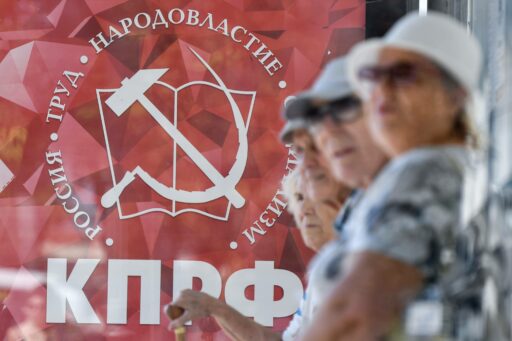
Security services continue targeting strong CPRF regional branches. This week authorities detained Yuri Kropotin, vice-speaker of the Altai Krai Legislative Assembly, and fellow deputy Andrei Chernobai, both from the Communist faction. They face fraud charges: allegedly, the lawmakers appointed aides who performed no real work. Last year another Altai CPRF deputy, Lyudmila Klyushnikova, was arrested on identical accusations before being placed under house arrest.
This year the region faces not only State Duma elections but also polls for the regional assembly. In the last federal cycle CPRF regional first secretary Maria Prusakova won a competitive single-mandate district. She intends to run again, even though that district has been abolished and its territory redistributed. Communists could also post a solid result on the federal party list—and potentially do well in the regional assembly race, especially given rising social tensions nationwide that play into their hands. Kropotin, Chernobai, and Klyushnikova all won their districts outright, meaning they enjoy significant personal popularity. That standing would have helped on both the federal (as key agitators for the party list) and regional levels. The campaign against these prominent Communists was almost certainly initiated by regional authorities working with the presidential administration; its goal is to prevent a Communist victory or at least a very strong showing in this one region.
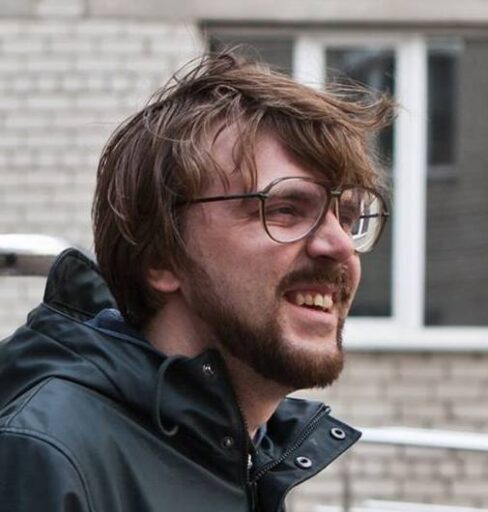
Ironically, the crackdown may backfire. Local Communists are acquiring the image of people persecuted for telling the truth. Footage of the search at Andrei Chernobai’s modest apartment—a young former trade-union activist living in plainly furnished, worn premises—sparked online sympathy rather than the intended outrage. Against that backdrop, accusations of financial scheming look contrived. Still, having started the pressure campaign, the authorities are unlikely to back down. Persecution of Communists will probably continue in Altai Krai and spread to other regions.