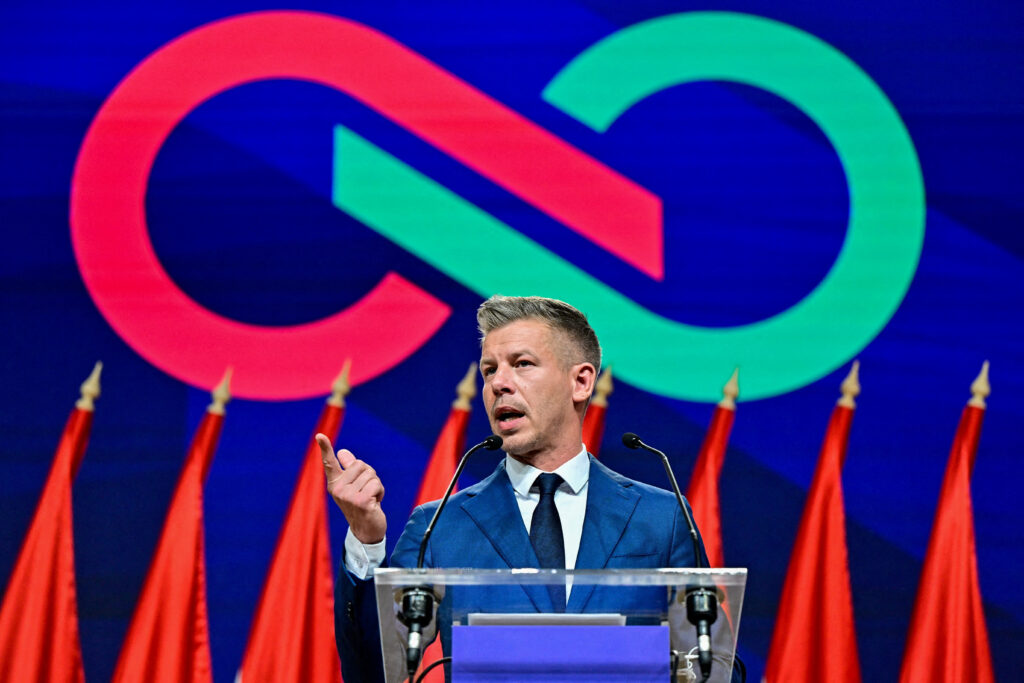
Hungary has embarked on a peaceful transition of power and regime transformation. With the victory of the Respect and Freedom Party («Tisza»), Hungary’s political system is expected to become less informal, less populist, and very likely less Eurosceptic. As the tenure of the longest-serving Prime Minister since the 1990s, Viktor Orbán, comes to an end, an essential question is what foreign policy Tisza’s leader, Péter Magyar, will pursue.
The relationship with Russia will not change structurally, because Magyar has signalled no interest in ceasing to buy cheap Russian energy resources. Nor has he advanced any suggestions for supporting new sanctions on Russia, which he prefers to see removed after the war ends. He has made it quite clear that he will not reject a phone call with Russian President Vladimir Putin, during which he would ask for an end to the war in Ukraine. Magyar has also stated that Russia poses a threat and that Europe should prepare to protect itself against it.
His signals point to a balancing act in Hungary’s foreign policy towards Moscow. Under this approach, Hungary will focus strictly on pragmatic cooperation. This will, however, exclude the personalised approaches that characterised the communication of Orbán and his confidant, the Minister of Foreign Affairs Péter Szijjártó, with power brokers in Moscow. Magyar’s non-confrontational tone towards Russia should not be mistaken for a continuation of Orbán’s friendship with Putin, Lavrov, and other senior Russian officials, or with Kremlin-aligned business circles. Kleptocratic dynamics—manifested through opaque transactionalism and the strategic use of influence to shape EU decision-making—are likely to be constrained by Magyar’s anti-corruption agenda. This agenda extends beyond domestic governance to foreign policy, particularly in dealings with Russia.
Russia’s Contribution to Orbán’s Downfall
The historically high mobilisation of about 78% of the eligible electorate was not entirely unexpected. However, a significant driver of this high turnout was the scandal involving leaked tapes, revealed through a transnational journalistic investigation, which exposed collusion between Orbán’s inner circle and the Kremlin. The tapes were published strategically on 8 April, just ahead of the elections, inevitably causing reputational damage to Orbán and diminishing his chances of remaining in power. They indicated that Hungarian Minister of Foreign Affairs Péter Szijjártó had agreed to provide his Russian counterpart, Sergey Lavrov, with sensitive documents concerning Ukraine’s accession (among other matters) through the Hungarian embassy in Moscow.
The allegations of a Hungarian-Russian exchange of sensitive information, as well as coordination on a joint strategy against Brussels between 2022 and 2025—amid Russia’s military aggression against Ukraine—were too serious for Orbán to recover from. The scandal reached its peak just four days before the 12 April elections. Its impact was so profound that, on the evening of the vote count, as voters celebrated Tisza’s victory, they chanted «Russians, go home» (Ruszkik haza!).
Magyar demonstrated restraint by not singling out any one actor when assessing the external support Orbán received during the elections. He rejected interference in other countries’ domestic affairs, underscoring that national sovereignty occupies a prominent place on his foreign policy agenda. When articulating his opposition to external meddling, Magyar noted that Orbán had received support from the presidents of Russia, the United States, China, Türkiye, and Israel, without isolating Putin alone. This again suggests that his dialogue with Russia will most likely remain unaffected by Moscow’s previous interference, which Magyar sees Orbán himself as the primary enabler of. By the same token, it can be expected that Magyar will show no interest in spoiling relations with the United States, despite J.D. Vance’s visit to Budapest in support of Viktor Orbán and President Donald Trump’s promise of economic aid should Orbán have requested it after the election. Despite being the most visible external backing Orbán received during the campaign, the Trump-Vance intervention had only a limited effect on the outcome.
Is Magyar’s Foreign Agenda Oriented Against Russia?
Viktor Orbán’s successor, Péter Magyar—a former member of Orbán’s government—led his party, Tisza, to an absolute majority in the Hungarian parliament, securing nearly 140 out of 199 seats. Magyar and Tisza received about 53% of the votes cast by 77.8% of eligible Hungarians, equating to roughly 6 million votes. This marks Magyar’s first national electoral success since joining the European People’s Party in 2024. Although Russia featured prominently in the final days of the electoral campaign, the first measures announced by Magyar focus on dismantling Orbán’s 16-year kleptocratic regime. This would involve structural reforms and the depoliticisation of state institutions, potentially requiring a two-thirds parliamentary majority and/or exemptions from existing legislation. Following the victory, Magyar called for the resignation of President Tamás Sulyok, whom he described as subservient to Orbán’s influence, as well as the resignation of the heads and members of the Constitutional Court, the State Audit Office, and the competition authorities. Another priority is to dismantle the publicly funded media apparatus that served as a propaganda tool under Orbán and replace it with a new broadcast authority to ensure press freedom. Drastically reshaping or severing ties with Russia is not among the urgent measures Magyar has put forward after his landslide victory.
Magyar’s primary goal is to revive Hungary’s ailing economy by improving dialogue with Brussels. This depends on unfreezing the € 18 billion in EU funds currently blocked due to rule-of-law concerns. He also seeks access to the EU’s defence loans under the Security Action for Europe (SAFE) initiative and aims to halt the € 1-million-per-day fines for non-compliance with migration rules. In no case is Magyar willing to participate in the EU’s migrant allocation mechanism, but he clearly intends to warm relations with Brussels by implementing corrections in the areas of justice and fundamental freedoms. These steps are expected to create more space for academia, civil society, and independent media. Such quick fixes should help secure additional financial resources for the industrial sector and restore access to EU funding.
The main Russia-related issues Magyar will need to address concern the 20th sanctions package, which includes a full ban on maritime services for Russian crude oil. Given current energy prices, driven by tensions in the Middle East, his government might request revisions or special exemptions for sanctions targeting the energy sector—particularly until oil supply via the Druzhba pipeline is fully resumed.
Russia Can Only Afford Pragmatic Relations with Hungary
Both Putin’s spokesperson Dmitry Peskov and Russia’s Foreign Minister Sergey Lavrov have expressed Moscow’s desire to manage the bilateral relationship pragmatically, based on a balance of national interests. No personal friendship between Péter Magyar and the Russian leadership is anticipated. Such expectations are entirely off the table from the Russian side.
Nevertheless, in political terms, a neutral Hungary is preferable to one that readily supports new sanctions against Russia. A functional political relationship also opens positive prospects on the economic front, which has two main dimensions. Russian gas supplied via the TurkStream pipeline and Russian oil—soon to be exported via Ukraine, which has promised to complete repairs to the Druzhba pipeline within a week of the Hungarian legislative elections—keep Russia connected to the European market. It is not primarily the 6.7 billion cubic metres (80% of total consumption) that Russia sells to Hungary annually under the 2021 long-term contract that matters most. Hungarian consumption of Russian gas serves as a guarantee that the pre-2022 Russian dominance of the European energy market can potentially be restored. By remaining anchored in the Hungarian market, Russia can continue its gas diplomacy across Europe, positioning itself as a readily available supplier capable of reducing energy costs for European businesses. Furthermore, preserving an open channel of communication with Hungary is vital for supplying gas to the separatist Transnistrian region of Moldova, one of Russia’s few remaining centres of influence on the EU’s eastern enlargement flank.
Tisza’s victory has not cancelled the € 12.5 billion Paks II nuclear power plant project, in which both Budapest and Moscow have a strong interest in proceeding. The construction timetable was agreed in 2020, and the permit was issued by the Hungarian regulator in 2023, with € 10 billion of the costs covered by a Russian loan. Magyar understands that Paks II is essential for Hungary to boost nuclear energy production and meet up to 70% of the country’s electricity demand from the 2030s onward. The project’s progress was discussed by Péter Szijjártó with Sergey Lavrov in Moscow in late 2025. One key test for bilateral relations after Péter Magyar assumes the role of Prime Minister will be the continuation of Paks II construction, which remains in its early stages.
For over a decade, Orbán presented himself as a useful and effective middleman for Russia, wielding leverage over EU decision-making. In the days following his victory, Magyar has shown no eagerness to antagonise relations with Russia. As Magyar works to de-Orbanise Hungary’s foreign policy, Russia will likely seek to fill the gap left by Orbán’s defeat by forging closer ties with Slovakia and the Czech Republic to gain new leverage within the EU. The central question is whether the EU will attempt to curb Magyar’s pragmatism towards Russia, or whether such an approach is acceptable as long as Hungary does not play the Russian card on the Ukrainian issue.