Since the preparation and call for military mobilization in August and September 2022, Russia has been stuck between competing, incompatible growth models. The first—redistributing energy rents via the budget to boost consumption—had exhausted itself as early as 2008 but briefly returned in 2022−23 because of the high prices induced by the energy shock preceding and escalating after the invasion of Ukraine. The second—squeezing every last drop of productivity out of a country full of underutilized labor and capacity by constantly escalating spending on the war—was short-lived and, according to Putin’s advisor Maxim Oreshkin, exhausted itself by last June. The macroeconomic bill for Russia’s dependence on oil, gas, coal, grain, and metals exports under financial sanctions keeps rising. 2026 will likely be the worst year since the invasion in this regard, regardless of whether individual commodities or groups of commodities perform well, bringing in more revenue or hard currency.
Drowning in Oil
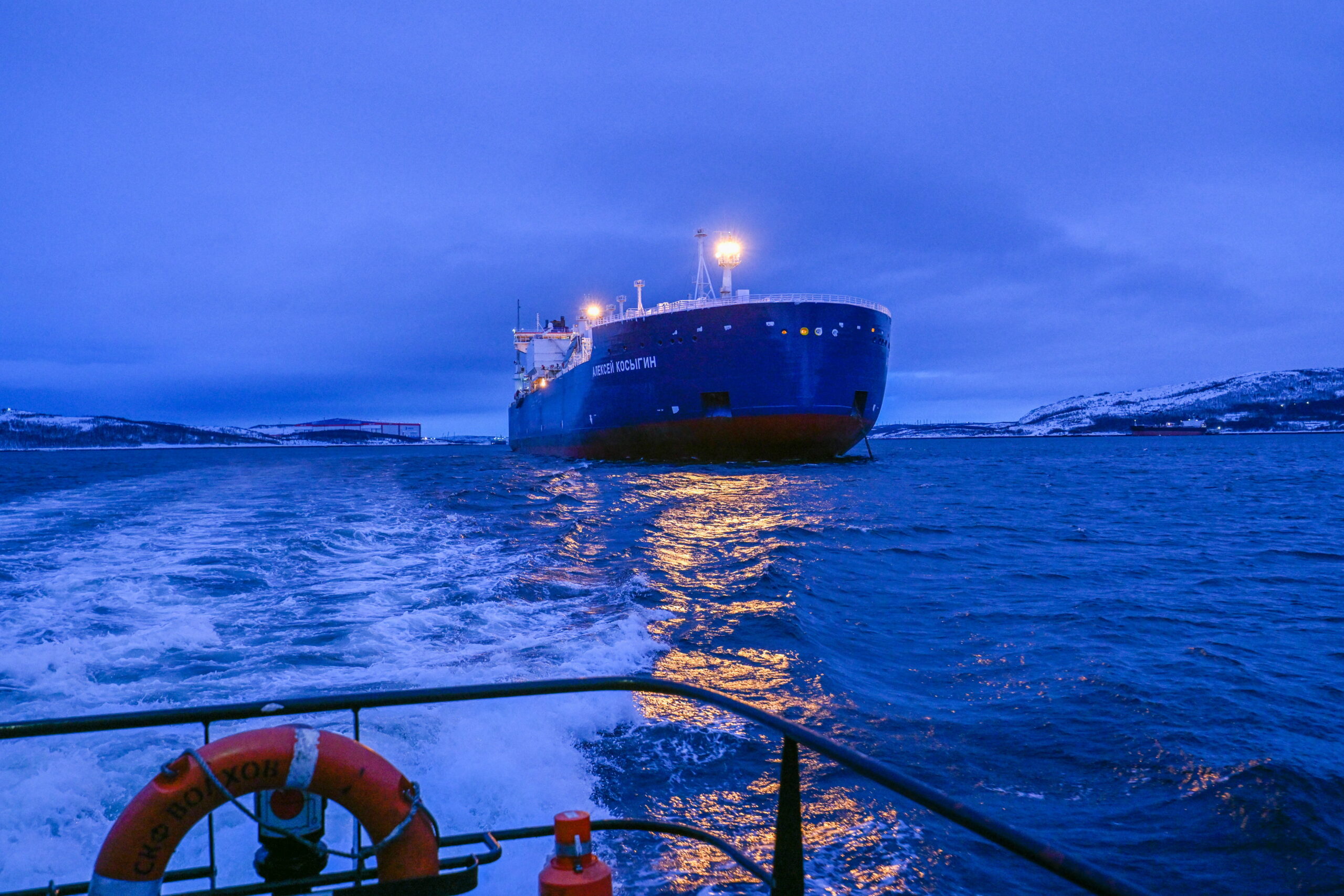
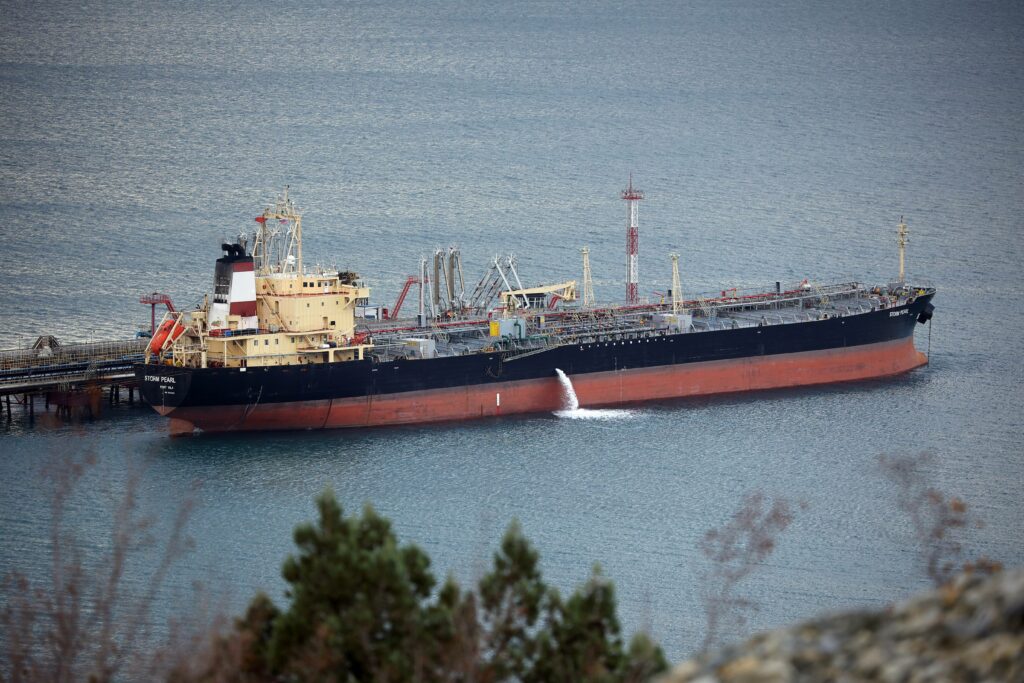
Russia’s energy exports have become the biggest liability for policymakers struggling to find budget revenues wherever they can get them. Despite some market jitters in January following the US raid extraditing Venezuelan president Nicolás Maduro to New York to stand trial and persistent threats of military action against Iran, the general consensus is that oil prices will trade around $ 60 a barrel this year. Caught between a large supply surplus and China’s oil stockpiling—which generated up to 1 million barrels a day of «demand growth» in 2025—it’s likely oil’s recent price increase toward $ 70 a barrel won’t last. The Trump administration is relatively consistent in its commitment to keeping oil prices lower to take the sting out of whatever inflation its other economic policies generate. Add to that Russian oil exporters facing pressure from sanctions placed on Lukoil and Rosneft, and data shows discounts for Urals blend cargoes widened from $ 15 a barrel to $ 24. Gas has become comparatively irrelevant. The emerging surplus of LNG supplies from capacity expansions in the US and Qatar is expected to depress natural gas prices in Europe and Asia except during cold snaps—a headwind doubled by the loss of the European market for piped gas. January data suggests oil and gas revenues fell to just 2% of GDP, the worst result in the last fifteen years.
Put simply, non-military state spending will be cut meaningfully and painfully if the current correlation of oil and gas market forces continues. The damage is not merely to capital investments or social programs bleeding funding to the war. It is rather the effect of a budget pullback on a business cycle that is facing a cardiac event. As of the start of January, only one in seven businesses were accessing bank loans to finance investments—the Academy of Sciences’ worst reading in 20 years—at a time when consumer spending appeared to have declined 3.6% year-on-year around the New Year’s holiday. High interest rates are strangling non-military business as the economy slows and incomes fall in real terms. Twelve percent of businesses surveyed are now ready to lay off «excess» employees, and only 25% are ready to hire more, down from 50% a year ago. State spending on the war is no longer catalyzing demand or investment and is instead deepening the damage from the impending economic contraction by reallocating productive labor and capital to wartime needs that are only consumed by the state itself.
The Trade Trap
The oil and gas conundrum is not just a budget and spending story. Due to financial sanctions, the only way the state can raise the foreign currency it needs to provide businesses and consumers with currency liquidity is through export earnings. Since imports of goods or services are paid for in foreign currency, it is vital that economic policy always maintain a healthy trade surplus. The margin for error is further narrowed by the fact that Russia continues to be a net importer of services, a net exporter of remittances, and a net exporter of primary incomes earned from foreign-owned businesses (though some of these will be Russian-owned but from abroad). If in Q1 last year the current account balance combining all these was in surplus ($ 17.9 billion), that surplus was just $ 4 billion in Q2 and $ 8.2 billion in Q3. Q4 data reflecting the late-year increase in crude oil discounts will be telling, but the larger challenge is clear: if this balance turns negative for an extended period, there will be greater difficulty managing foreign currency liquidity. These conditions are a perpetual tax on growth. Russians’ incomes cannot be allowed to rise such that imports increase. Efforts to substitute imports domestically will create significant inflation as long as the labor market is tight.
Oil still drives the lion’s share of the trade surplus sustaining this tenuous equilibrium. Given the volatile nature of commodity prices, this has the corollary effect of strengthening the pressure on the Bank of Russia to keep interest rates high to suppress imports. Given that 54% of Russians say they’re ready to pull money out of bank deposits if rates fall and one in five will put that money into housing—a structural driver of surges in imported consumer durables demand—the Bank of Russia is trapped. If rates fall too much, they’ll trigger inflation and demand for goods the economy cannot meet, since it’s already exhausted its ability to squeeze more productivity out of the available labor supply and would have to import machinery and tools to build new factories churning out consumer goods. On top of this, the Bank of Russia is tightening macroprudential requirements for banks to hold more capital to manage default risks from large companies with high debt burdens, raising the «risk premium» from 40% to 100% for these borrowers. Banks are under pressure to hold more reserves, and the Bank of Russia must do whatever it can to convince Russians to keep their money in banks.
Exchange rate management is the final component of the damaging effect oil dependence is having on the wartime economy. Since the initial sanctions shock post-invasion, exporters have been legally required to buy rubles with their foreign currency earnings to stabilize the exchange rate and FX market liquidity. But the Ministry of Finance is in purgatory. The ruble is trading in the 75−80 band against the US dollar—strong enough to reduce revenues from oil and gas taxation (which is calculated against dollar prices) at a time when those prices are relatively low in real terms. However, were oil prices to collapse toward $ 50 a barrel or lower, the ruble would rapidly depreciate and send inflation higher, forcing the Bank of Russia to tussle with the Kremlin over interest rates. The relative strength of the ruble has emerged largely due to declining demand for imports—an expanding sign of a civilian recession. But if oil prices were to skyrocket, officials cannot let the ruble appreciate too much without threatening domestic businesses that have benefited since the invasion. Similarly, if another export windfall is thrown at consumers and businesses through state spending, punishingly high inflation will also return.
Commodity Dependence as Inflation Trap
If oil is the wobbly base upon which macroeconomic management depends, Russia’s other major commodity exports or sectors are exposed to risks that can feed inflation or market instability. None can replace energy in scale for tax revenues or foreign currency earnings. All are subject to a constantly rising domestic cost base from steady increases in utilities tariffs, nominal wage increases from lack of labor, pressure to service ruble-denominated debts linked to the Bank of Russia’s key rate, and mounting costs for rail and trucking freight transport.
Wheat and grain harvests are a political priority given the sector’s extensive subsidies and intended role as a buffer against any dependence on imported food. Last year’s grain and legume harvest yielded over 138 million tons, almost 91 million tons of which was wheat. Despite falling price outlooks for wheat last year heading into 2026 and weaker exports, the price of bread rose 11−13% last year, nearly twice the official inflation rate. Whatever is invested into the crop to generate billions of hard currency earnings and ample supply hits the major bottleneck that milling, refining, and mass production are becoming more expensive all the time. Logistics aren’t improving amid the continuing decline in fixed asset investment, and Russian Railways keeps raising tariffs to hold the system together. Even when wheat prices fall domestically as they did in Q4 2025, they typically rise again whenever export demand picks up, worsened by logistics costs. These annual export revenues do not protect Russian consumers, who pay more whenever wheat prices surge and gain less when they fall, due to the wartime economy’s effect on the production of the food products they consume.
Metals exports are fickle but provide significant, reliable export earnings from steel, aluminum, nickel, and larger market products bolstered by precious metals—gold, silver, and palladium. Just like grains and food production, metals producers are pushed to supply the military and domestic market as first priority to preserve employment and tax revenues. In 2025 alone, steel demand fell 14% from the damage of high interest rates and a strengthening ruble—the worst result since 2015, when Russia’s net imports collapsed by 30% from the ruble’s devaluation, recession, and banking crisis. Aluminum has fared better from market tightness globally in 2025, but persistent efforts to push more aluminum into domestic construction are a double-edged sword. If prices rise—they’re currently buoyed by supply constraints and US tariffs driving huge premiums on the US market—the gains from export earnings to the Chinese market will be mirrored by rising costs for domestic end-users. The same applies to copper and, to a much lesser extent, nickel as export prices rise.
China is the swing partner for every metal. While aluminum exports to China rose 51% last year and, as of H1 data at least, copper exports were up 81%, the drop in oil prices and weakening consumer economy drove a 6.9% decline in overall imports from China, led by a more than 10% fall. As long as Russia requires a trade surplus to access credit and currency, it will have to run a trade surplus with China. But the mechanism by which policymakers can protect against any shortfalls of currency liquidity in domestic banks—higher commodity prices—will only increase the pressure on the Bank of Russia to hold rates higher or, in an extreme shock, take them higher once more. Miners may enjoy a windfall from surging gold and silver prices, but these price movements are market signals of concern regarding the health and stability of financial markets and the global economy. The last thing Moscow needs is a global slowdown from a major change in US economic conditions and a US stock market downturn, both of which will quickly feed through to commodity markets.
All the News Is Bad—Is There Any Other Kind?
Commodity markets can’t bail out policymakers this year. If oil spikes, there will be significant appreciation pressure on the ruble threatening a renewed surge of imports. If metals spike, the military’s voracious appetite will drive prices higher for the rest of the economy. If grains spike, price increases for bread and feedstock given to animals or used in other food products will increase even faster than they already are relative to aggregate inflation (if official data is to be believed). If the reverse happens, policymakers are back to square one. The greater the budget deficit from the loss of oil revenues, the more state spending must be cut to prevent unacceptably high levels of inflation that destabilize investment and business contracts. This would accelerate the now-emerging collapse of business investment.
The broader lesson of Russia’s experience is that its pursuit of autarky in wartime is incoherent and more damaging with each month. Lacking labor and favorable demographics, every push to consume more domestic production increases the price of these various inputs. Labor costs are sticky. People don’t take pay cuts until you get high levels of unemployment that would be a political nightmare for the Presidential Administration to spin. What’s worse, labor costs add to services inflation—the sorts of businesses you grab coffee from, eat out at, book rooms with, get your nails done, and so on—that is typically stickier than goods. But this source of relief for goods is weakened by the macroeconomic need to reduce imports and the political need to prioritize domestic production. Greater autarky enables the regime to pursue its geopolitical goals by burning down the house. Eventually, the flames consume too much for the home to be salvageable without political changes the regime has thus far avoided for fear of backlash.
Import substitution and the various buzzwords policymakers have paraded as policy since 2014 have failed in their chief task: insulating Russia from external economic shocks or price levels. When prices for inputs like steel continue to rise—even if slowly—when demand is so weak and global price conditions are so favorable, something has fundamentally broken in the economy’s capacity to adapt. The beauty of Russian economic policy is that it can always be worse. This year, it likely will be.