Since 2022, Egypt has received far less media attention in the context of ties with Russia than Iran, Turkey, or the UAE. Yet bilateral engagement between Moscow and Cairo has progressed steadily and consistently during this period. In terms of trade volume, Egypt now ranks among Russia’s top three partners in the Middle East. Moreover, Russian officials view the country as a key «gateway» to the African continent—a point underscored when Foreign Minister Sergey Lavrov, speaking at the Russia-Africa ministerial conference held in Cairo in late December 2025, emphasized the unique nature of the two countries’ relationship.
The foundation for elevating cooperation to a qualitatively new level does appear solid. At the same time, significant constraints continue to limit deeper economic integration.
Robust Growth in Trade
Egypt has been one of the few directions where Russian foreign trade showed resilient expansion following the onset of full-scale war in Ukraine. Bilateral turnover stood at roughly $ 6 billion in 2022, rose above $ 7 billion in 2023, and reached $ 9.3 billion by the end of 2024. The upward trend continued into 2025, with trade growing 12 percent in the first nine months—pointing to a full-year figure likely in the $ 10−11 billion range (final statistics are typically released the following spring).
Egypt thus remains, by a wide margin, Russia’s leading trade and economic partner in Africa, accounting for more than one-third of Moscow’s total commerce with the continent. In the broader Middle East context, Cairo consistently places in the top three partners for Russia—behind only Turkey (around $ 55 billion in recent years) and closing in on the UAE (near $ 10 billion). A key detail: the trade balance stays heavily in Russia’s favor, with roughly $ 6 billion of the $ 9.3 billion 2024 figure representing Russian exports.
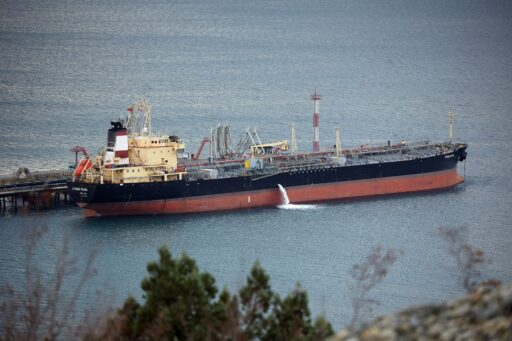
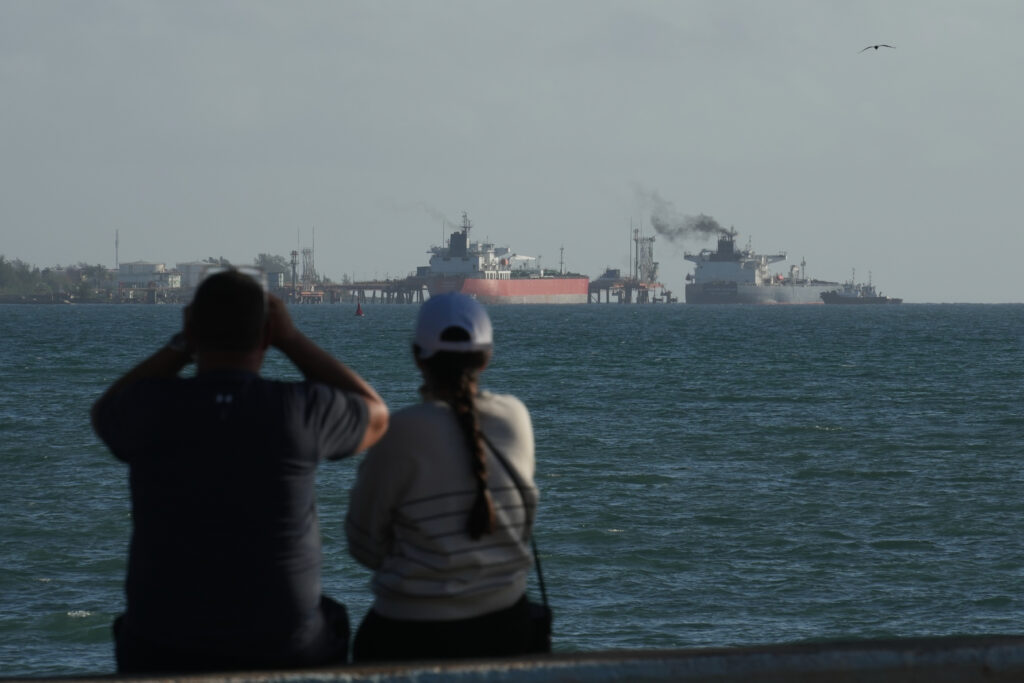
The primary engine of this growth has been Russian grain shipments. Egypt’s steadily rising population, combined with bread and bakery products traditionally forming a large share of the average Egyptian diet, drives sustained demand for cereals. The sharp contraction in Ukrainian export capacity—previously the second-largest supplier to Egypt—has further strengthened Russia’s position, as Ukraine’s agricultural sector suffered heavily from the war.
By the end of 2024 Egypt had become Russia’s single largest wheat buyer worldwide, taking in 10 million tons. As Russia’s ambassador to Egypt put it: «No one else in the world purchases grain on this scale, and Russia sells more wheat to no other country.» Wheat exports alone were valued at approximately $ 3.1 billion—about one-third of total bilateral trade.
The second-largest export category ($ 1.3 billion) was iron and steel, fueled by two major Egyptian construction drives. One is the ambitious new administrative capital being built 45 kilometers east of Cairo. The other is the El-Dabaa nuclear power plant, constructed by Rosatom. This flagship project, with total investments around $ 30 billion (including a $ 25 billion Russian state loan), began in 2022; the four VVER-1200 units are scheduled for completion by 2030. It marks not only Egypt’s first nuclear facility but also Rosatom’s inaugural atomic plant on the African continent. Moscow hopes successful delivery will cement strategic ties with Cairo and pave the way for Russian nuclear technology in other regional markets.
Russia also supplies Egypt with vegetable and animal oils, timber, petroleum products, fertilizers, legumes, machinery, aluminum, and plastics. In return, the Russian market mainly receives Egyptian fruits, vegetables, and nuts.
Established Human Connections
One essential prerequisite for deep and diversified international cooperation is a broad network of interpersonal and societal ties—particularly in countries where informal practices and institutions play a significant role. In other words, effective engagement requires knowing «the right people» and maintaining working relationships with them. While such connections often form by chance, sheer volume dramatically increases the odds of success: the more interactions between citizens of the two countries, the greater the likelihood of encountering precisely the contact who proves valuable.
Personal contacts between Russians and Egyptians are plentiful. Egypt remains one of the most popular destinations for Russian tourists: in 2025, around 2 million Russian citizens visited the country—second only to Turkey (roughly 7 million). Given that this has been a steady flow for nearly two decades, a substantial community of Russian-speaking Egyptians has emerged. One indirect result has been a surge in student exchanges: as of 2025, more than 11,000 Egyptian students are enrolled in Russian universities.
Thus, the sheer scale of contacts—short-term (tourists) and long-term (students, businesspeople, property buyers, mixed marriages)—serves as a crucial long-term factor reinforcing and expanding bilateral relations.
Russian authorities have been seeking ways to stimulate and stabilize economic ties with Egypt. One prominent effort has been the push toward settlements in national currencies—a topic that gained urgency amid Western pressure severely complicating dollar and euro transactions. There has been some progress, albeit slow. The banking systems of the two countries remain poorly integrated, and full linkage appears unlikely in the near term under existing sanctions. Moreover, the sharp devaluation of the Egyptian pound has hindered national-currency payments. As a result, around 60 percent of transactions between Moscow and Cairo are still conducted in euros or dollars.
Among major government-led projects, the El Dabaa nuclear plant remains the flagship. Recognizing that one power station alone cannot produce a qualitative leap in relations, however, other initiatives have been proposed. The closest to realization is the creation of a Russian Industrial Zone near the Suez Canal. The concept envisions Russian companies setting up production on roughly 50 hectares of land, with output sold in Egypt on the same terms as local goods. How effective the zone will ultimately prove remains unclear, though its backers argue it will serve as an entry point not just to the Egyptian market but to Africa as a whole. Implementation has been gradual: first Russian firms are not expected to begin operations until around 2030.
Another significant proposal is a Free Trade Agreement (FTA) between the Eurasian Economic Union (EAEU) and Egypt. Negotiations have been underway since 2015. Such an arrangement—already successfully tested with Iran—could substantially boost trade by slashing tariffs. Yet as of late 2025, Russian officials have described the talks as «on pause.»
An FTA could represent a major step toward integrating the two economies, but there are doubts about whether Cairo is prepared to move forward amid mounting Western pressure on Russia.
The Limits of Cooperation
Overall, Russian-Egyptian relations have indeed reached a new level in recent years and rest on a reasonably firm foundation for the foreseeable future. Steady, high demand for Russian grain, combined with the long-term, capital-intensive El Dabaa nuclear project, provides a reliable base for both commercial and political engagement. Add to that the large volume of people-to-people contacts generated by Russian tourism, which fosters personal relationships and informal networks. In short, Egypt’s emergence as a key partner for Russia in the Middle East within the broader «pivot to the East» appears to be a logical and sustainable trend.
That said, the boundaries of this partnership are clear. The bulk of Russian exports consists of agricultural commodities. In the realm of technology, the only truly in-demand offering is Russia’s peaceful nuclear sector—where Moscow remains a global leader with competitive terms. Put simply, Cairo turns to Russia precisely in those niches where it is either irreplaceable (grain) or offers objectively superior conditions (nuclear energy). Meanwhile, Russian construction firms have not been invited to build the new capital—China has been actively brought in for that role.
Western sanctions on Russia remain a major factor. Ideas such as an EAEU free-trade zone or deeper payment-system integration could benefit Cairo by stimulating trade with Moscow. Yet under Western pressure, the Egyptian side has hesitated to advance in these directions, and the process has been paused for now.
In theory, arms deliveries could open new horizons. In recent years Egypt has consistently ranked among the top three arms importers in the Middle East (after Saudi Arabia and Qatar). Once the war in Ukraine ends or stabilizes, Russia’s expanded defense industry could generate surplus export capacity. However, Cairo has traditionally favored Western suppliers (the United States and France), while China has aggressively entered the market in recent years. Given this competition and ongoing sanctions pressure, a major pivot toward Russian weaponry seems improbable.
Finally, Egypt itself has relatively little to offer Russia. Almost all of its exports to the Russian market are also agricultural (fruits, vegetables, nuts). The country has not become a significant transit hub for Moscow (unlike Turkey) nor a source of strategically important technological imports (a role Turkey and the UAE are vying for in the region). Egyptian partners are also unlikely to become meaningful investors in the Russian economy—unlike the Gulf monarchies, Cairo has far fewer financial resources at its disposal.
Russian-Egyptian relations fit the classic pattern of Moscow’s engagement with Middle Eastern countries: betting on the Kremlin’s remaining areas of strength—few in number, but real. At the same time, Russia’s overall authority and negotiating leverage in the region have declined, making it difficult to push through deep economic integration at present.