When Kremlin spokesman Dmitry Peskov welcomed the US administration’s December 2025 National Security Strategy (NSS) as «largely consistent with our vision,» it seemed that Russia and America concurred in their rejection of the liberal international order. Yet Russian reactions to the US’s relinquishment of international norms—Putin’s conspicuous silence, threats and gloating; officials’ contradictory and aggrieved statements; state TV anchors’ sardonic mockery; ultra-patriot bloggers’ realist anxiety; and establishment foreign policy titans’ misgivings—reveal a mismatch in their views of a new international order. Russia and the US may both oppose liberal institutionalism, but their visions of what should replace it are incompatible. Russia wanted a «multipolar» world order with negotiated spheres of influence. The Trump administration has delivered mercurial US hegemony.
Monroe Doctrine or Multipolarity?
The NSS’s invocation of the Monroe Doctrine, its call to end NATO expansion, and its removal of Russia as a «direct threat» appeared compatible with Russia’s multipolar world order vision. Trump’s pressure on Ukraine to accept territorial concessions and forgo NATO membership seemed to offer what two decades of multipolarity rhetoric had not: legitimation of Russia’s «national security interests.»
But Russia misread what the NSS entails. While Moscow celebrated the absence of anti-Russian language, it failed to grasp that «America First» means unconstrained US hegemony: not a multipolar concert of powers, but transactional US primacy without the preexisting guardrails of international law. The Trump administration’s foreign policy is less an execution of grand strategy than a demonstrative repudiation of the institutional constraints that curb American primacy at any given moment—hence the label «mercurial hegemony.»
Multipolarity was first advanced by Foreign Minister Yevgeny Primakov in the 1990s and reinvoked by Putin’s 2007 Munich Security Conference speech, after which it became the bedrock of Russia’s foreign policy agenda. Multipolarity is a pliable concept that is defined in relation to the audience it addresses. In layman’s terms, a multipolar world order connotes the existence of several centers of power rather than just one (unipolar) or even two (bipolar). Common official Russian framings of multipolarity include the inherently contradictory ideas of promoting sovereign equality for the Global South (e.g., BRICS), legitimizing hierarchy for great powers (from Russia as co-architect of the entire global order to dominant player in the post-Soviet space), and promoting civilizational diversity for non-Western polities.
Flexibility notwithstanding, multipolarity has a core organizing principle: the rejection of the US as the hegemonic enforcer of a normative universal international order that it does not itself adhere to. For two decades Russia exploited the gap between American proclamation and practice, invoking the wars in Kosovo and Iraq as evidence of US hypocrisy. Trump has closed that gap not by becoming more consistent but by abandoning the proclamations entirely. This leaves Russia rhetorically disarmed—its most effective weapon rendered obsolete not by American virtue but by American audacity.
Writing at the end of 2025, Russian establishment foreign policy expert Fyodor Lukyanov expressed his misgivings about the implications of the Trump administration’s norm abandonment for the most modest of Russia’s multipolar visions: regional dominance in the «near abroad»:
«In Russia’s case, the contiguous space, which is clearly more important to us than anything else, is clearly what is most accurately described by the term ‘near abroad.’ But working here in the post-global era of competition between spheres of influence will require a lot of re-learning.»
Lukyanov’s anxiety about Russia’s ability to project itself as a regional power was vindicated by JD Vance’s visit to the South Caucasus in February 2026, signaling the US’s commitment to the Trump Route for International Peace and Prosperity (TRIPP). TRIPP was the cornerstone of a US-brokered peace deal between Armenia and Azerbaijan in August 2025. It is a proposed transit corridor through Armenian territory that would connect Azerbaijan to its exclave Nakhchivan, in which the United States would hold a 74% stake for 49 years, with options to extend for a further 50. The deal, clearly intended to bypass Russian and Iranian influence in the South Caucasus, is the USA planting itself in Russia’s backyard under the guise of a commercial infrastructure project.
The Russian Foreign Ministry announced that Russia was «ready to consider options» for joining TRIPP, but Washington did not respond. Russia was not so much rejected as rendered irrelevant. Thus, mercurial hegemony reaches far beyond the Western hemisphere, entering what Russia regards as its geopolitical orbit on terms that multipolarity’s toolkit cannot address.
The Marinera and Energy Vulnerability
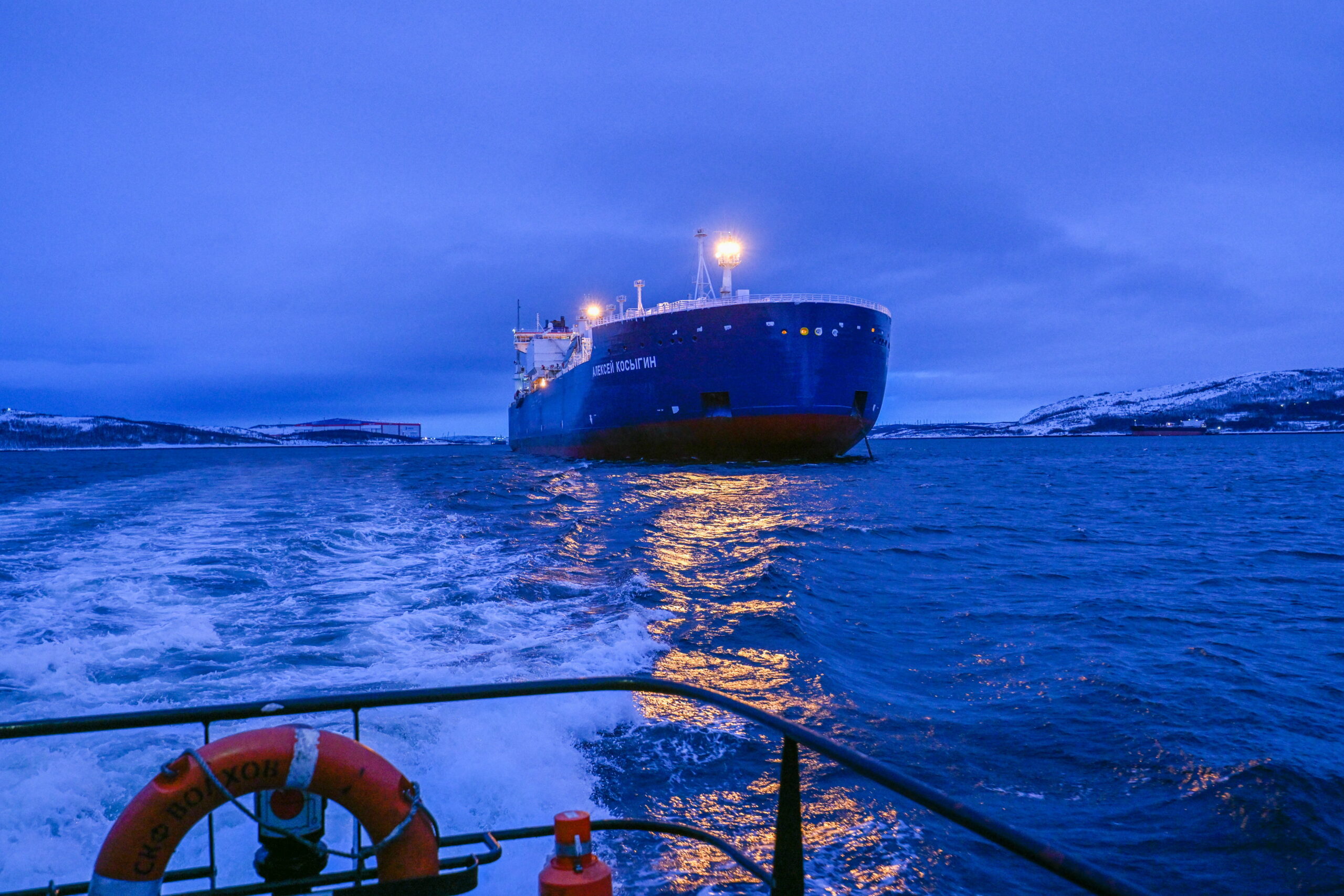
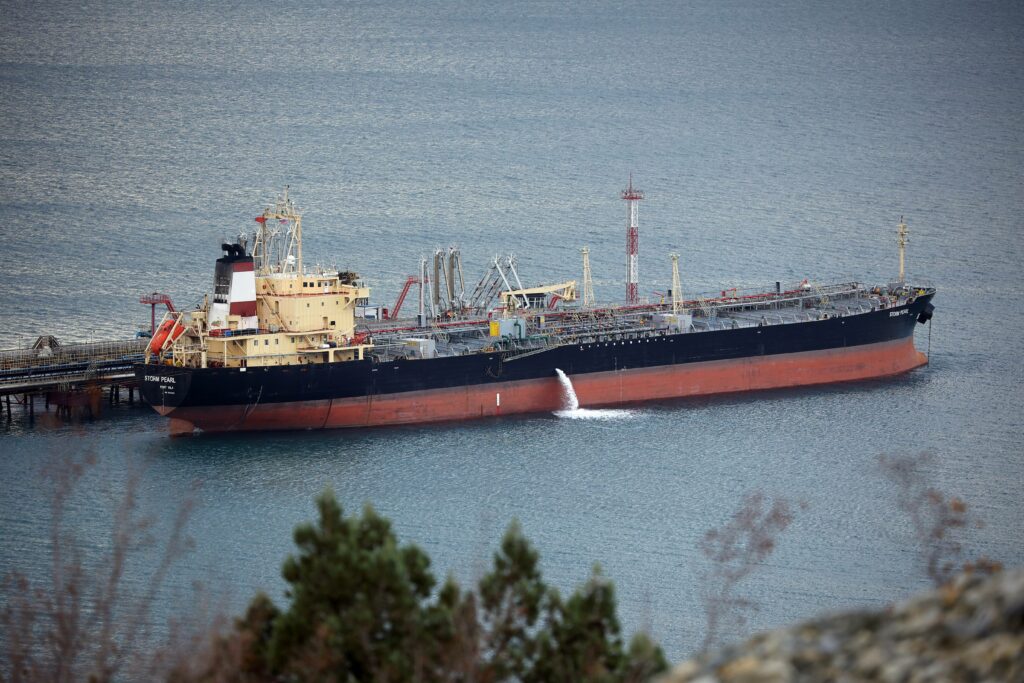
Moscow’s strategic paralysis was on full display following US military action against a Russian tanker near Venezuela. After fleeing US forces in December 2025, the sanctioned oil tanker Bella 1 renamed itself Marinera, painted a Russian flag on its hull, and secured temporary Russian registration. Russia deployed a submarine escort to protect it. On 7 January 2026, US forces seized it.
Only the Russian Foreign Ministry responded, delivering a formulaic condemnation by citing the violation of international law. Putin’s response? Silence. Russia appears to have decided that protecting a single tanker was not worth jeopardizing potential Ukraine concessions from Trump. The Marinera was part of Russia’s sanctions-evasion shadow fleet coordinating with Iran and Venezuela. The Marinera is emblematic of a broader pattern of shadow fleet vessels re-registering under the Russian flag as third-country registries came under pressure to delist these tankers amid tightening Western sanctions. The seizure demonstrated that sanctions enforcement operates when convenient, regardless of Russian interests.
Even ultra-patriot military bloggers, who routinely demand more belligerent tactics against Russia’s enemies, acknowledged Moscow’s strategic paralysis in the wake of the tanker seizure. Mikhail Zvinchuk’s Rybar channel, with links to the Russian MOD, conceded that «our fleet did not have time to come to the rescue» and that the re-flagging had put Russia in an «extremely awkward position,» creating «a precedent for further operations against the entire so-called Russian shadow fleet.» Another Z blogger, Alexander Kots, who now reports for Russian-state-aligned publication Komsomolskaya Pravda, was stumped. «How to respond to this… I honestly don’t really understand.» Zvinchuk and Kots’s words are an admission that the practice of Russian sovereign flagging provides no protection for tankers. The joint seizure of a Russian tanker by Belgium and France in the North Sea on 1 March and yet another by France on 20 March validated their anxiety.
The seizure came in the aftermath of the announcement of US sanctions against Russia’s largest oil producers, Rosneft and Lukoil. Oil and gas revenues comprise around a quarter of Russia’s budget and finance its war in Ukraine. New sanctions along with a strong ruble and global oversupply had depressed domestic revenues, falling 50% in January 2026 compared to the year before. Urals crude was at near-negative margins earlier this year.
The closure of the Strait of Hormuz has inflated global oil prices, granting Russia a temporary reprieve from its declining fossil fuel revenues. The Kremlin has gloated about the sudden reversal in its energy revenue fortunes. That Urals crude is trading at a premium compared with Brent and at double its pre-conflict price, along with a 30-day US sanctions waiver on Russian oil at sea, has led many media commentators to declare that Russia is the main beneficiary of the conflict.
Yet Russia’s capacity to fully capitalize on higher prices, greater demand, and sanctions easing is diminished by a stubbornly strong ruble—oil is sold internationally in USD—and a near doubling of freight cargo costs wrought by the war in Iran. As a seasoned expert on Russian energy markets, Tatiana Mitrova notes: «…higher prices do provide fiscal relief. Narrower discounts and benchmarks above the budget baseline stabilize revenues. But price is not the same as structural strength. Russia’s oil sector remains constrained by a mature resource base, technological limitations under sanctions, and an investment focus on sustaining legacy fields rather than expanding new capacity. Spare production capacity is limited.» Structural weaknesses aside, the real prize for the Kremlin may be the precedent that Western energy market stability outweighs sanctions discipline in Washington’s calculus.
Current global energy volatility has brought the question of European energy security back to the fore. Putin responded with a double-edged tactic—threatening to cut off remaining gas supplies before the EU’s self-imposed 2027 deadline, while also declaring that Russia is ready to resume long-term supplies thereafter. Russia was able to pivot its oil exports from European to Asian markets with relative speed, but gas market adaptation is a far more protracted process. Russia is redirecting what it can—LNG tankers, existing pipeline capacity—while the infrastructure for a genuine long-term Asian gas strategy remains years from completion, with its biggest customer China extracting large discounts relative to the prices Russia once commanded in European markets. That Putin is simultaneously threatening and courting Europe suggests the Asian pivot cannot fully compensate for the market Russia has been systematically expelled from.
This dynamic shows that the Trump administration’s mercurial hegemony does not preclude transactionalism that may offer the Kremlin short-term benefits. But Russia cannot know what will trigger sanctions enforcement or easing, making it hard to plan economically or strategically.
Greenland: Sardonic Pleasure, Strategic Anxiety
Ostensibly, Trump’s threats to annex Greenland appeared positive for the Kremlin. Putin avoided offering a substantive response by emphasizing that the matter did not concern Russia. Lavrov attempted to frame it as a legitimization of Russia’s actions in Ukraine by drawing parallels with Crimea: «Crimea is no less important for the security of the Russian Federation than Greenland is for the United States.» Peskov’s comment that Trump «would go down in history» without specifying how was calculated ambiguity, illustrating Moscow’s strategic paralysis whereby it cannot condemn the US’s military adventurism without undermining its own, despite the threat it would pose to Russia’s Arctic security.
Yet anxiety lies beneath the schadenfreude. Kots, posting on his Telegram channel, cut through the official line: «Trump wants to seize the Russian Arctic.» For Kots this would «put pressure on our Northern Sea Route and limit access of our strategic submarines to the Arctic.» One of Russia’s top propagandists Solovyov’s offer to «help liberate Greenland» obscures the fact that US militarization of the island would directly threaten Russia’s Northern Fleet submarine bastion on the Kola Peninsula—the backbone of its second-strike nuclear capability and the cornerstone of its strategic deterrent.
Lavrov’s more recent warning of «military-technical countermeasures» in the event of Greenland’s militarization is not rhetorical; it is an acknowledgement of genuine strategic vulnerability. The contradictory official responses expose Russia as spectator, not co-architect, of a new world order, even in Russia’s most strategically important region: the Arctic.
New START and the Collapse of Strategic Stability
Even on arms control, traditionally an area of US-Russian cooperation, Trump’s approach offers Russia no agency. The New START treaty, the last remaining nuclear arms control agreement between the world’s two largest nuclear powers, expired in February. In September 2025, Putin made a concrete offer to maintain the treaty’s limits voluntarily for one year after expiry on the condition that Washington reciprocated. Trump did not respond and said of the New START treaty in January 2026, «if it expires it expires.» When the treaty expired, Trump rejected Putin’s proposal for a one-year extension. Russia’s Foreign Ministry declared the treaty’s obligations «no longer binding.» Peskov declared that Russia viewed this «negatively» and expressed «regret.»
Not all Russian voices were so measured. Kots offered a cautionary note that inadvertently reveals the depth of Russian anxiety: «The US President will offer us another ‘very good deal.’ A good deal, of course, primarily for Washington. But we shouldn’t make concessions to the enemy in an area where we have an advantage. They would never feel so sorry for us.» While Trump suggested the possibility of negotiating a new arms deal, the details and timeline remain hazy, with Washington clearly setting the terms.
Conclusion
Moscow’s strategic paralysis is perhaps best illustrated by Putin’s response to the assassination of Russia’s ally, the Iranian Supreme Leader Ayatollah Khamenei. Commenting soon after, Putin condemned it as «a murder committed in cynical violation of all norms of human morality and international law.» That Putin is deploying the vocabulary of morality and international law speaks to Moscow’s inability to respond to the US’s abandonment of normative liberal values. His inability to help his ally Iran speaks to Russia’s inability to challenge US hegemony materially. The fact that he broke his recent spell of silence, while carefully refraining from reproaching the US explicitly, suggests an understanding that even tactical exchange on Ukraine cannot compensate for the structural incompatibilities in US and Russian foreign policy agendas.
While the US’s mercurial hegemony does not preclude scenarios that offer Russia short-term gains—as the war in Iran clearly does—not understanding the rules of the game, nor being able to pre-empt the ever-shifting priorities of the USA, leaves it strategically paralyzed. Russia is trapped between a rules-based order it spent two decades delegitimizing and a mercurial US hegemony it cannot contest. It eroded the former without building the hard power to thrive in the latter. After two decades of multipolar rhetoric, Russia faces a future shaped by others’ power, whether US mercurial hegemony or subordination to Chinese dominance. Multipolarity has no answer to either.