One of the longest-running, most stubborn and irreconcilable debates among Russian economists in recent years has centered on the impact of sanctions imposed on Russia, its companies and its citizens by a wide array of countries and organizations. Some argue that the restrictions have only strengthened Russian sovereignty and made the economy more self-sufficient. Others have spent years insisting that the country is on the brink of collapse, which is always «just about to happen.» The overwhelming majority of participants in this dispute acknowledge the negative effects of sanctions but remain deeply skeptical that the problems they create will ever force the Kremlin to change its political course.
In recent months, however, a situation emerged that at first glance seemed to offer hope of a new twist in the sanctions saga. In October 2025 the United States unexpectedly ramped up pressure on Russia by imposing extraterritorial sanctions on Rosneft and Lukoil while simultaneously leaning hard on buyers of Russian crude—above all India. The effect was immediate: Russian oil exports began to contract slowly (down 1.2% in January 2026 from December 2025), while the Urals discount to Brent widened rapidly, reaching $ 27−30 per barrel by mid-February. Oil and gas budget revenues almost halved, deficit forecasts shattered records, and it began to look as if the Kremlin would have to make painful choices. Indeed, some decisions were taken after the February 26 meeting: the ruble went into free fall against major currencies, and the specter of sequestering unprotected budget items loomed on the horizon. And then, right at the most interesting point in the story, «Iran happened.»
War in the Persian Gulf has always been seen by the oil market as the ultimate risk factor, but this time the consequences exceeded even the most pessimistic forecasts. When prices surged above $ 100 per barrel and barely budged despite the massive release of 400 million barrels from strategic reserves, the White House took an unexpected step: first it allowed India a 30-day window to buy Russian oil already on tankers awaiting discharge, then issued a license to sell crude that had been loaded by April 12. Against this backdrop, Sri Lanka, Bangladesh, Thailand and even South Korea suddenly discovered an irresistible urge to buy Russian oil—especially since certain grades of Arabian crude were trading above $ 150 per barrel.
The central question now is whether the sanctions regime will be restored once (and if) the Gulf war ends, or whether this first relaxation marks the beginning of the end of the sanctions war. It is impossible to answer that today. But several important observations can already be made.
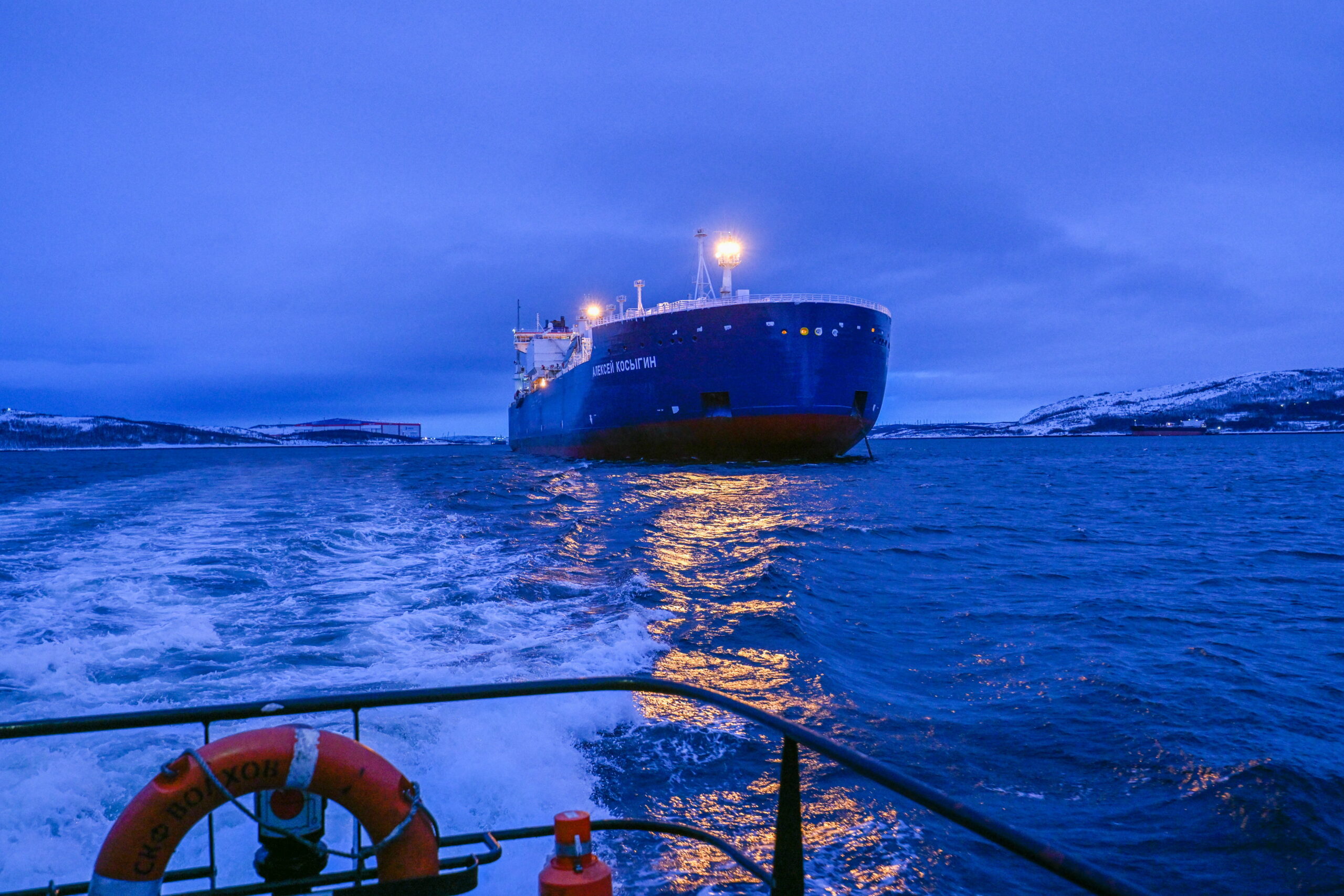
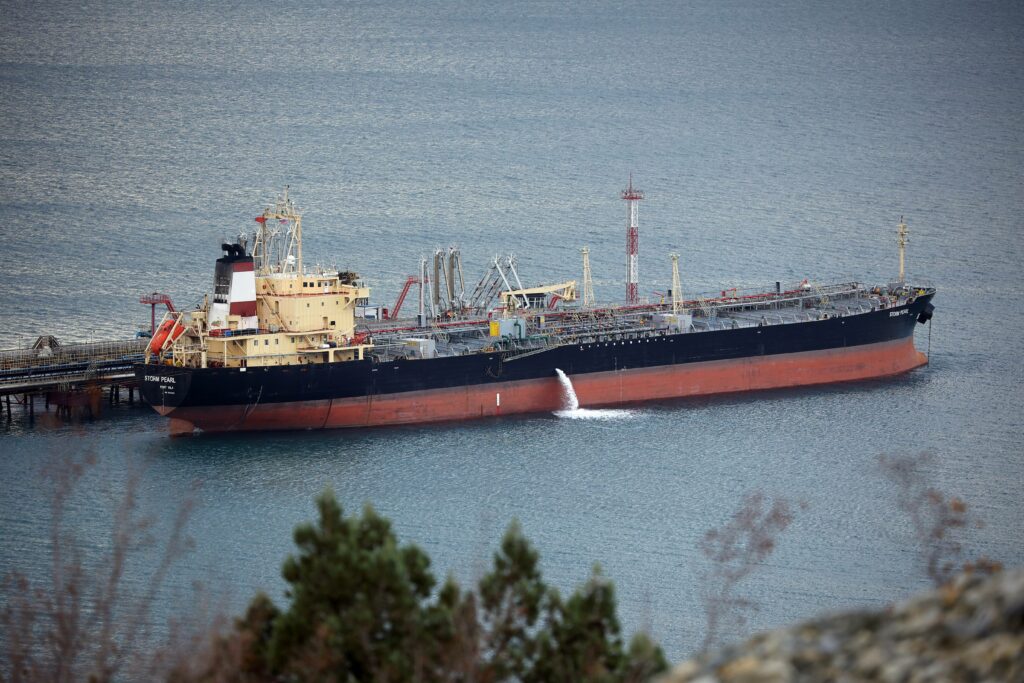
First, the original Western sanctions strategy on Russian energy (primarily oil) was aimed less at cutting export volumes than at reducing the revenues Moscow derives from them. When the United States and later the EU imposed oil embargoes, they assumed Russian companies would suffer heavy losses reorienting flows eastward—which, indeed, happened. The so-called price cap, followed by sanctions on the «shadow fleet,» intensified that pressure. The whole edifice remained relatively stable as long as the total volume of Russian oil was simply redistributed among different buyers (with Western countries effectively gifting their competitors a relatively cheap resource—a value-based choice on their part). But when huge volumes of Middle Eastern supply suddenly disappeared from the market, it became clear that the world could not do without Russian oil. The temporary lifting of sanctions is not that important: Russia physically cannot ramp up deliveries significantly for reasons unrelated to external restrictions. What matters far more is that the surge in global prices alone is enough to resolve most of the Kremlin’s recent budget headaches.
Western countries no longer need to quarrel over who is prepared to ease sanctions and who is not (even their complete removal is unlikely to cause prices to collapse right now). What they must understand is something else: genuine pressure on Russia is possible only when there is a sustained surplus of energy supply over demand. It is worth remembering that just a couple of months ago respected organizations such as the IEA and JPMorgan were forecasting Brent at $ 50−52—or even $ 30—per barrel in 2027.
On localized markets, sanctions policy works with devastating efficiency: it has, for example, virtually destroyed the forestry industry in northwestern Russia and slashed Gazprom’s exports many times over. But where the market is truly global, sanctions inevitably play a secondary role (recall the record export figures for Russian fertilizers in recent years). This creates a window of opportunity to rethink the entire sanctions strategy and shift it toward the model once applied to the Soviet Union: allow exports of raw materials while tightly restricting the flow of high-tech goods and technologies into the country.
The latter approach requires imposing strict producer liability for the end-use of their products. In recent years Russian missiles have been found to contain components from at least 49 Western companies. The most that has been done is to send them polite letters asking them voluntarily to stop supplying unreliable counterparties. By contrast, in the early 1980s Toshiba’s delivery of equipment to the USSR in violation of CoCom rules led to arrests, the resignation of almost the entire company leadership, and a complete ban on its exports to the United States. Today, despite far graver consequences from sanctions violations, no financial, administrative or criminal measures have been taken against a single executive of any Western firm. Yet precisely such tough measures could ensure far more effective enforcement of the sanctions regime.
Another important aspect is the growing divergence in approach across the Atlantic—one driven by far more than values alone. Brussels and European capitals sharply condemned the American moves to ease pressure and declared they would continue the policy of complete rejection of Russian energy carriers, even if it inflicted serious economic costs on Europe itself. Here one cannot ignore how differently Washington and Brussels view their geopolitical ambitions. In recent years the European Union has earned a reputation as the most resolute advocate of sanctions: it has consistently adopted 19 packages against Russia, has never lifted a single previously imposed measure, and has even ostentatiously ignored rulings by its own courts that challenged individual restrictions.
European sanctions have repeatedly proved more costly to Europe than to Russia, yet that has never deterred Brussels from its chosen path. A prime example is the European oil embargo announced in 2022: even before it formally took effect, rising energy prices handed Russia an extra $ 115 billion in export revenues, while European governments had to subsidize their energy consumers by more than € 650 billion in 2022−2023. We are now witnessing a similar story in the fertilizer market: the plan to raise duties on Russian product from 40% to 400% by 2028 has already driven up fertilizer prices in the EU by nearly 60% and triggered mass protests by farmers. There are hundreds of smaller examples.
At the same time, the EU has completely stepped back from any sharp geopolitical moves: it is steadily increasing imports from China even as the Americans cut back; it is doing everything possible to avoid raising military spending; and in the Iran crisis it refused to support the United States. One can also recall Emmanuel Macron’s repeated statements about how many times French troops should be sent to Ukraine.
Against this background, the White House under Donald Trump is pursuing a chaotic and sweeping foreign policy—both in the economic sphere (with wild swings in imposing or lifting exorbitant tariffs) and well beyond it (recall the Venezuelan operation). Such zigzags inevitably affect the global conjuncture, triggering everything from stock-market crashes (as in spring last year) to gold rallies (in the second half of 2025) to the current spikes in oil and gas prices. The artificially created imbalances demand a response.
In fact, lifting sanctions (something Washington, unlike Brussels, now understands perfectly well) is just as much a geopolitical tool as imposing them. Trump, for instance, has in several stages revised virtually all the main sanctions on Belarus—and more than 400 political prisoners have already been released, while Alexander Lukashenko has been invited to the United States, something that surely worries the Kremlin far more than his previous «sanctioned» status. The same logic can easily be applied to Russia: Washington realizes that wars are not won in finance ministries, and if allowing Putin to earn several tens of billions of dollars helps defeat the ayatollahs’ regime, that is not too high a price. A peaceful Middle East and a loyal Iran would more than recoup those costs in the short term.
When we wrote last year about the exhaustion of sanctions policy, we were referring primarily to the effect produced by its gradual, incremental tightening. By the end of 2025 that tightening had, on one hand, been successfully neutralized through the creation of a «shadow» system of supplies and payments—what might be called «alternative globalization.» On the other hand, further escalation was beginning to bump up against the limits of open violations of international law (seizure of vessels, closure of straits, etc.). Reviving sanctions pressure today would require more flexible and unconventional measures—ones that Europe, by all appearances, is incapable of adopting.
The most obvious among them were attempts to pressure buyers of Russian raw materials. Here the United States has been the pioneer: under Biden it threatened Chinese banks with sanctions for facilitating payments with Russia; under Trump it applied harsh pressure on India. The EU has done nothing of the sort. On the contrary, Brussels recently signed a free-trade agreement with New Delhi and introduced a similar regime with the Mercosur countries, including Brazil—the largest buyer of Russian fertilizers.
If one follows this logic consistently, pressure should also be increased on countries that actively help Russia circumvent sanctions. It would make sense to extend the entire sanctions package (except personal ones) to the countries of the Eurasian Economic Union. That is exactly how the CoCom regime operated during the Cold War: technological restrictions were imposed not only on the USSR but were extended to the Warsaw Pact and Comecon countries. Given the post-Soviet states’ dependence on the West, such a move would very likely cause the collapse of the entire «Eurasian integration project» and deliver a serious economic and reputational blow to the Kremlin. Well-designed sanctions can strip Russia of allies, whereas many of the measures already in place, on the contrary, bind those allies to Moscow on the basis of purely economic interests.
A less obvious but potentially effective tool of pressure could be the partial lifting of restrictions. Consider just two hypothetical examples. At present the United States and the EU have imposed personal sanctions on 13,600 Russians, including many deputies, officials and businessmen. Suppose the EU unilaterally reviews its lists and, on the basis of «expert assessments» that certain individuals do not actively support the war or participate in its organization and financing, removes sanctions from, say, 200 people. In a Moscow where internet is being switched off for the security of the «first persons,» how many days—or hours—would it take for the FSB to show up at their doors suspecting collusion with Western politicians? Why not sow chaos in the Russian elites at virtually no cost?
Or why not lift sanctions on those sectors in Russia where private business dominates and which contribute less than one-hundredth of the taxes paid by Rosneft to the budget? That would create a powerful psychological effect and could postpone the ruin of businesses that bear no direct responsibility for the war. Otherwise their laid-off workers would simply swell the ranks of Putin’s mercenaries at the front.
In other words, sanctions have a future only if their application becomes more dynamic, less predictable, and is calculated not merely to «tighten the economic screws» but also to destabilize the Putin regime politically.
The war in Iran has sharply intensified the debate over the future of anti-Russian sanctions, demonstrating how much their success has depended not on their internal effectiveness but on shifts in the global conjuncture. The benefits Russia will reap from any easing of the sanctions regime are unlikely to guarantee it long-term economic prosperity, but they can highlight how flawed many of the earlier decisions turned out to be. Russia’s war against Ukraine will not end because of economic pressure. It can be won either on the battlefield or by overthrowing the regime that started it.