The war in Iran has dramatically sharpened the debate over the future of anti-Russian sanctions. Against the backdrop of surging oil prices and Washington’s temporary easing of restrictions on Russian crude and petroleum products already loaded onto tankers, Vladislav Inozemtsev has put forward a fair and incisive argument: genuine pressure on Russia can only be sustained when global energy supply remains consistently higher than demand. It is difficult to argue with that premise. The real question, however, is whether all Western powers draw the same political conclusions from this reality.
Different Limits of Flexibility
For Washington, the logic of recent weeks is straightforward. Faced with the threat of another oil-price spike, the U.S. administration has chosen to dial back sanctions pressure—not only on Russian but also on Iranian oil—in order to prevent the market from overheating further. The move can legitimately be criticized, but its internal rationale is clear: when oil becomes too expensive, the market must be stabilized even at the cost of temporary sanctions relief, to avoid outright shortages.
Europe’s stance is markedly different. Brussels has made it plain that even an acute energy crisis will not prompt a return to Russian fossil fuels. Not only has the EU refused to relax its oil restrictions (Hungary being the customary exception), it has stuck to its own, lower price cap on Russian crude—around $ 44 per barrel—while the American cap remains at $ 60.
At the same time, the Union has legislated a phased but total ban on Russian gas: LNG imports will be prohibited from the beginning of 2027, and pipeline gas from the autumn of the same year. Amid current risks to the gas market and rising prices, the European Commission is not discussing a return to Russian supplies or President Putin’s recent gas proposals; it is instead debating more flexible rules for filling storage facilities.
Even the recent increase in Russian LNG imports into the EU (up 17 percent year-on-year in the first quarter of 2026 to 4.8 million tons) reflects pragmatic calculation and the exploitation of a window of opportunity before the full bans take effect, rather than any willingness to ease pressure or compromise with Moscow.
In short, the thesis that pressure on Russia is only feasible under favorable global market conditions describes the limits of American flexibility far more accurately than it does the logic of European sanctions policy.
This does not automatically mean the EU’s strategy is more effective or rational. It does, however, confirm once again that Western sanctions policy is no longer unified in its internal logic. The United States continues to be guided primarily by the imperatives of global market stabilization and, apparently, by the need to minimize domestic political risks ahead of the November mid-term congressional elections. The European Union, by contrast, is pursuing a consistent course of long-term political decoupling from Russian energy, even when that entails additional economic costs and political pain.
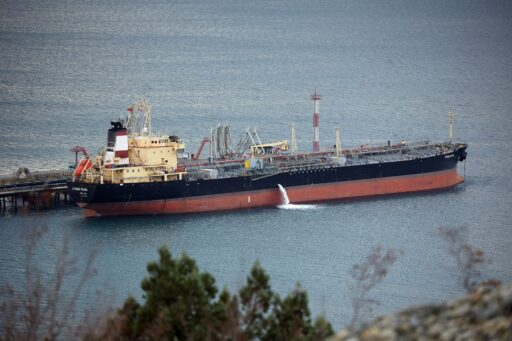
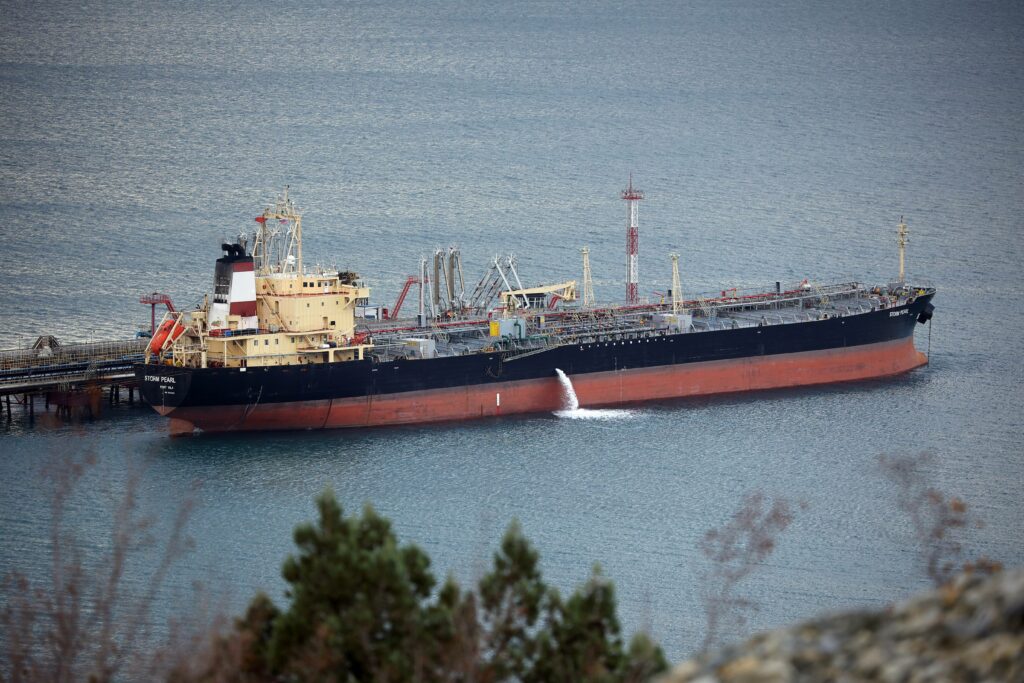
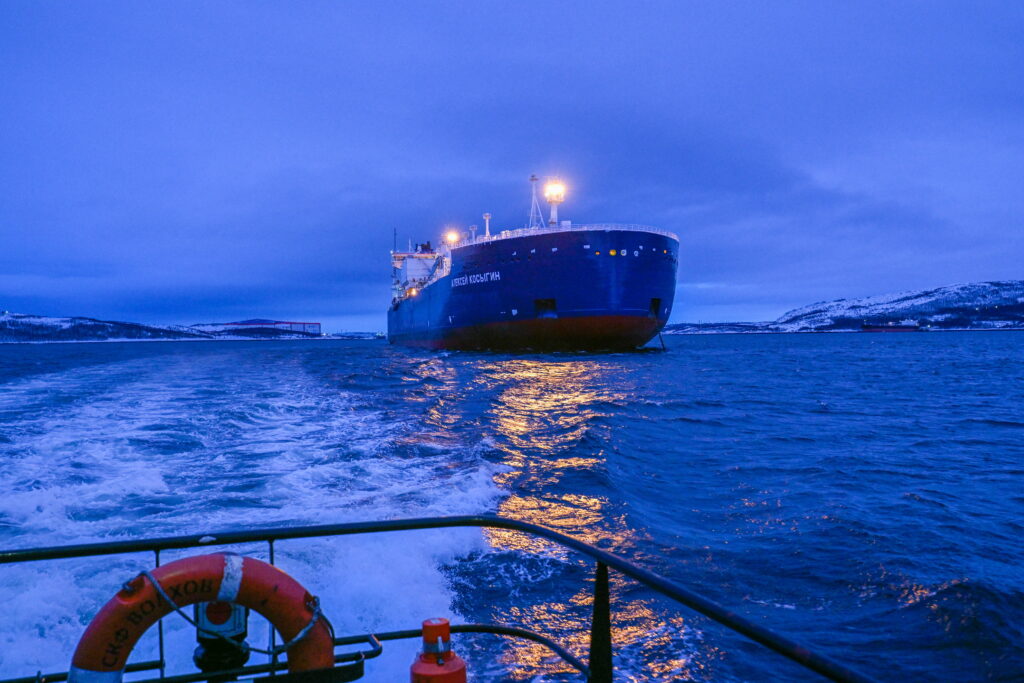
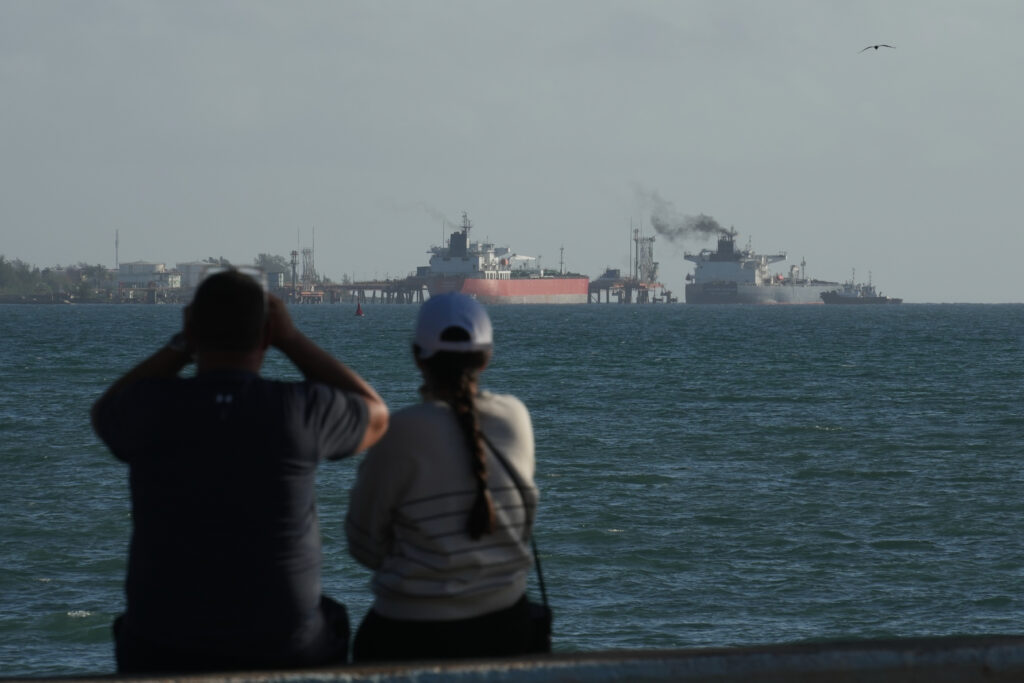
In practice, the divergence is unmistakable. While Washington temporarily eases sanctions pressure, European governments are tightening it—most notably against the «shadow fleet» of tankers. Sweden and France have already detained the first such vessels, and Britain has announced naval and law-enforcement inspections and seizures.
The Logic of Resilience
This brings us to the second important issue raised by Inozemtsev: the flexibility of sanctions as a geopolitical tool. The idea that sanctions should not only be imposed but also lifted, softened, recalibrated or applied more selectively when circumstances change certainly deserves serious discussion.
In the European case, however, the problem is not merely—or even primarily—a lack of political will or an inability to adopt «more flexible and unconventional measures.» The EU is simply structured differently from the U.S. presidential system. Every new sanctions decision requires complex intergovernmental negotiation and consensus among all 27 member states. The very fact that the bloc has managed to adopt nineteen sanctions packages despite divergent economic interests, internal disagreements and openly pro-Russian positions in some capitals testifies not to weakness but to considerable political effort, effective coordination and diplomatic success.
European «inflexibility,» therefore, has a dual nature. On the one hand, it genuinely complicates rapid, unorthodox maneuvers. The EU cannot zigzag politically, tightening and partially lifting restrictions according to short-term market conditions. On the other hand, precisely this inflexibility makes European sanctions policy more predictable and, consequently, less vulnerable to short-term market swings and crises. In this sense, predictability itself becomes an element of sanctions pressure: it shrinks the room for expectations of future relief and thereby limits the willingness of market participants to take additional risks and venture into the «grey zone» of global oil trade.
If American flexibility allows faster adaptation to shocks, European resilience sends the market a different signal: even in a crisis, not every oil panic automatically leads to a relaxation of sanctions discipline. It is precisely in this contrast—between adaptability and resilience—that the dividing line between the two approaches to sanctions policy largely runs today.
The Foundation of Resilience
A key pillar of the EU’s sanctions resilience lies in its fundamental attitude toward fossil resources. In the 21st century, energy security is defined less and less by military or administrative access to foreign raw materials and more and more by the ability to reduce dependence on them altogether.
The more modern response to Middle Eastern crises comes not from those shouting «drill, baby, drill» and issuing more drilling licenses, but from those investing in renewable energy, the electrification of transport and the development of domestic low-carbon sources. For Europe, sanctions policy and the energy transition are not competing but mutually reinforcing strategies.
It is telling that the current oil shock has only strengthened the case inside the EU for accelerating the reduction of dependence on imported fossil fuels. The share of renewables in EU electricity generation has already reached 47 percent (and exceeds 80 percent in several countries) and accounts for about 25 percent of total energy consumption. Meanwhile, the spread of electric vehicles and higher energy efficiency are beginning to exert a tangible influence on European and global oil demand: according to estimates, worldwide demand has already fallen by roughly 2.3 million barrels per day—more than Iran’s pre-war exports. This effect will only grow and could exceed 5 million barrels per day in the coming years.
In this context, high oil and gas prices function not only as a source of short-term pressure but also as a catalyst for structural change. They accelerate the shift of both demand and capital toward alternative energy and increase the political readiness of European governments to invest in their own generation capacity, grid infrastructure and domestic low-carbon assets.
It is important to stress that this is not a hypothetical transformation but a process already well under way. The EU is consistently speeding up the commissioning of new renewable capacity and increasing investment in infrastructure, including grids and storage systems. In 2024 alone, around 80 GW of new renewable capacity was added (66 GW solar and 13 GW wind), and the annual pace is set to rise to roughly 100 GW in the years ahead. At the same time, the Union is substantially scaling up investment in the pan-European energy system: annual spending is projected to reach around € 660 billion in 2026−2030. This amounts to nothing less than a wholesale overhaul of the entire energy architecture—one that will gradually reduce not only import volumes of fossil fuels but also the economy’s vulnerability to external shocks.
In this logic, the energy market increasingly resembles a system of communicating vessels: the higher the price in one segment today, the stronger the response from consumers and investors in another tomorrow.
The European Union does not always move with perfect confidence along this path and is currently balancing short-term price relief against its long-term «green» strategy. Yet it is precisely in this duality that its approach lies: to treat current crises not as a pretext for retreat but as an additional argument for accelerating import diversification, the development of domestic energy sources and a broader energy transformation.
That is why European sanctions resilience has a structural foundation. It rests not only on political will or regulatory decisions but on a strategic vision of the future of energy in which dependence on imported hydrocarbons steadily declines.
Against this background, the contrast with American policy stands out sharply. An approach focused on expanding fossil-fuel production, boosting energy exports and managing the current market balance allows quicker reactions to price shocks but does less to address the long-term vulnerability of the economy. The European strategy, by contrast, bets on changing the very nature of that vulnerability.
Priorities
None of this negates the central point: the war in Iran has indeed demonstrated how heavily the effectiveness of oil sanctions against Russia depends on global market conditions, and that the West lacks a single model for adapting sanctions to an energy crisis. That said, it does not follow that temporary U.S. concessions—and the benefits they bring Russia—prove the «imperfection of earlier decisions.» Their impact is likely to be limited and will largely depend on whether these easing are extended after 11 April 2026.
Far more significant is something else. The current crisis has laid bare the differing strategic priorities of Western countries. For the United States, a price shock makes it acceptable to temporarily reduce sanctions pressure in order to stabilize the market. For the EU, even a crisis of this magnitude has so far not provided grounds for revisiting its chosen course.
The key question is whether the EU has a «pain threshold» beyond which its leaders would be prepared to consider easing restrictions on Russian energy. Could prolonged disruptions in supplies through the Strait of Hormuz and a further rise in oil prices, for example, increase pressure on European governments and lead to a revision of certain decisions or a postponement of import bans?
Judging by the current logic of European policy, it seems more likely that EU countries will opt for more expensive alternative supplies—U.S. LNG, Norwegian pipeline gas or oil from Kazakhstan, Nigeria and other producers—along with fresh investment in domestic energy sources, rather than risk easing sanctions and sliding back into systemic dependence on Russian hydrocarbons.
In this sense, Washington’s temporary concessions are less a «hole» in the sanctions regime than a stress test of European sanctions strategy. And so far the test shows that this strategy is grounded not only in current market conditions but in the longer-term goal of reducing dependence on fossil fuels—while still leaving room for tactical maneuvering until the restrictions fully enter into force.
The most important takeaway from the current crisis, therefore, is not that sanctions have reached their limit, but that their future trajectory will increasingly be shaped not only by Russia’s behavior but by the priorities that Western countries themselves are prepared to defend in times of crisis.