This week, the Kremlin will hold the 2nd Russia-Africa ministerial conference—the first in the summit series launched in 2019 to take place in Africa. The Egyptian government has reprised its role (as in 2019) as co-organizer and now host of the gathering. The meeting is reportedly intended to set the stage for the 2026 Russia-Africa Summit and to focus on trade. This week’s conference may also signal the future role of the Special Representative of the Russian Presidency for the Middle East and Africa, a position formerly held by the recently retired diplomat Mikhail Bogdanov.
Previous summits raised expectations for Russia’s commercial footprint in Africa but have underdelivered. According to 2024 figures, Russia’s trade with the continent (USD 25−30 billion) is smaller than Ukraine’s (USD 41 billion). In investment, Moscow barely registers. Arms sales have seriously eroded since 2020, dropping Moscow from the largest to the second-largest supplier to sub-Saharan Africa.
While the covert and security side of Russia’s «double-headed» presence remains robust, the official diplomatic and commercial sides are hampered by the underlying weaknesses of Russia-Africa ties, particularly on the economic front. Reflecting on these trends in 2025, the pan-African magazine The Africa Report referred to Russia as «an economic power in appearance only.»
The high tempo of Russian diplomatic activities on the continent suggests that Moscow is seeking to change this perception. In 2025, Moscow has opened several «Russia House» branches across the continent, bringing the total to 22 countries covered, and has opened two new embassies (in Niger(fully operational by the end of 2025) and South Sudan), with five more on the way (Comoros, Gambia, Liberia, Sierra Leone, Togo). Notably, Comoros and Liberia (along with South Sudan, independent since 2011) never had a Soviet embassy in their capitals. Business diplomacy has proliferated, with government-sponsored events covering topics such as energy and mining, held in cooperation with Burkina Faso, Tanzania, and other governments. Across the continent, Russian state-owned companies have been signing agreements and building momentum around the commercial potential of Russo-African ties.
For example, the nuclear power state-owned company Rosatom has sealed deals and MoUs, reaching a total of 23 countries as of 2025. Some projects are significant: in 2025, the Republic of Congo ratified a deal for Russia to develop its Pointe-Noire to Maloukou-Trechot oil pipeline, with estimated delivery by 2029. The agreement follows a build-own-operate-transfer model, meaning Russia will retain use of the infrastructure for 25 years.
Seeking to overcome its relative diplomatic and trade isolation since 2022, Moscow has invested more in developing its official ties with Africa in diplomacy and trade. These ties hold strategic importance for the Kremlin because, beyond economic diversification, they form part of Russia’s broader effort to challenge US leadership.
Tailwinds
The year 2025 might come to be seen as the final moment of a Western-led, rules-based international order. The US administration under President Donald Trump openly seeks to relinquish America’s role as leader of the international community, consummating what Alexander Cooley and Daniel Nexon described as «Exit from Hegemony» in their 2020 book of the same title. One of the key arguments in Cooley and Nexon’s book is that leading states («hegemons») require smaller states to act as willing constituents of the global order—adopting diplomatic norms, establishing ties such as trade and business, and making the system their own, whether to participate in it or reform it. As powerful as they may be, global leaders still need consent from those they lead.
With the US abandoning its leadership role, Moscow—working in tandem with Beijing—gains more space to offer governments worldwide an alternative to the US-led, post-Cold War order. In this context, Russia-Africa business ties, diplomatic relations, cultural exchanges, and other engagements substantiate the offer of a new order. Four factors make the present moment especially conducive to this agenda in Russia-Africa relations.
First, US strategic priorities lie elsewhere. Washington has ended most USAID programs as well as the Global Engagement Center, a counter-disinformation body active in Africa. Africa received less than a page of attention in the 2025 US National Security Strategy, and Trump has expressed open contempt (if not hatred) toward the continent. The picture is not one of complete abandonment, however: the African Growth and Opportunity Act—the linchpin of US trade policy with Africa—and AFRICOM might not end up gutted after all, and reports suggest US intelligence is active again in Mali. Even if confirmed, these moves do not represent progress or a leadership role.
Second, Europe—the other pillar of the Western coalition—has too little fiscal and decision-making bandwidth to replace the US in Africa. It may not even be strategically prudent to assume such a role at a time when Europe faces a larger threat from Russia (a fact African observers recognize). While Europe remains a credible partner for African governments, competition has intensified, requiring the bloc to step up its efforts.
Third, continental coordination remains relatively weak in Africa. The African Union and regional organizations (e.g., ECOWAS in West Africa) are limited in resources and in their ability to forge common African positions. The Sudanese civil war offers a grim example: faced with a major catastrophe, the AU (and the regional body IGAD) has struggled to position itself as the decisive player and deliver «African solutions to African problems.»
Fourth, Russia-China competition in Africa is mild. Generally, Moscow is viewed as a viable partner in areas such as defense, grains, fertilizers, and space exploration, while China serves as the primary alternative to the West for African governments, especially in economic matters. With a few exceptions, Beijing’s and Moscow’s offers to the continent are complementary.
Finally, many African governments have embraced a «non-aligned» or «multi-aligned» foreign policy. This is not neutrality toward global crises but a security strategy designed to mitigate risks encountered in recent years (the US-China trade war, the COVID-19 pandemic, and others). From this perspective, states across the continent see no viable gains from responding decisively to Russia’s full-scale invasion of Ukraine. While no African government (except Eritrea) has supported Russia’s war of aggression, none has imposed sanctions either.
Extra-regional powers and local middle powers have ridden these tailwinds, becoming key actors in the continent’s international relations. This has created an opportunity that Russia has exploited to enhance its official diplomatic and trade ties with African countries in 2025.
The relatively more conciliatory US policy toward Moscow and its overall diminished role in Africa send ambiguous signals about the future of Washington’s pressure on governments engaging with Moscow. Europe will remain active on the continent and could potentially benefit from US retrenchment. However, large strides would be needed for the EU to expand its scope as a partner in a region where Chinese, Gulf, and Turkish companies are strong rivals.
In turn, Russian security engagements in Africa have come at the expense of regional organizations. While claiming to support African agency, Moscow undermines ECOWAS and SADC when dealing bilaterally with regimes suspended by the AU. This has long applied to the Sahel juntas of Burkina Faso, Mali, and Niger, and, since 2025, to the Madagascar military government as well.
More broadly, many of Russia’s engagements have been pursued at the expense of local actors. For example, Russia’s Sahel policy has come at the cost of Algeria’s traditional ties with the region. In 2025, rather than using its leverage as a conciliator, Moscow has remained passive in the Algeria-Mali diplomatic crisis.
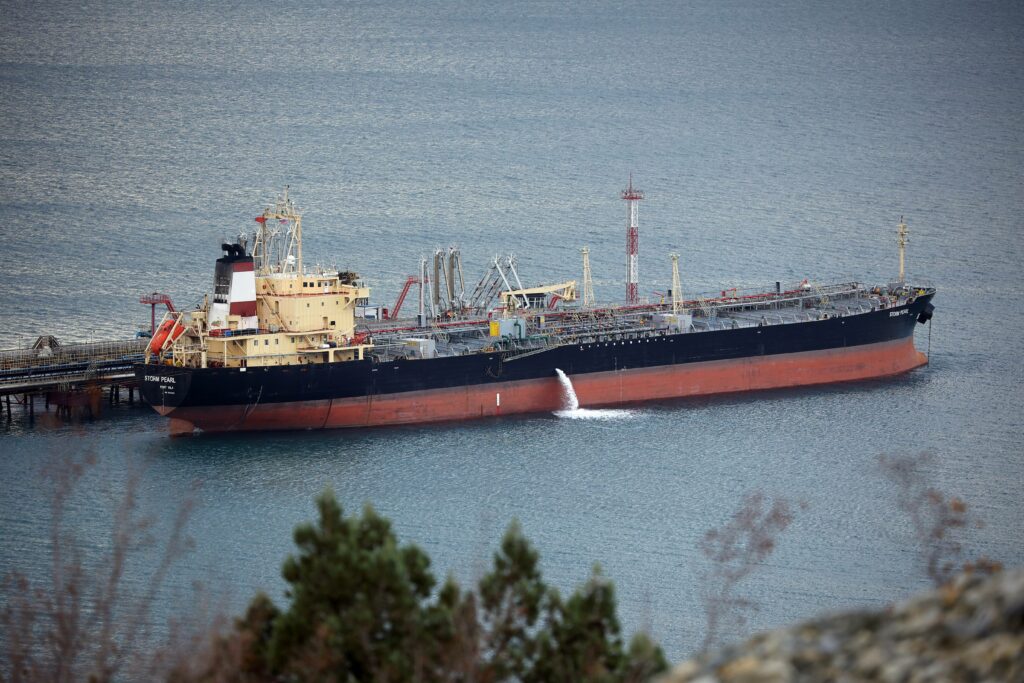
In a similar vein, Moscow exploits the non-alignment of governments worldwide by using them as jurisdictions to evade sanctions, launder disinformation, launch hybrid operations against Europe, and recruit manpower for its war against Ukraine. This trend dates back to when Prigozhin ran covert social media operations targeting the US from Ghana and continues today as the Russian «shadow fleet» sells oil across the continent.
Outlook
Russia’s engagements with African governments are shaped by broader global trends. In that sense, the 2026 Russia-Africa Summit will provide clarity on how actors on the continent perceive Moscow—and, among other things, its war against Ukraine. It will also reveal the extent to which the wider array of cooperation in business, mining, and energy remains credible for African counterparts.
More broadly, any consequential transformation in Russia’s full-scale invasion of Ukraine would have implications for the Kremlin’s Africa policy. Though unlikely today, an outcome perceived as a Russian victory would, in terms of diplomatic standing, further enhance the Kremlin’s position on the continent, as perceived reputational and sanctions risks from engaging Moscow would diminish.
This would bolster Russia’s efforts to reshape the world order in service of its authoritarian and anti-human-rights agenda. More immediately, it would provide breathing room for the Kremlin’s aggressive posture toward Europe.
For Europe to counter this, support for Ukraine must remain intensive in volume and extensive in duration. In parallel, a diplomatic and commercial competition strategy in areas such as defense, grains, fertilizers, energy (including nuclear), and space would erode Russia’s trade and credibility gains on the continent. Coordination between the EU and other large extra-regional players—such as Brazil, India, Indonesia, and Türkiye—can add scope to initiatives across all these policy areas.