While markets continue to digest the unpredictability of US policy in Venezuela, the Kremlin is issuing orders for the year ahead on the home front. At a meeting with the Council on Strategic Development and National Projects on December 8, Putin apparently ordered the government to work with the Bank of Russia to return the economy to sustainable growth while keeping inflation at 4−5%, its ongoing central bank target. Though unsurprising, this highlights the impotence of Putin’s marching orders on the economy as the war rolls on. The Bank currently forecasts GDP growth of 0.5−1.5% in 2026. It remains to be seen how exactly they expect even these modest figures to be realized.
The underlying damage to the economy that brought growth down to 1% for 2025 shows no signs of relief. Trailing indicators reveal that personal electronics sales fell 10% for January-September last year, and sector contract prices are rising enough that higher component costs will drive retail prices up 10−15% early this year. Marat Khusnullin predicts that new housing completions will fall about 5% this year and settle at levels 15% lower by 2027−2029. Spending on organized tours with domestic tourism service providers fell 10.6% last year. Purchases of foreign autos fell precipitously, and the aggregate auto sales market shrank by 19%. Things are dire enough for the average household that officials expect demand for fish to fall while shrinkflation becomes an ever-present frustration for consumers, robbing them of their purchasing power.
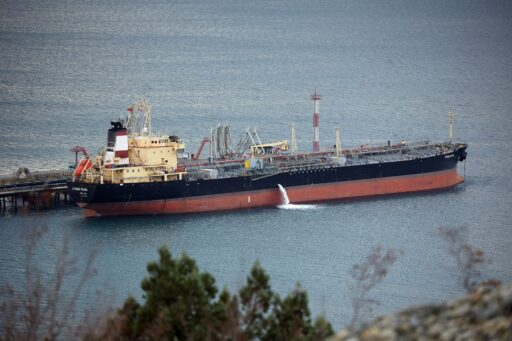
Ukraine appears to have found a new lease on diplomatic life in its never-ending fight for a ceasefire or peace deal, while the Russian war economy’s disequilibrium tumbles into an ever more imbalanced and damaged state. Production tells the tale. Over the course of 2025, manufacturing PMIs tipped into negative territory, so much so that by December, manufacturing contracts fell at the fastest pace since March 2022. Since the mobilization of men for the front, defense spending and the extension of subsidized credit to defense industries have provided a fiscal stimulus offsetting the headwinds to the rest of the economy. That stimulus is clearly under threat this year. There is considerable uncertainty over further sanctions enforcement on Venezuela and the new specter of congressional secondary sanctions on buyers of Russian crude. However, it’s safe to say that the Trump administration is more seriously interested in a world where oil trades closer to $ 50 a barrel to provide a balm for the inflation caused by its kneejerk trade policies elsewhere. Assuming the government is forced to limit the budget deficit to not far from 2025’s 2.6% of GDP to maintain the Bank of Russia’s inflation target, what once was stimulus to run in place will no longer stave off recession. The question is one of timing.
There is something akin to collective madness now gripping the bureaucracy in Moscow as officials are forced to slash spending or raise new tax revenues to impose the minimum level of macroeconomic stability possible. Last month, there was a bizarre budget forecast through 2042 published by Maxim Reshetnikov’s staff at the Ministry of Economic Development with no coherent set of assumptions, an unexplained timeframe, and the belief that over the next 17 years, the budget will remain in deficit every year, growing the national debt from 38.5 trillion rubles to 238 trillion. Belief in Mikhail Mishustin’s image as a «fixer”—the man to shore up Putinism against its gravest failings—makes sense only insofar as the political system perpetuates itself, not in terms of its efficacy in delivering on Putin’s non-military mandates. A system that budgets more for the war in one week than 75% of Russia’s regions budget for a year, whilst foisting scores of unfunded social mandates and demands that they redirect money toward recruitment, is not in the best of health.
Faced with the high likelihood of recession looming before them and the veneer of normality required by the Kremlin’s dishonest rhetoric on the economy, policymakers still have some tricks up their sleeve. The most recent industrial statistics review from TsMAKP shows two opposing mini-trends: non-military manufacturing output ticked up slightly in November somehow, while aggregate production declined. I’ve been wondering how this is possible given that the Russian Academy of Sciences found sales estimates for 2025 among surveyed businesses to be the worst they’ve been since 1998. The mood is horrendous, not optimistic. Yet I recall that older business practices can be called upon in times of crisis. Factory workers may be forced to churn out military production on punishing schedules, the scale of physical output unmatched by indices that track ruble prices because of contractual gimmicks hiding costs for the defense budget through credit subsidies, and similar quasi-Soviet mobilizations of labor that would not show up in typical indicators that paint a far more damning portrait.
It is difficult to assess any of these developments in a quantitative sense without better data, access to Russia itself, and regular contact with people actually working in these industries. But barring that, we can infer that the divergence between the 24/7 assembly lines for arms and the rest of the economy is becoming a chasm. There are always limits considering the source, but this comports with what I saw from Rosstat. Domestic inputs produced by Russian firms—bulldozers, cars, machinery, the implements of business—fell hard enough in November that even a significant recovery in December would look recessionary on paper. These declines risk further destabilization because of the regime’s approach of taxing the public to find more money for the war. Siluanov’s current estimate for the VAT tax hike to 22% is 750 billion rubles, something like 0.25−0.3% of GDP depending on how seriously we take ruble GDP estimates. That sum will inevitably fall as layoffs begin and lost corporate earnings become lost investment, which in turn becomes lost wages.
That Russia can return to growth above its 1% trend (at best) with the current investment profile, the heaping of money onto capacity that is not productive, and the ongoing depletion of the male labor force, is a fantasy. There is no productivity breakthrough to be had without an end to the war, or at least an end to the war at its current intensity. The year is not off to a good start. Suffice it to say, there is so much farther things can fall.