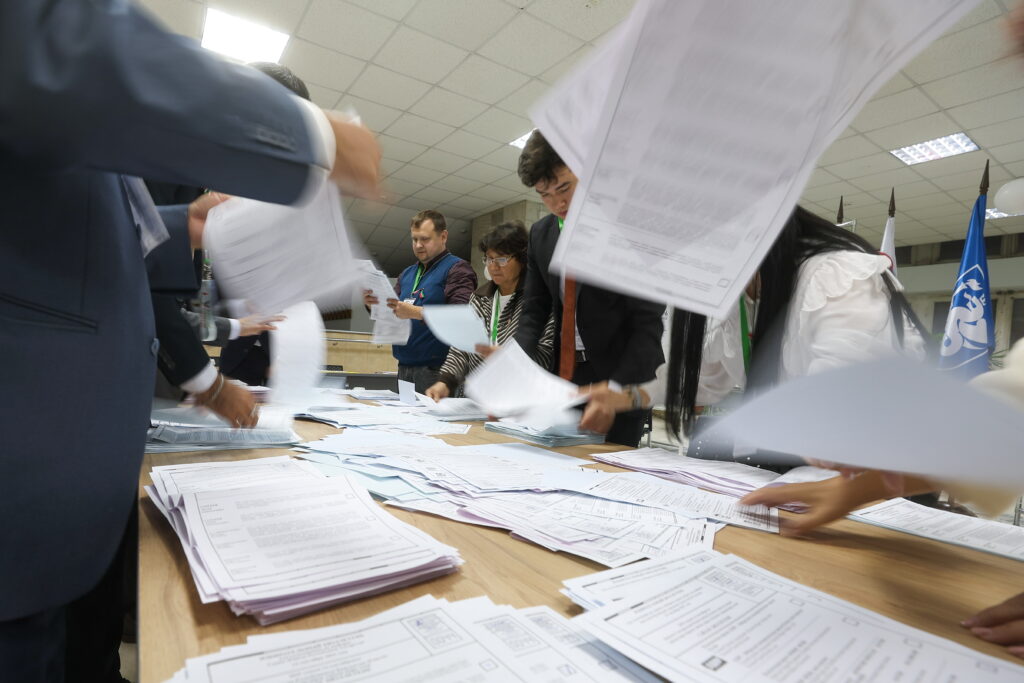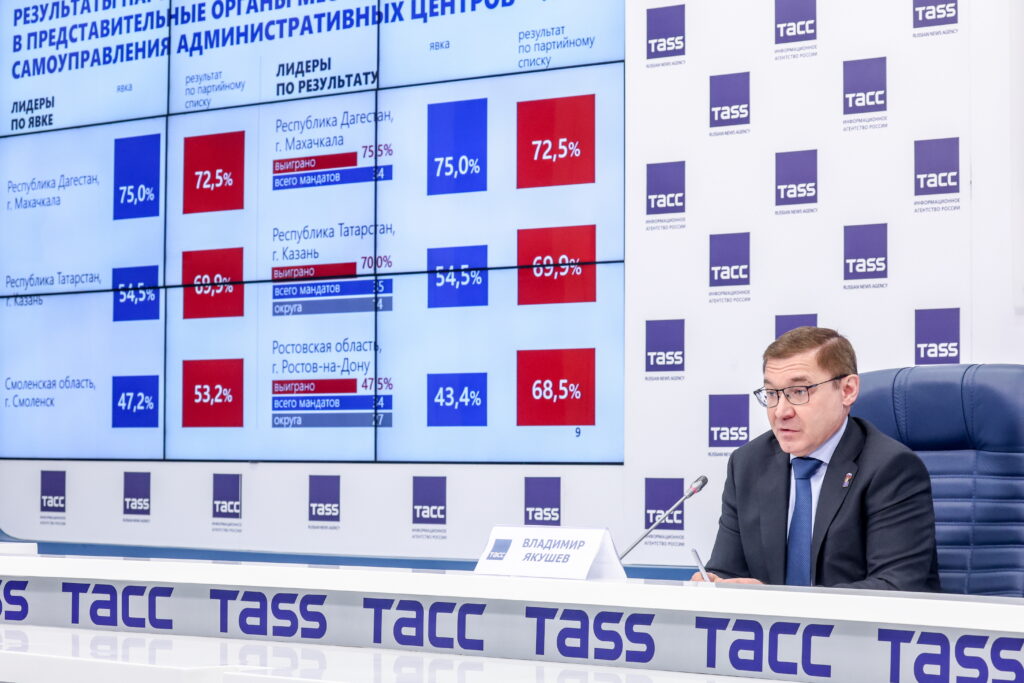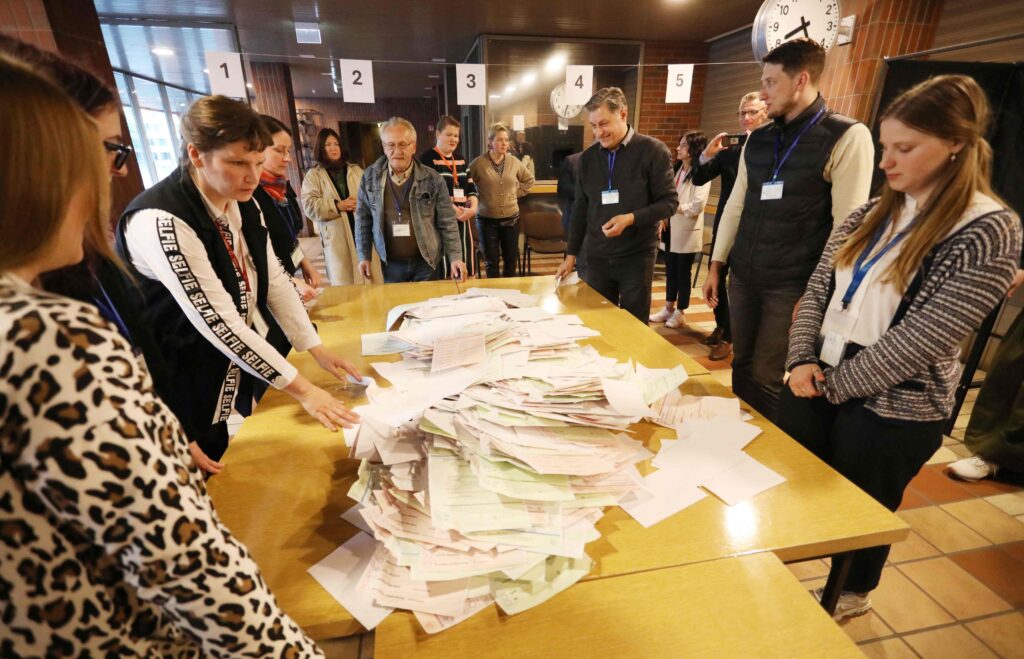
Three months remain until the official launch of the election campaign for State Duma deputies. The elections are scheduled for September 20, 2026. On the same day, gubernatorial races will take place in at least seven regions, along with elections to 38 regional legislative assemblies, 12 city councils in regional capitals, and several thousand local contests at various levels.
Even under a deeply consolidated authoritarian regime, elections remain an important public institution—not so much because of their outcomes, but because of the campaign process itself. It is during this period that the shifts in the political system become most visible: what the authorities fear, which topics are taboo, how much risk opposition politicians are willing to take, how large the administratively dependent segment of the electorate is, and so on.
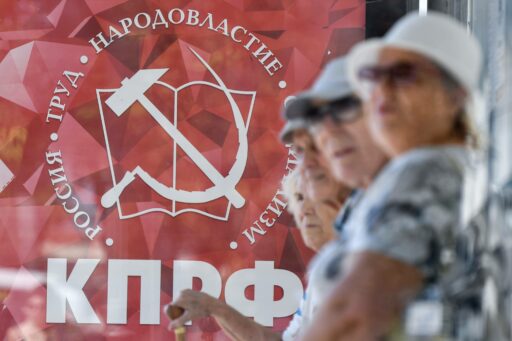
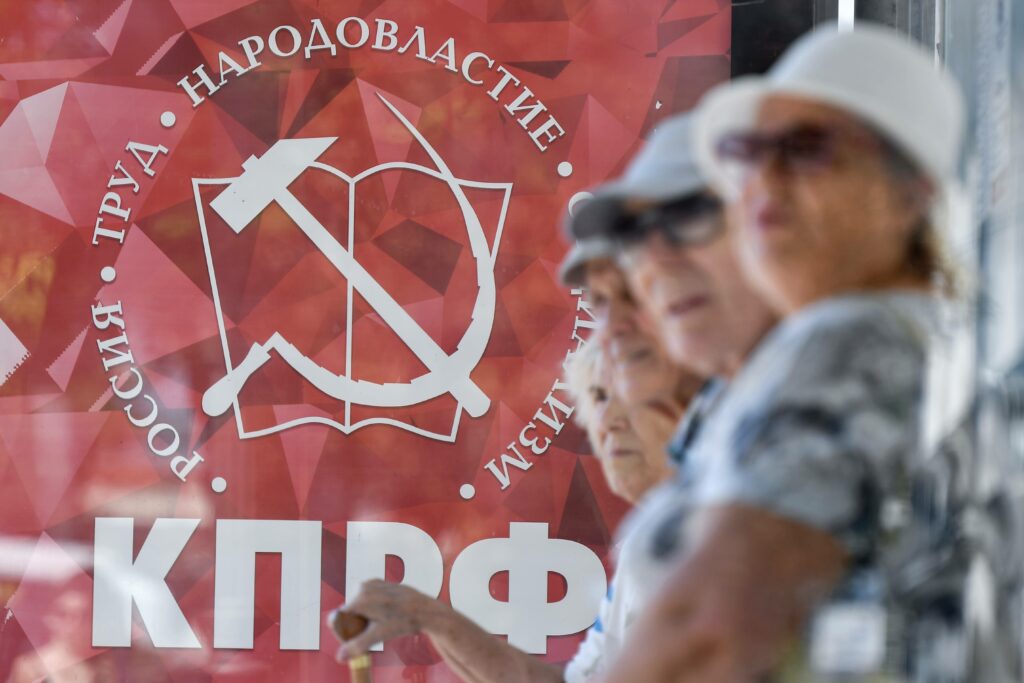
Ahead of the upcoming electoral cycle, we are launching a short series of articles on the current condition of Russia’s key political parties. The first piece focuses on CPRF—a party that has been regularly making headlines in recent months.
How did CPRF fare in the last elections?
According to official Central Election Commission (CEC) data, in the September 2021 elections to the 8th State Duma, CPRF secured 18.93% of the vote and comfortably took second place. United Russia claimed first with 49.82%, while the Liberal Democratic Party of Russia (LDPR) came third with 7.55%.
These figures immediately raised serious doubts about their accuracy. International observers from the OSCE/ODIHR did not attend, and numerous documented violations—from issues with observer access to clear signs of fraud—undermined trust in the results. The Golos movement openly stated that mass falsifications during voting days had returned. Several independent electoral analysts, working from official statistics, independently estimated the volume of anomalous votes at 14−16 million. Sergei Shpilkin put the lower bound at around 13.8 million stuffed votes, while Sergei Guriev, citing data from political scientist Alexei Zakharov and human rights activist Oleg Kozlovsky, mentioned an upper bound of up to 16 million. With such adjustments, United Russia’s real result would have been 31−35%, and CPRF’s 25−27% (plus another roughly 4% for CPRF spoilers: the Party of Pensioners and Communists of Russia).
These estimates are indirectly supported by results in regions where falsifications were minimal at the time: in Altai Krai the United Russia/CPRF ratio was roughly 34−31, in Yakutia 33−35 (favoring the communists), in Vologda Oblast 34−22, in Irkutsk Oblast 36−28, in Kostroma Oblast 30−28, in Omsk Oblast 33−31, and so on. United Russia’s official lead was ultimately secured by a handful of «problem» regions with anomalously high turnout and off-the-charts results for the ruling party.
Social media mentions throughout the campaign showed a similar picture: despite United Russia’s dominance in volume of content, engagement levels (likes, comments, reposts) for United Russia and CPRF ran almost in parallel (slightly lower for the communists), with a huge gap over the others.
Thus, in 2021 CPRF delivered its strongest performance—in both genuinely collected votes and campaign visibility to voters. A major factor was Alexei Navalny’s Smart Voting project, which overwhelmingly recommended CPRF candidates. Thanks to this, the party managed to consolidate not only its traditional electorate but also a significant portion of the urban protest vote, forming a rare opposition coalition ranging from Stalinists to liberals.
CPRF’s trajectory from 2022 to 2025
The full-scale war that began in February 2022 effectively erased CPRF’s 2021 gains, shrinking its support back to the boundaries of its core electorate. The coalition that had formed around the communists quickly fell apart: the party leadership’s unconditional support for the war alienated a large share of protest voters. Moreover, some Soviet-nostalgic voters drifted to United Russia, which in practice pursued the hardline foreign policy that the most radical communist supporters had long dreamed of.
At the same time, wartime censorship sharply narrowed opportunities for any meaningful criticism of the authorities—even on socio-economic issues. The remaining criticism became extremely cautious and limited to topics that cause friction even within the elites. Just a few years ago, today’s levels of inflation, rising mortgage and utility rates, and cuts to social benefits would have prompted CPRF to launch large-scale campaigns, but nothing of the sort is happening now.
In the same vein, the party carried out a «self-purification,» expelling several politicians of left-wing (or simply protest) orientation who had joined its ranks. In 2022 the Moscow city committee of CPRF removed two of its candidates from municipal elections in Ramenki. In 2023 State Duma deputy from the Moscow City Duma Evgeny Stupin was expelled, and in 2024 as many as 16 members were expelled in Primorsky Krai, including regional parliament deputy Alexander Sustov and former regional branch head Vladimir Grishukov.
None of this, however, shielded CPRF from mounting pressure, including forceful measures. As early as October 2021—right after the elections—federal party leader Valery Rashkin faced criminal charges for illegal hunting. In November the State Duma stripped him of parliamentary immunity, and in April 2022 a court in Saratov Oblast sentenced him to three years’ suspended imprisonment with a two-year probation period and a matching ban on hunting. In May of that year Rashkin was deprived of his mandate.
A major blow came in 2023 with the departure of communist Anatoly Lokot from the mayoralty of Novosibirsk, the country’s third-largest city. Beyond prestige, the post provided a certain administrative resource in a city with 1.2 million registered voters.
In spring 2025 the State Duma adjusted the boundaries of single-mandate districts due to demographic shifts and the inclusion of «new regions» (occupied Ukrainian territories), which were to receive their own representation. Seven new districts appeared in the occupied territories, while Moscow, Moscow Oblast, and Krasnodar Krai each gained one additional mandate—all regions ultra-loyal to the authorities. Ten regions lost one district each: Altai and Zabaykalsky krais, and Volgograd, Voronezh, Ivanovo, Kaluga, Rostov, Smolensk, Tambov, and Tomsk oblasts. The most painful loss for CPRF was the Altai district, from which communist Maria Prusakova had won in competitive 2021 races.
Simultaneously, intense security pressure targeted CPRF’s Altai Krai branch. The region has traditionally been important for the party: more than 1.7 million registered voters, consistently strong results. In the 2021 regional assembly elections the communists formed the country’s largest faction (18 members). Without spoilers from Communists of Russia, CPRF would have outpolled United Russia on party lists: CPRF 24%, Communists of Russia about 12%, for a combined left-wing total of 36% against United Russia’s 34%.
Over the past year law enforcement in Altai Krai has opened several cases against regional parliament deputies from CPRF concerning «fictitious aides»: they are accused of helpers (formally civil servants employed in the assembly apparatus) not actually performing their duties. Even the vice-speaker was implicated. In recent months 11 people linked to the regional branch have been detained. The timeline: On November 20, 2025, a major fraud case was opened against deputy Lyudmila Klyushnikova and her aide Svetlana Kerber. They were arrested but transferred to house arrest in December. On January 30, 2026, State Duma deputy and Altai communists leader Maria Prusakova denied rumors of a case against her. On February 5 searches took place at vice-speaker of the regional assembly Yuri Kropotkin and deputy Andrei Chernobaev. According to Nezavisimaya Gazeta, nine people were detained, including deputy regional branch head Daria Zulinskaya and aides to communist deputies: seven were later released as witnesses, but the deputies remained in custody. On February 27 another CPRF deputy, Alexander Volobuev, was detained—taken directly from the army, where he had been sent amid a scandal over a photo showing a man resembling him kissing another man (pro-regime Telegram channels linked Volobuev’s case to the banned «LGBT movement» in Russia).
In Kurgan Oblast, where CPRF also traditionally holds strong positions, on March 2, 2026, the mandate of the oldest city duma deputy Ivan Kamshilov was revoked—formally because, as the sole communist, he had not formed a one-person faction and had not reported on his own work to himself.
Amid such pressure some deputies are leaving the party voluntarily. On February 13, 2026, Sverdlovsk Oblast assembly deputy from CPRF Taras Isakov announced plans to run in the elections with United Russia. He remains in CPRF faction for now and refuses to submit an exit application so as not to lose his mandate.
What electoral results is CPRF bringing into the campaign?
It is hardly surprising that—with vague positioning, the absence of any sharp criticism of the authorities, and growing administrative and security pressure, CPRF is approaching the new Duma campaign with noticeably weaker electoral prospects than five years ago. This is clearly visible in the results of 2025 regional assembly and city council elections. Compared with the September 2021 Duma elections in the same regions, party support has fallen by roughly 11 percentage points (more than halved); relative to 2020 regional assembly elections, the drop is about 6 points. A similar trend appears in city council races in regional capitals: losses of up to half the 2021 figures and around 9 points compared with 2020 municipal elections.
In some regions and cities where communists previously performed confidently, results have been disastrous. In Ryazan and Chelyabinsk oblasts CPRF lists garnered only about 6%—barely above the threshold. At the same time, last year the party performed decently in city elections in Orel, Kazan, and Krasnodar. These three cases, however, are specific: in Orel Oblast the governor is communist Andrei Klychkov, making CPRF essentially a second «party of power» with its own administrative resources. Kuban and Tatarstan are regions of mass falsifications, where such results are possible only by arrangement with the authorities.
Even in the current environment, there are examples of relatively successful campaigns showing that with a different approach and in a more competitive (or at least freer) setting the party still has potential. In 2025 the CPRF took 14.9% in the Komi Republic State Council elections despite a spoiler list (though in 2021 the result there was far better at 26.9%). In 2023, in a competitive race, the party managed to defend the governorship of Khakassia—the very post Valentin Konovalov had won in very difficult 2018 elections.
These cases demonstrate that, if it maintains a broad coalition and the ability to run a competitive campaign, CPRF can not only post good results but actually win. In Komi, State Duma deputy Oleg Mikhailov actively works to hold together a coalition of former Shies landfill protesters and the Komi people’s movement. In Khakassia the party had its own administrative resource thanks to the regional head post and ties with part of the republican elites. A certain administrative resource also remains for CPRF in Gennady Zyuganov’s home region of Orel Oblast, where communist Andrei Klychkov is still governor—though Klychkov consistently stays in line with the Presidential Administration’s policy.
A huge loss for the party will be Moscow, with nearly 8 million registered voters. In 2021 CPRF received 22.7% there at 50% turnout—over 800,000 votes (about 8% of the party’s nationwide total). The introduction of remote electronic voting (DEG) makes the communists’ prospects in the capital far gloomier. In 2021 supposedly 1.9 million of the 4 million who voted used Moscow’s DEG system (less than half). Already then DEG flipped results in eight of 15 single-mandate districts: paper ballots showed opposition candidates winning, but after electronic votes were counted systemic candidates prevailed. The counting took anomalously long, and observers recorded numerous oddities: on Sunday night the pace of electronic votes for United Russia surged sharply and normalized after six hours; for two hours electronic party-list votes for United Russia significantly outpaced those for its single-mandate candidates (uncharacteristic of natural patterns); re-votes (about 15% of votes) mostly shifted from opposition to pro-regime candidates; later a second, hidden blockchain containing re-vote chains was uncovered.
In 2021, more than 2 million Muscovites were still able to vote using paper ballots and could at least have some degree of confidence in the counting of their votes. By contrast, during the local elections in September 2024, paper ballots were issued to only about 50,000 people in the capital. Virtually all voters were effectively forced to rely on electronic voting (DEG). As a result, CPRF’s performance in Moscow now depends almost entirely on the will of the city’s and federal authorities.
The party has grown so uncertain of its position in the capital that on March 3, 2026, Moscow City Duma deputy Leonid Zyuganov — grandson of the CPRF leader — announced he would not seek nomination to the State Duma. The reason is straightforward: the party is afraid of losing his seat in the Moscow city legislature.
The party’s campaign efforts will also be seriously hampered by a bill that passed its first reading in the State Duma. The legislation introduces a ban on using AI-generated images of people in election campaigning, as well as any depictions of deceased individuals — including real historical figures. This rule effectively outlaws CPRF’s long-standing visual staples, forcing it to abandon images of Lenin and Stalin in its materials. Similarly, Liberal Democratic Party of Russia (LDPR) would have to drop depictions of Zhirinovsky.
One of the most high-profile cases involving this issue has already occurred with the communists: in 2025, the Chelyabinsk regional branch of CPRF clashed with the local election commission over a leaflet featuring an «ideal family» image generated by AI. The commission banned distribution of the material, arguing that it used images of third parties. The party attempted to challenge the decision, but the Supreme Court sided with the commission.
Overall, the executive branch, law enforcement agencies, and United Russia are doing everything possible to constrain CPRF’s opportunities. Without effective countermeasures, even clearing the 10% threshold under these conditions could come into serious doubt. So far, however, no particularly creative responses have emerged.
Recently, CPRF announced plans to hold intra-party primaries under the «People’s Candidate» project, running from March to May 2026. The idea is to launch the campaign early, draw public attention, and potentially identify new activists. How well this plays out in practice will be crucial.
Despite all the restrictions, CPRF remains the most capable of pursuing an independent political line among Russia’s legally existing parties and displays a certain resilience to pressure. For those managing domestic politics, it continues to be an outsider: the party relies on its own internal resources, is not dependent on a single leader or narrow circle of close associates and retains elements of internal democracy in decision-making.
CPRF’s main asset is its most developed and genuinely operational network of regional branches among all political forces (excluding United Russia, which, after more than 20 years of existence, remains essentially an appendage of the bureaucratic apparatus and survives solely on administrative resources). With sufficient will, this infrastructure could enable CPRF to rapidly launch effective public campaigns in the regions, centered on the increasingly acute socio-economic agenda.