The U.S. temporary authorization allowing the sale and delivery of Russian oil and petroleum products already loaded on vessels triggered an almost immediate — and entirely predictable — political backlash in Europe. Just as sanctions pressure on Russia’s oil sector was beginning to show cumulative impact, Washington took a step that appears, at first glance, to be a clear concession to the Kremlin. Symbolically, it looks terrible. But when viewed through an economic rather than purely political lens, a more nuanced question emerges: how serious is this oil breach, really, and what risks does it pose to the existing sanctions framework?
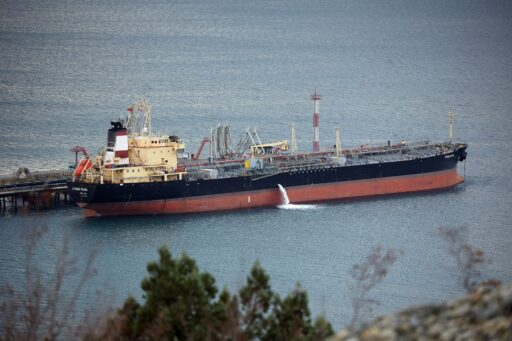
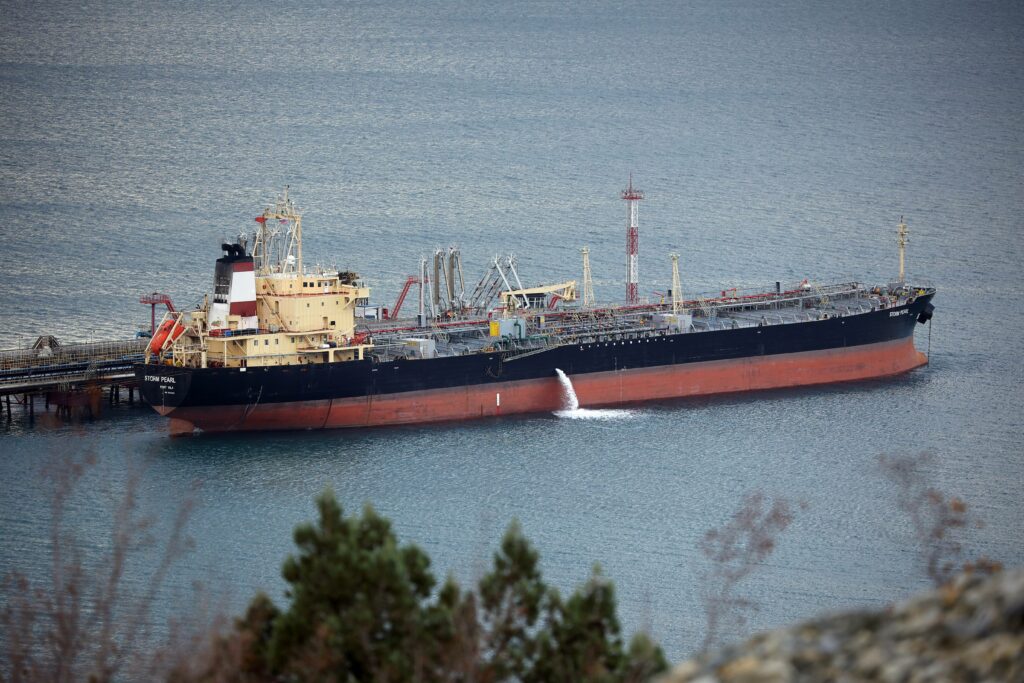
First, let’s clarify exactly what the United States did. The Treasury’s Office of Foreign Assets Control (OFAC) issued General License 134, which authorizes transactions necessary for the sale, delivery, and unloading of Russian-origin crude oil and petroleum products loaded onto vessels no later than March 12, 2026, through April 11, 2026. An earlier license (General License 133) had been limited to shipments bound for India; the new one broadens the scope globally. Crucially, it covers not just «routine» cargoes but also oil produced by already-sanctioned Russian entities and operations involving tankers in the so-called shadow fleet. This isn’t mere rhetorical softening — it’s a concrete legal window to unblock deals that, until yesterday, were considered toxic under U.S. sanctions rules.
That said, Washington has not dismantled its entire oil-sanctions architecture against Russia. From the outset, the restrictions were never designed to completely remove Russian barrels from the global market. Instead, the approach — including the price cap mechanism — was crafted to keep Russian oil flowing while sharply curtailing Moscow’s export revenues.
The framework operates on two main fronts. First, an embargo on seaborne deliveries of Russian crude and products to EU countries, G7 members, and several aligned nations. Second, companies from the sanctions coalition are prohibited from providing key services (shipping, insurance, chartering, brokering, maintenance, etc.) to third-country buyers if the oil is purchased above the agreed price ceiling.
In essence, the sanctions were built to decouple the physical presence of Russian oil on world markets from the financial rents Russia earns from exporting it.
This makes the current waiver doubly ambiguous. On one hand, it runs counter to the political logic of maximum pressure: at the very moment when sanctions on Russian oil companies and their logistics were starting to bite into the federal budget, the U.S. effectively lifted restrictions on cargoes already at sea. On the other hand, the measure is narrowly time-bound and was issued against the backdrop of an acute global oil-market crisis sparked by the U.S.-Israeli war against Iran. The primary goal is clearly to ease upward pressure on prices and stabilize the market.
The problem is that even this temporary friction relief objectively benefits Russia in the current environment. Russia’s federal budget entered 2026 in dire shape. The deficit for January-February reached roughly 3.4−3.5 trillion rubles — nearly matching the full-year target already — while oil-and-gas revenues over the same period plunged about 47% year-on-year. February saw Russia’s oil and product export earnings hit their lowest levels since the full-scale invasion of Ukraine began. This was precisely when the combined weight of sanctions, discounts, logistical bottlenecks, and issues with key buyers was becoming most visible.
The war with Iran changed everything overnight. Brent crude surged above $ 100 per barrel (and at times approached or exceeded $ 108 in mid-March), while Russia’s Urals benchmark — used for tax calculations — climbed well above the level baked into the budget. Estimates suggest Russia has already pocketed anywhere from $ 700 million to $ 1.9 billion in extra fossil-fuel export revenue since the conflict escalated. Russian officials publicly welcomed the U.S. waiver as a market-stabilizing move.
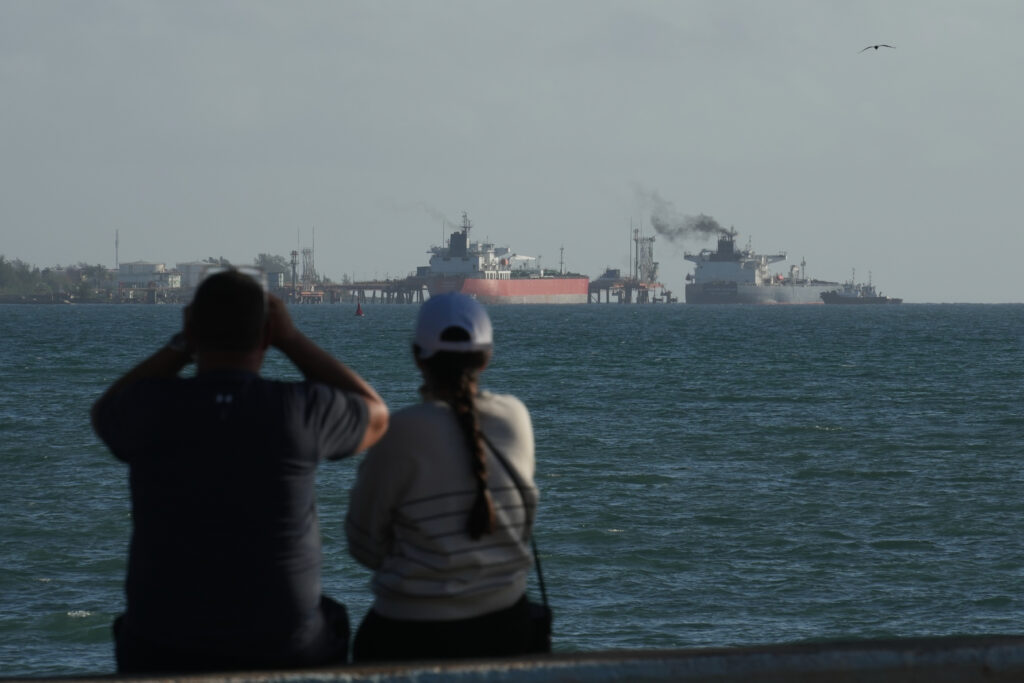
In other words, the biggest gift to Moscow right now isn’t the license itself — it’s the price shock on global markets. The license simply lets Russia capture more of that windfall. Within days of the easing, India alone snapped up around 30 million barrels of Russian oil that had been stranded at sea.
So how big is the «oil breach» in reality? A great deal depends on how long elevated prices persist and how aggressively Washington is willing to suppress further spikes. Beyond the license, the U.S. announced the release of 172 million barrels from its Strategic Petroleum Reserve, while 32 IEA member countries agreed to collectively release around 400 million barrels from their emergency stocks. Russia itself estimates that roughly 100 million barrels of cargo fell under the U.S. waiver.
This all points to Washington acting not out of any consistent desire to help Russia, but out of emergency panic-suppression mode — cooling oil markets at almost any cost. Yet that’s exactly where the deepest political vulnerability in the sanctions regime lies. When energy security collides head-on with sanctions discipline, the U.S. administration signals that it’s prepared to sacrifice the latter for the former.
The strategic risk here is primarily about market signaling. Sanctions regimes function not just through formal prohibitions and enforcement but through expectations. If traders, insurers, shipowners, and buyers start to believe that Washington will grant another carve-out whenever prices spike sharply, the deterrent effect begins to erode. Discounts could narrow, intermediaries could grow less cautious, and buyers could once again test the boundaries. The real danger isn’t the one-off loophole — it’s the risk that emergency exceptions become normalized practice.
For now, though, it’s premature to speak of serious cracks in the sanctions architecture. The price cap was always a compromise between two conflicting goals: capping Russian revenues while keeping Russian oil in the system. The current decision — however unpalatable it appears — doesn’t repeal that compromise; it merely exposes the inherent tension within it. The more the world market comes to rely on Russian barrels during a crisis, the harder it becomes for Western capitals to maintain rigidity. And the more clearly the system’s Achilles’ heel is revealed: oil sanctions work only as long as geopolitical shocks don’t make every additional barrel too valuable to the global economy to leave on the sidelines.
The answer to how big this «oil breach» really is must therefore be ambivalent. In the short term, it’s neither a catastrophe nor the nullification of oil sanctions — just a temporary, limited measure that leaves the core restrictions intact. Politically and institutionally, however, the damage is already visible. Russia gains an extra revenue window precisely when its oil earnings and budget are under severe stress. More importantly, it creates a precedent in which the toughness of sanctions starts to depend not on Moscow’s behavior but on the state of the global oil market. For the Kremlin, that precedent may ultimately prove far more valuable than a few weeks of additional cash flow.