The end of 2025 was far from serene for Central Asia.
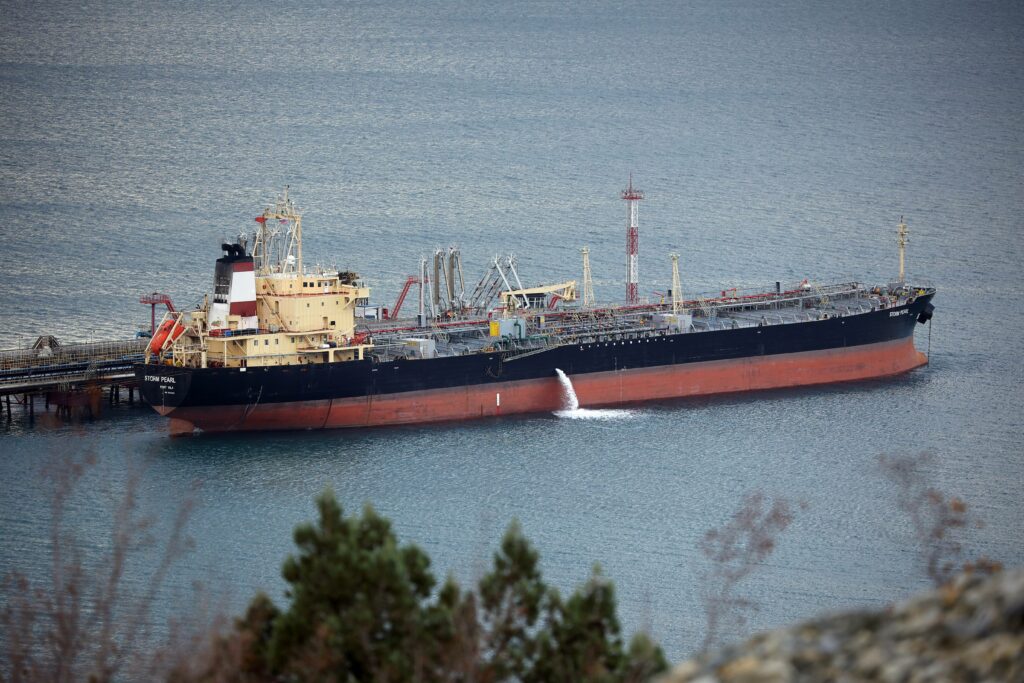
Kazakhstan, the region’s leading exporter of Caspian oil, felt the direct fallout from the Russia-Ukraine war for the first time. In late November, Ukrainian sea drones struck the marine terminal of the Caspian Pipeline Consortium (CPC) in Novorossiysk, damaging one of its key offshore loading berths. Kyiv framed the attack as a blow against Russia, but the reality was more nuanced: Russian oil accounts for only about 15% of the pipeline’s throughput. The bulk—around 80% of Kazakhstan’s total oil exports—comes from major Caspian fields like Tengiz, Kashagan, and Karachaganak. Astana is now exploring ways to divert more volumes toward China or the Baltic port of Ust-Luga, as the Black Sea route has become increasingly unreliable for large-scale trade.
Yet the year’s most emotionally charged event, dominating social media and public discourse, was the December stabbing of 10-year-old Tajik boy Kobiljon Aliev at a school near Moscow. The perpetrator, a 15-year-old ninth-grader with far-right views who idolized foreign extremists like Brenton Tarrant—the perpetrator of the 2019 Christchurch Mosque attacks—fatally wounded Aliev. The boy’s funeral in Tajikistan became a national event, and authorities there provided his family with a new home.
Although all Central Asian leaders attended an informal CIS summit in St. Petersburg, the gathering did little to bolster Russia’s image in the region. Even during talks with Tajik President Emomali Rahmon at the Hermitage, Putin had to address Aliev’s death. Across Tajikistan, neighboring states, and Muslim communities in Russia itself, the tragedy is widely seen as a consequence of Kremlin policies: the rising influence of nationalist groups tolerated—or even quietly backed—by security services (social media rumors—unsubstantiated—claimed the attacker’s father was linked to the «Russian Community» group); humiliating airport checks; aggressive wartime recruitment (where men aged 18−65 can now secure residency mainly through military contracts or proof of unfitness); and a new migration framework that sets strict limits: migrants must arrive for fixed terms only, without families. For those with children already in Russia, enrollment in schools has become far harder; this year introduced mandatory Russian-language testing, which many ethnic Russian repatriates also fail. At the State Duma’s insistence, the passing threshold was raised from 30% to 90% correct answers, even as many test questions appear methodologically dubious.
Another source of friction is China. Unlike Moscow, Beijing does not mistreat Central Asian laborers on its soil; on the contrary, it actively imports its own citizens into the region, particularly Tajikistan and Kyrgyzstan. This sometimes sparks open clashes. A classic case was the November incident in Kyrgyzstan’s Konstantinovka village, where Chinese road construction workers brawled with locals over a minor traffic dispute. The episode triggered yet another wave of anti-Chinese sentiment online.
Such sentiments remain a constant undercurrent in Central Asia, flaring up periodically around events like debates over sales of land to foreigners or the release of statistics on citizenship grants and intermarriages. A Kyrgyz passport is hardly coveted worldwide, yet local nationalists insist that Chinese men are systematically marrying Kyrgyz women, threatening the long-term «dissolution» of the young nation.
Meanwhile, China’s economic sway has now surpassed Russia’s. Russia led China in Kazakh imports as recently as last year, but in 2025 the figures drew level or tilted toward Beijing. Kazakhstan’s trade with China in the first 11 months hit $ 43.8 billion, while turnover with Russia fell short of $ 30 billion. Similar gaps exist for Uzbekistan, Tajikistan, and Kyrgyzstan—though adjustments are needed for Russia’s «gray imports,» especially via Kyrgyzstan.
The practice of re-exporting goods to Russia has exposed Central Asia to real risks of Western sanctions. This year, banks from Kazakhstan, Kyrgyzstan, and Tajikistan landed on EU lists. The Donald Trump administration poses fewer awkward questions than a potential Kamala Harris one might have but blows still land occasionally from Washington.
How do these relatively poor post-Soviet states navigate pressures from multiple directions? They rely on an unspoken doctrine of «strategic silence,» long adopted across the region. Major shocks—like Russia’s full-scale invasion of Ukraine or Israel’s Gaza operation—did temporarily disrupt this approach, as ignoring them proved difficult. But by 2025, the model regained stability through collective effort. Rather than choosing sides—meeting Putin, Trump, or Ursula von der Leyen one by one—the five Central Asian states engage them sequentially. The C5+1 format (five regional states plus one external partner) is not new: U.S. Secretary of State John Kerry tested it in 2015 by gathering Central Asian foreign ministers in Samarkand, and Japan’s Prime Minister Junichiro Koizumi pioneered treating the region as a unit back in 2004. Yet 2025 brought qualitative advancement.
First, regional leaders held an unprecedented number of high-level meetings in a single year—with Putin, Trump, Xi Jinping, EU leadership for the first time, and Japan’s new premier. Not all plans materialized: a May summit with Gulf Cooperation Council states fell through.
Second, the five appeared more united than ever. For the region, 2025 will be remembered for the Khujand Declaration. The document remains unpublished, but it is known to fix the tripoint border junction among Uzbekistan, Kyrgyzstan, and Tajikistan in the Fergana Valley—a critical step, given the brutal 2022 clashes on the Kyrgyz-Tajik frontier involving artillery, tanks, and drones.
Moreover, Central Asia formally widened its circle in 2025. Azerbaijan—the sixth Muslim former Soviet republic—emerged as a natural European corridor for the region and now participates fully in the Consultative Meetings of Central Asian Heads of State.
At first glance, the notion that five post-Soviet states, many recently at odds, could coordinate diplomacy and speak with one voice seems like propaganda. How have these autocracies achieved what even the institutionally mature European Union often struggles with? Why has the group not fractured under centrifugal forces—some leaning toward China and Russia, others toward the West and Arab monarchies?
Yet Central Asia appears to offer a genuinely unique model. By preserving the status quo, each state deliberately avoids exclusive ties to any single power pole. Centripetal forces prevail: the five are forging a shared regional identity and aligned policies. This has transformed the region into «nobody’s backyard.» In the long run, this proves advantageous for all involved. On this basis, Central Asia began eyeing Mongolia in 2025—its foreign policy also masters balancing powerful neighbors. Building similar identity on the South Caucasus (Armenia, Azerbaijan, Georgia) will take many years, even with ongoing reconciliation and integration between Yerevan and Baku.
Naturally, unity among the five does not erase internal differences. Kazakhstan and Uzbekistan stand out in economic and territorial scale, rightfully claiming «middle power» status alongside Azerbaijan and Turkey. Kazakhstan benefits additionally from oil and gas, while Uzbekistan relies mainly on human resources. Still, on November 6, 2025, all five leaders visited Donald Trump together, though he invited only Tokayev and Mirziyoyev to the December 2026 G20.
Turkmenistan at every meeting—with Putin, Trump, or Xi—resembles the quiet, odd classmate: present to stay with the group but mostly silent or uttering platitudes. When it hosts, events feel otherworldly—like the recent Forum of Peace and Trust, attended by Putin, Georgia’s Prime Minister Irakli Kobakhidze, and the president of São Tomé and Príncipe. The point? To underscore neutrality, the cornerstone of Turkmen foreign policy.
Kyrgyzstan, once the region’s most unstable spot, has since 2022 firmly aligned closer to Moscow—in both foreign and domestic policy. Hence Putin’s pompous visit, complete with a giant screen obscuring the Ukrainian embassy in Bishkek; a domestic foreign agents law; and crackdowns on media. This is a deliberate choice: Bishkek believes loyalty to Moscow, combined with honed skills in customs schemes, yields more than distancing. Yet this does not preclude discussing hydropower and IT with Trump—perhaps some investments or contracts will materialize.
Tajikistan strikes a unique balance: total dependence on Moscow paired with occasional defiance when needed. Unsurprisingly, after the Aliev murder and post-Crocus «Tajikophobia» wave, Dushanbe at least verbally defended its citizens. Handing a protest note to Russia’s ambassador was bold, especially amid ongoing Afghan border shootouts that could eventually force Dushanbe to seek Moscow’s aid (publicly rejected for now).
These differences may seem profound, but over the past decade—since Uzbekistan’s Islam Karimov died in 2016—each state has found self-interest in rapprochement. Dropping out of this informal alliance offers no gains. Staying in yields modest perks: attend Putin’s May 9 parade, tell Trump he truly halted reachable wars, assure Erdogan the Turkic world is near.
For external players, Russia has ceded top trading partner status to China. Its role now largely counters growing Beijing influence. Meanwhile, Central Asia advances infrastructure for Western trade—via the Caspian, Azerbaijan, and Turkey. Labor migration to Russia will likely decline, suiting Moscow, Tashkent, Dushanbe, and Bishkek alike. Russian authorities cautiously trial imports from farther abroad, while Central Asian states explore European labor markets.
Moscow fully grasps that shrinking economic presence in Central Asia erodes political leverage. Yet the current nationalist bent in Russian foreign policy consistently overrides rational calculations.