New Delhi’s abstention in the United Nations vote condemning Russia’s full-scale invasion of Ukraine in early 2022 did not come as a surprise to many, given the primacy of Russia in India’s strategic calculus. Shared historical ties forged during the Cold War, a time-tested military-technical partnership, and similar yet differentiated interests in the international system—such as engendering multipolarity and strengthening connectivity in Eurasia—feature as strategic imperatives in the India-Russia relationship. Along with its abstention, India did not join the sanctions against Russia.
India’s relations with Russia remained unchanged on paper, similar to the previous decade when Russia annexed Crimea. In both instances, India called for the cessation of hostilities, reiterating that war was not in the interest of any country. There was some resistance in the previous decade, when Russia’s growing contestation with the West led the US to threaten secondary sanctions on India through the Countering America’s Adversaries Through Sanctions Act (CAATSA) over India’s purchase of the Russian S-400 anti-missile defense system. In 2021 India secured waivers from the US. However, the pre-2022 Russia sanctions did not affect India. Russia’s exclusion from SWIFT and the Western-led financial architecture in early 2022, however, has considerably affected the bilateral partnership.
India-Russia Relations Since 2022
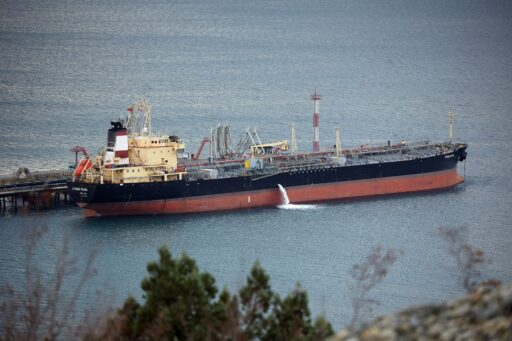
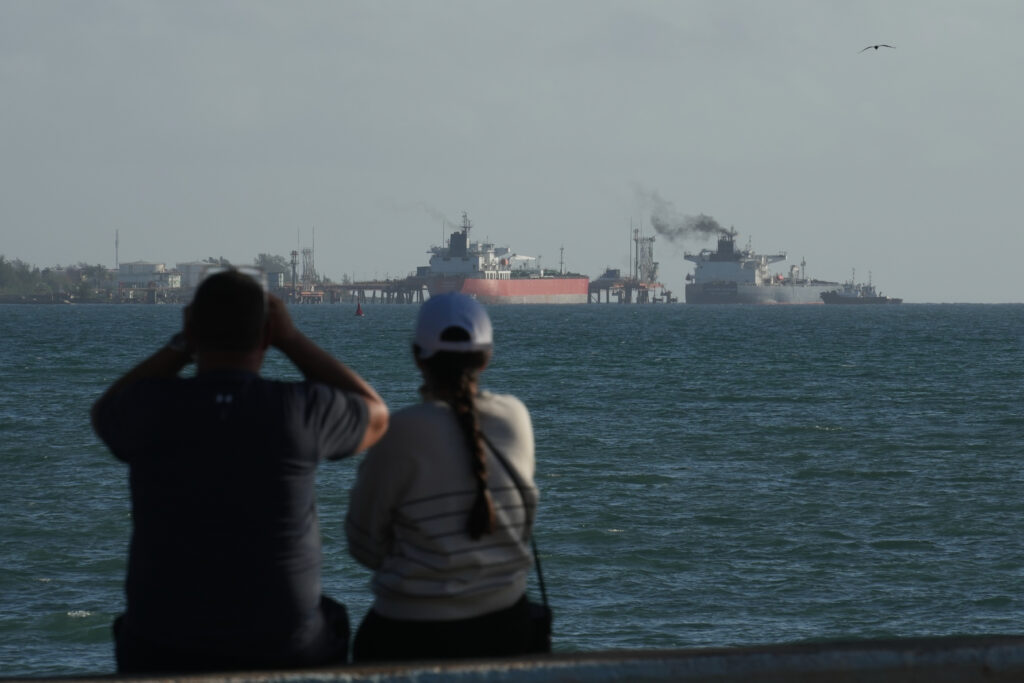
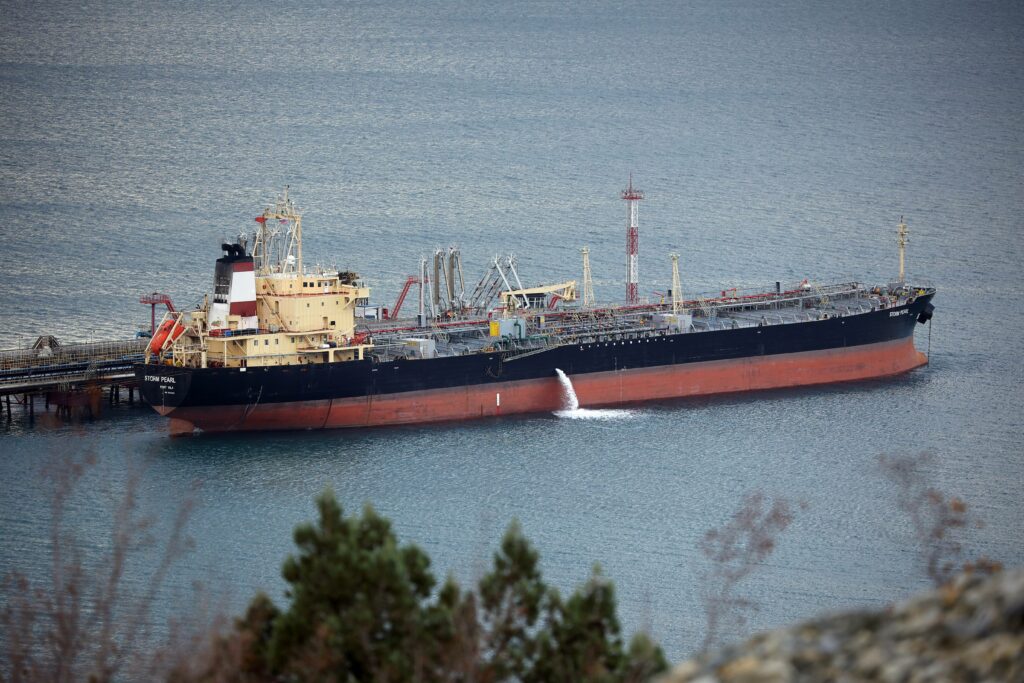
While cooperation continued, including deliveries of weapons systems and military platforms, Indian refiners began importing large volumes of oil from Russia. Before the war in Ukraine, in 2021, India imported US$ 2.3 billion worth of oil from Russia. This figure stood at $ 25.5 billion in 2022, $ 48.6 billion in 2023, $ 52.7 billion in 2024, averaging 1.7 million barrels per day in 2024. Furthermore, trade patterns remained largely unaffected overall. India’s decision not to join the sanctions regime received considerable pushback from the West. In the latter’s calculus, New Delhi is perceived as an important middle power in Asia with deepening ties with the West, sharing complementary perceptions of rules-based security architecture in Europe and the Indo-Pacific, and wielding considerable influence among Global South countries. India’s decision not to join the sanctions (along with two-thirds of the countries of the world) has signaled further fragmentation of the existing world order.
That said, sanctions have had an intervening effect on the India-Russia relationship. While trade remained sustained, private-sector cooperation between India and Russia saw a downturn, marked by the exits of Indian tech firms such as Infosys and Larsen & Toubro, as well as other conglomerates such as Tata Industries, Aditya Birla, and Kotak Mahindra. Even with the payment issue reaching a settlement using the Special Rupee-Vostro mechanism—wherein Russian banks were allowed to open rupee-based accounts in India, enabling payments in rupees—concerns still prevail. Given that banking operations remain influenced by global credit ratings and most Russian entities have negative credit ratings, this issue has particularly surfaced in non-energy investments and transactions. Given the other structural constraints of the Indian market being risk-averse, large private-sector firms such as Infosys and the Tata Group have retrenched from the Russian market due to their business interests in the West. That said, the exodus has not had a severe impact on the bilateral partnership, as the economic quotient in the India-Russia relationship was not significantly high to begin with, with the mainstay of the partnership being the military-technical relationship. Furthermore, Indian firms did not have a considerable presence in Russian markets to begin with.
Economic Relations Take Center Stage
Interestingly, even with the setbacks, the enhancement of the economic partnership is viewed as being of paramount importance for the India-Russia relationship. This development has been exacerbated by the decline in the bilateral military-technical partnership. Russia remains India’s largest military partner; however, since the previous decade (peaking at around 70% in 2010−214), the share of Indian arms imports from Russia has fallen from 49% in 2021 to 40% in 2025. While roughly two-thirds of the Indian armed forces still using Russian weapons systems and military platforms, the government is diversifying military procurement away from Russia, with the larger goal of bolstering indigenous military production. While there is continued interest in New Delhi in purchasing additional units of the S-400 and the new variant S-500, along with other advanced systems such as the Voronezh radar systems, the war and supply chain disruptions have resulted in the military-technical partnership declining. In this context, strengthening the economic partnership has emerged as a priority in making the relationship more relevant and resilient.
That said, in the current configuration, achieving high levels of qualitative trade depends on a conducive geoeconomic environment. India and Russia are connected by three trade corridors: the existing route via the Suez Canal, which is predominantly used for trade; the Eastern Maritime Corridor between Chennai and Vladivostok; and the International North-South Transport Corridor via Iran. While trade mechanisms persist, the economic impetus remains low in the latter two corridors. For instance, US President Donald Trump doubling down on sanctions on Iran has reduced the economic impetus of the INSTC in the short to medium term. In the East, India does not have comparative advantages in the Russian Far East, where China holds market dominance. Additionally, Indian exporters have to grapple with high freight costs. All these factors, combined with Trump’s secondary sanctions, have at present created narrow niches for strengthening trade linkages between the two countries.
Since the full-scale invasion of Ukraine, hydrocarbons have dominated India’s imports from Russia. In 2025, Russia — India trade stood at $ 68.7 billion, of which $ 56.9 billion constituted hydrocarbon imports from Russia. Indian exports were less than $ 5 billion. Even with the uptick in numbers, given Russia’s eastward pivot and India’s standing as one of its biggest trading partners, the low non-oil trade volumes and the negative balance of payments further indicate that the figures are not substantially high in a broader sense.
US Factor in India-Russia Relations
Though Russia remained an irritant in the India-US relationship during the first years of the war in Ukraine under then-US President Joseph Biden, no major secondary sanctions were imposed against Indian interests, except the January 10 sanctions levied last year, which targeted Gazpromneft, Surgutneftgaz, and 183 tankers transporting Russian oil. With Trump, there was initially a perception that the India-Russia relationship would continue along pre-2022 lines, factoring in a shift in US policy towards Ukraine and a more conciliatory position vis-à-vis Russia’s demands. However, with domestic pressure mounting against Trump over inaction in Ukraine amid intensifying Russian attacks, the US Congress shifted its approach by strengthening secondary sanctions and imposing restrictions on third countries purchasing Russian oil, selectively zeroing in on India. With preexisting tensions—New Delhi rejecting Trump’s claim of mediating the India-Pakistan clash last year, India expressing disinterest in purchasing F-35 fighter jets, and the inability of both sides to reach an agreement on a trade deal—Washington imposed 25% secondary tariffs on India, bringing the total tariffs against India to 50%. Furthermore, the sanctions imposed on Lukoil and Rosneft last October further resulted in Indian refiners scaling back their purchases of Russian oil. The Indian government continued to vehemently oppose external attempts to influence India’s foreign policy, reiterating its strategic autonomy and energy security interests.
Even with the US eventually revoking the tariffs and the conclusion of an interim trade agreement, the incident signaled two realities: first, that India’s relations with Russia are no longer insulated from sanctions; and second, that the general undercurrent of a transactional US policy toward India casts doubts on Washington’s reliability as a credible strategic partner. Subsequently, the incident led to the further strengthening of the India-Russia relationship, evidenced by a string of visits between Indian and Russian officials. In August alone, the Indian National Security Advisor Ajit Doval and External Affairs Minister S. Jaishankar visited Russia. There were at least five top-level visits by Indian officials to Russia in 2025. This signaled the importance of Russia in India’s calculus. Additionally, with Trump’s approach shifting toward the Indo-Pacific—where Washington took a conciliatory position toward Beijing and began terming the partnership as G2—New Delhi’s approach to Beijing underwent a soft recalibration. Even with hostilities persisting, cooperation between the two countries improved, as evidenced by the Shanghai Cooperation Summit in Tianjin. This was the first visit to China by an Indian Prime Minister in more than seven years and signaled a shift in India’s partnership with China, moving toward a cautious reset.
The war in Iran saw the enforcement of sanctions weaken, with the US granting a temporary waiver to India to continue purchasing Russian oil. The Indian Ministry of External Affairs reiterated that oil purchases were not influenced by the pressure of third countries. With demand for energy substantially increasing in India following the closure of the Strait of Hormuz, Indian refiners increased their purchases of Russian oil. In March, Indian refiners purchased more than 60 million barrels of oil from Russia, underscoring that market mechanisms and sanctions shape the direction of energy flows and that Russian energy continues to remain relevant in India’s calculus.
What Do These Developments Mean for the India-Russia Relationship?
The existing drivers of the India-Russia relationship and the recent chain of events signal the continued relevance of Moscow in India’s strategic calculus. Putin’s recent visit to New Delhi has induced a degree of confidence in strengthening the bilateral partnership. Under sanctions, the economic partnership with New Delhi will likely see an uptick, given that strengthening trade was ideated as a priority during the recent India-Russia summit in December last year. With global energy markets in upheaval, energy cooperation with Russia will be sustained. While the consolidation of the Russia-China partnership continues to be watched closely in New Delhi, the latter remains convinced that Moscow will keep New Delhi’s interests in consideration, given India’s importance for Russia’s Eurasian policy. However, despite bilateral ties functioning rather well under sanctions, concerns prevail. Global financial order remains unipolar, with the dominance of the dollar-backed global political-economic architecture. Under the current state of globalization, sanctions have a debilitating impact on third countries.
If in the recent past India’s ties with Russia did not come under the scanner, since 2022 they have become a major irritant for the West. This gives the sense that going forward, shocks in the world order will have a stronger influence on the India-Russia relationship, and that until the war in Ukraine ends, the qualitative development of the India-Russia partnership is likely to be constrained by sanctions.