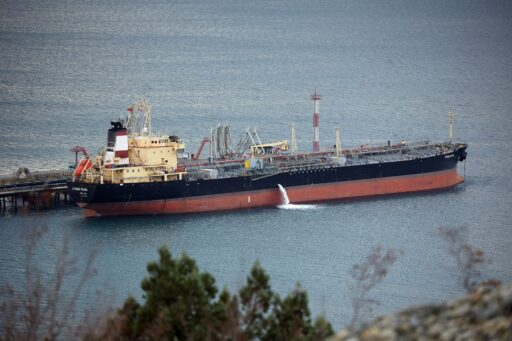
The failure of peace talks between the US and Iran, held in Islamabad over the weekend, paves the way for further escalation and, unfortunately, a deepening global economic shock. While the budget’s oil and gas revenues are backward-looking and will begin rising in April due to the increase in prices, this escalation challenges the dominant framing of how the Russian economy is performing. Yes, crude oil loadings for export through the Baltic rose slightly in the first week of April compared to March—despite Ukrainian strikes—reaching 2 million barrels per day. Yet the best officials can do with the increased revenues is hold off budget cuts. Instead of an economic rebound, observers should think of the coming weeks and months as a ricochet from the conflagration in the Middle East.
You can pick apart the underlying crisis through the prism of investment. Alexei Zabotkin, a deputy chair of the Bank of Russia, explained that GDP grew 1% in 2025 despite a 2.3% real-terms decline in fixed capital investment because investment exceeds the retirement of fixed capital. In other words, if more money is going into production—whether for modernization or for expanding factories, offices, or other facilities—than is being «lost» from retirements, then production and growth can continue sustainably. In typical fashion for Russian technocrats, this formulation is absurdly orthodox, technically correct, and wholly inadequate for explaining the wartime economy. Given that Aleksandr Shokhin is promoting the notion that if the bank were to cut the key rate to 10%, investment might return to growth, there appears to be too much confidence that simplistic formulations, textbook definitions, and the cost of capital can explain everything. Just because aggregate investment is 33% above 2019 levels in nominal terms does not mean the aggregate figures capture the actual increase in prices since then or the increasingly low multiplier effect of the capacity being built when it is directed toward the war effort. The fact that demand for investment goods is now below 2019 levels and falling is proof of that.
The first error in Zabotkin’s formulation is that he assumes normalcy. Military investments have driven the expansion of production since the war began—if not the expansion of all investment—and that capacity is insulated from the dynamics of retirements. In the civilian economy, there may be some truth to this, yet the civilian economy’s growth has largely been driven by the massive surge in nominal incomes and, until mid-2024, mortgage subsidies. IBC Real Estate, a sector consultancy, forecasts real estate investment to halve this year, falling to 650−700 billion rubles. We began this year with weekly increases in nominal non-cash consumer spending falling below the official annualized inflation rate—down from over 20% by the end of 2023 to just 3.5%. Given that liberal economists at the Moscow Economic Forum warned of a 2% contraction in GDP this year even with the expected oil revenue bumper, that figure is clearly entering negative territory now. Higher commodity prices will lead to higher inflation. Nabiullina and the Bank of Russia are already signaling they may hold rates steady for now.
To reframe, Zabotkin’s assertion is effectively that because the economy is building so much capacity for destruction that is not being retired, it can keep growing «sustainably.» This brings us to the second problem: negative macroeconomic conditions are worsened dramatically by the state’s constant expansion into economic activity in order to keep redirecting resources toward the war or otherwise controlling them. It is beyond absurd that Prime Minister Mishustin is fighting against infrastructure and other sector concession projects that are «pseudo-concessions» because they actually require no private capital. This has been an issue in government since 2017—nearly a decade—and a fight in an area where government policy regularly once returned 70−100% of a private investor’s money within the first year, or even without fully delivering on the contract. How weak is the state, and how poor is its capacity to actually create structurally sustainable conditions for growth, that it can’t convince private investors to put their money up for what are effectively guaranteed returns? Why risk it when ownership is so politicized? No wonder angel investing—admittedly Russia’s venture capital market is small—fell nearly 80% last year.
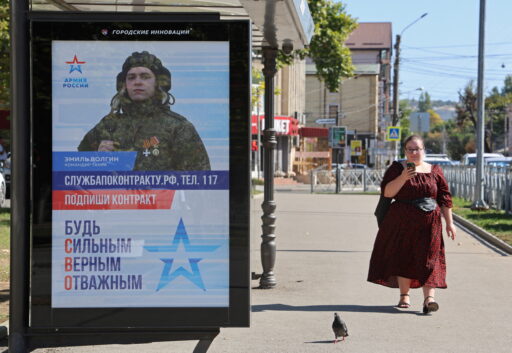
The economy is in a trap of the regime’s own making. Where private sector activity falls, the surviving businesses typically become even more reliant on the state. Property developers are already facing this reality as they hunt for business, as are suppliers of commodity inputs. But it extends further. The number of contracts state enterprises closed with small and medium-sized businesses peaked in 2024 and actually declined slightly in 2025 in ruble terms—less than 10 trillion in total and therefore less than 2% of GDP. Those same businesses are increasingly hiring comparatively lower-productivity workers because of labor shortages. That’s great for workers looking for more flexibility, but it is a structural problem for an economy far too reliant on state and state-adjacent employment. Now that households are leading a consumer recession, businesses will be competing harder for government contracts wherever they can get them while struggling to remain productive. A decline in interest rates does little to address these combined issues. It may relieve some burden for big businesses tasked with sustaining the wartime economy and may keep some small businesses open more easily, but it will merely return the economy to a higher rate of inflation and, perhaps, more real estate investment in a market that cannot afford to buy.
Whatever gains come as commodity markets race to price in further escalation and now months of energy market disruption are likely to be undone by the final piece of what Zabotkin misses: the allocation of capital within the aggregate figures he cites. The fact is that investment into crucial fixed assets like roads, railways, and ports has fallen, except in places where the war is directly being supported. Russian Railways is now running less freight than it did during COVID and entered the year cutting its investment program by 20% to 713 billion rubles while negotiating an increase in its debt limit with the government. Tariffs have to rise to maintain the network, adding to inflation disproportionately in Russia given the logistical distances involved in delivery. On April 6, they sold their Moscow skyscraper for 261 billion rubles to raise cash. The misallocation of capital away from these uses and away from other productive areas compounds over time.
Last year, mining companies in the Urals slashed investment by 2.3% because of high interest rates. These same companies would ostensibly benefit from the impending supply shocks for various commodities, ranging from coal surging in use in the Asia-Pacific to offset the loss of LNG supplies to minerals and metals whose production outside of Russia relies on inputs like sulfuric acid. Let’s assume that at slightly lower interest rates, these miners and others can invest. Can they trust there will be the export capacity to sell more abroad?
It gets worse. One of the most important inputs for semiconductor production—helium—has been affected by the loss of transit via the Strait of Hormuz. Qatar provides approximately a third of global supply. Reportedly, one in five commercial data centers in Russia built in the last 10−15 years are having technical issues, problems frequently linked to the length of their service life, difficulties accessing imports, and a lack of component inventories. If Russians posting videos online already hate how interruptions to internet access are disrupting payments, their daily lives, their ability to call an ambulance, or care for loved ones, how will they hold up when the rest of the developed world outbids them for every last available semiconductor or when China restricts exports? When the chips are down, the last pockets of resilience in the civilian economy will follow.
We need to move beyond the first-order question of who gets the oil money from war in the Gulf and move on to the next steps. The idea that Russia’s economy can keep growing sustainably based on what an aggregate investment figure says on paper is, politely put, nonsense. Ukraine’s import dependencies in wartime are well understood. Russia’s are less so, given the accelerating rate at which things are failing.